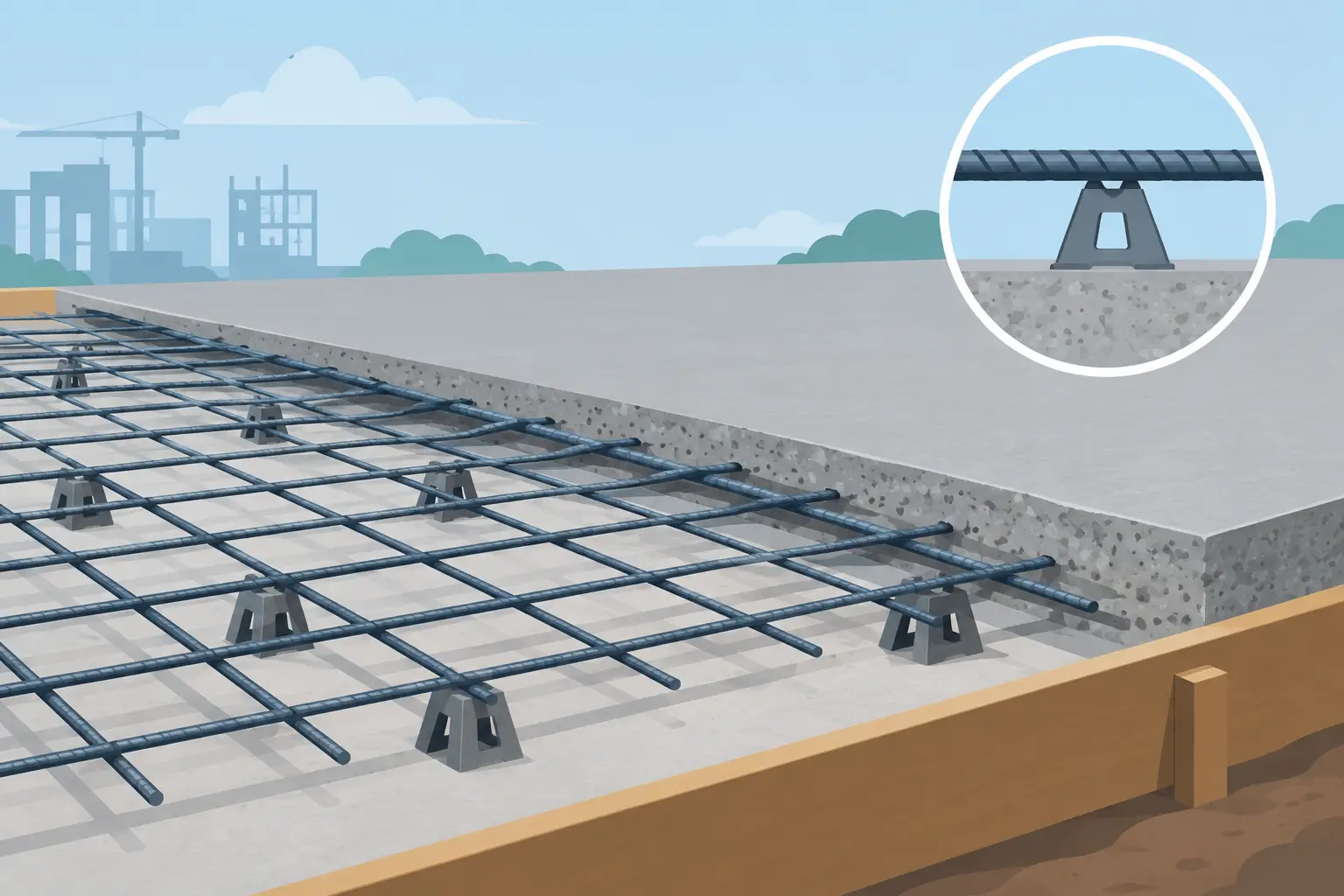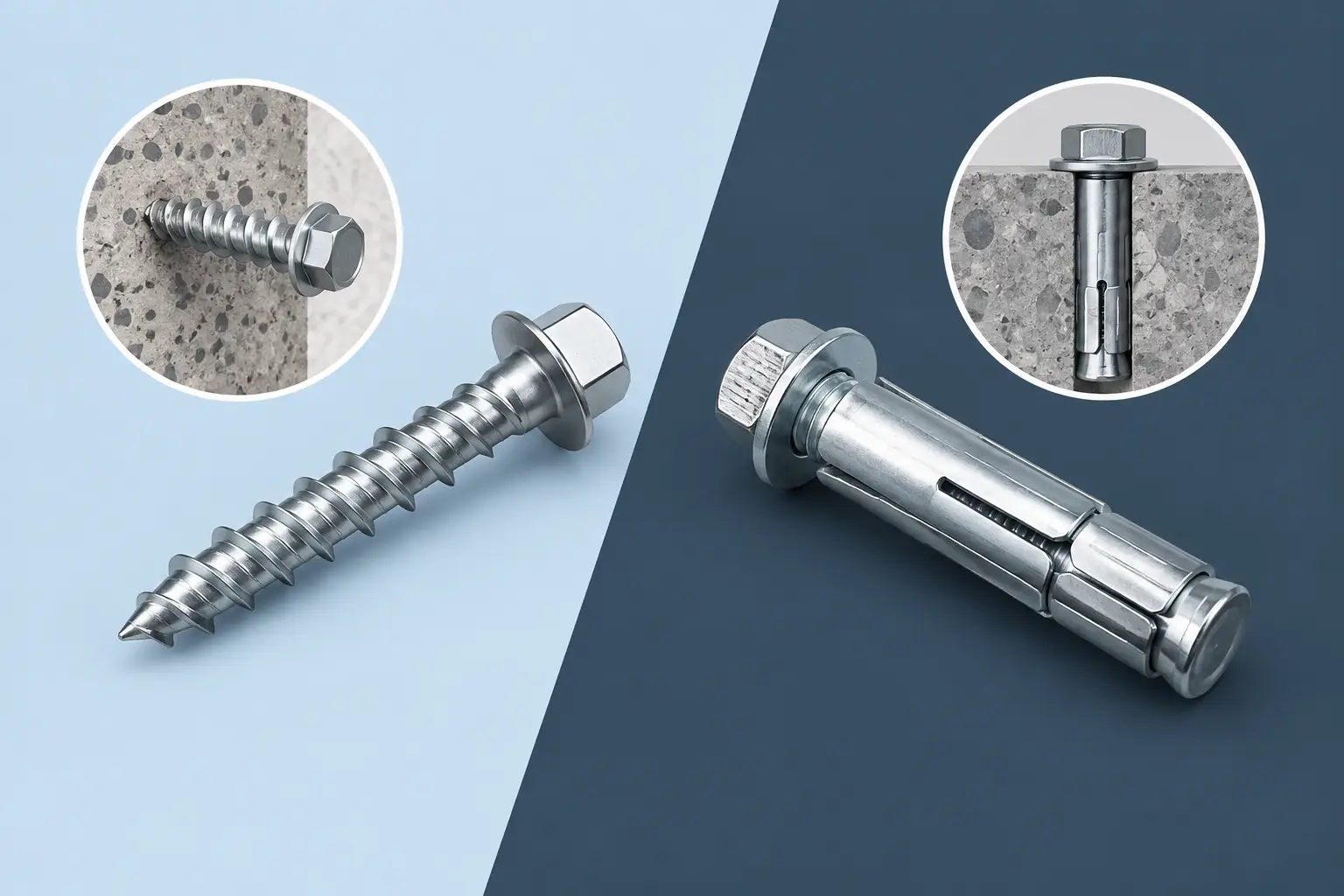
An urgent concrete pour supply example showing how builders confirm rebar, mesh, chairs, tie wire, and delivery before the truck arrives on site safely.

Choosing a Concrete Fixings Supplier
A missed delivery on fixings does not look dramatic on paper, but on site it can stop a pour sequence, delay follow-on trades, and turn a simple install into a scramble. That is why choosing the right concrete fixings supplier matters more than many buyers give it credit for. If the anchors, screws, pins, and fastening accessories are not available when needed, the rest of the schedule starts slipping.
For trade buyers, this is not really about buying a box of hardware. It is about keeping work moving with the right product, in the right spec, at the right time. A supplier needs to do more than carry stock. They need to understand substrate conditions, load expectations, compliance requirements, and the reality of ordering for live residential, commercial, and civil jobs.
What a concrete fixings supplier should actually solve
A good supplier solves three problems at once – product suitability, supply certainty, and speed. If any one of those falls short, the cost shows up somewhere else. It might be rework because the wrong fixing was used in cracked concrete. It might be labor downtime because the correct line was out of stock. Or it might be procurement friction because pricing is unclear and every order requires back-and-forth just to get basic information.
For builders and concrete crews, the best supplier is usually the one that reduces decisions, not one that creates more of them. You should be able to identify the required fixing, confirm it meets the application, see the price clearly, and arrange delivery without wasting time.
That is especially true when concrete fixings sit alongside other structural and site products in the same order. If you are already sourcing reinforcing mesh, bar, tie wire, chairs, and related materials, it helps when your supplier can support the broader package instead of making you split purchases across multiple vendors.
The difference between stocked product and usable supply
Not every stocked range translates to reliable supply. Some suppliers list a category but only carry shallow quantities, slow-moving sizes, or limited variations. On a small job, that may be manageable. On a larger project, it becomes a problem fast.
Usable supply means the supplier can support standard requirements consistently and respond when quantities increase. It also means they understand that construction ordering is rarely perfectly linear. Quantities change. Install details shift. Urgent top-up orders happen. A supplier that can only handle ideal conditions is not much help on a real project.
This is where local delivery performance matters. A competitive price loses value if the product turns up too late to use. Fast regional coverage, practical dispatch capability, and direct contact with someone who can act on urgent requests are often worth more than shaving a small amount off unit cost.
How to assess a concrete fixings supplier
The quickest way to assess a concrete fixings supplier is to look beyond the catalog and test how they operate. Product range matters, but it is only one part of the picture.
Start with compliance and product clarity. Fixings used in concrete and structural settings need to be suitable for the application, and buyers need enough detail to choose correctly. Vague descriptions create risk. If the supplier cannot clearly identify what the product is, where it is typically used, and what options are available by size or type, ordering errors become more likely.
Then look at pricing transparency. Trade buyers do not want to chase quotes for every common item. Clear per-item pricing speeds up purchasing, helps with estimating, and reduces admin. For procurement teams and contractors managing margins tightly, that matters.
After that, test responsiveness. If you call with an urgent requirement, can you get a direct answer from someone who understands site needs? Or do you get bounced around? A service-driven supplier should be able to confirm availability, advise on alternatives if needed, and move quickly.
Finally, consider whether the supplier fits the way your projects run. Some suppliers are fine for planned bulk orders but weak on short-notice requests. Others are better for smaller pickups than coordinated delivery. The right fit depends on your workload, but the key is consistency.
Why range still matters
Concrete fixings are not one-product purchases. Jobs often require a mix of anchors, screws, pins, and associated accessories depending on slab condition, base material, load requirements, and installation method. A narrow range may force substitutions that are technically possible but not ideal.
A broader range helps buyers stay closer to spec and reduce compromise. It also saves time. If the supplier carries the common variations and supporting site products, ordering becomes simpler and crews are less likely to be left waiting for one missing line.
There is also a practical procurement benefit. When one supplier can cover reinforcing steel products, concrete accessories, and fixings in the same transaction, coordination gets easier. Fewer purchase orders, fewer delivery variables, and fewer calls to chase status. For busy trade buyers, that is a real advantage.
Price matters, but only in the right context
Every contractor wants a competitive rate. That is standard. But the cheapest line on paper is not always the lowest job cost.
If lower pricing comes with poor availability, unclear specifications, or slow dispatch, the savings disappear quickly. Site downtime costs more than most small price differences. Reordering the correct product after a mistake costs more. Sending labor back to finish missed fixings costs more.
That does not mean price is secondary. It means price should be judged alongside reliability. The better suppliers understand this and keep their offer straightforward – fair pricing, clear product information, and dependable turnaround. That is usually a stronger commercial outcome than chasing the lowest nominal number.
The role of direct support in trade supply
Construction buyers do not always need long sales conversations, but they do need access to someone who can solve problems quickly. Direct support is one of the clearest signs that a supplier understands trade purchasing.
A direct contact model helps when an order changes, a size needs to be checked, or a delivery window becomes critical. It also helps on larger volume orders where availability, staging, and timing need to be confirmed properly.
For smaller buyers and owner-builders, the same principle applies. They may not place high-volume orders every week, but they still need straightforward guidance and a simple ordering process. A good supplier does not overcomplicate it.
When fast delivery becomes the deciding factor
There are times when range and price are both acceptable from several suppliers. Delivery then becomes the deciding factor.
This is common on active pours, remedial work, urgent repairs, and staged structural jobs where materials need to arrive in sequence. If fixings show up late, crews either wait or move on and create knock-on inefficiencies elsewhere.
Fast delivery is not just about speed. It is about predictability. Buyers need confidence that the order will arrive when promised and in the quantities expected. That reliability supports scheduling, labor planning, and client communication.
Suppliers that work closely with site-based customers understand this. They know that service is not an extra. It is part of the product.
What trade buyers should expect from their supplier
Trade buyers should expect a supplier to be clear, responsive, and operationally reliable. That includes accurate product information, competitive and visible pricing, practical stock support, and delivery that matches the urgency of the job.
They should also expect the supplier to understand adjacent categories. Concrete fixings are often part of a wider order linked to reinforcement and concrete work. A supplier that knows those categories can usually support purchasing more effectively than a general outlet with a fragmented offer.
Quality Steel Supplies fits that model because it serves real project demand with compliant structural materials, transparent pricing, and fast delivery support for jobs that cannot afford delays.
The best supplier relationship is usually not the one with the most noise around it. It is the one that keeps your materials moving, answers the phone, and gets the right product to site without turning a basic order into a problem. When concrete work is on the clock, that kind of reliability is what buyers remember.
Related Posts