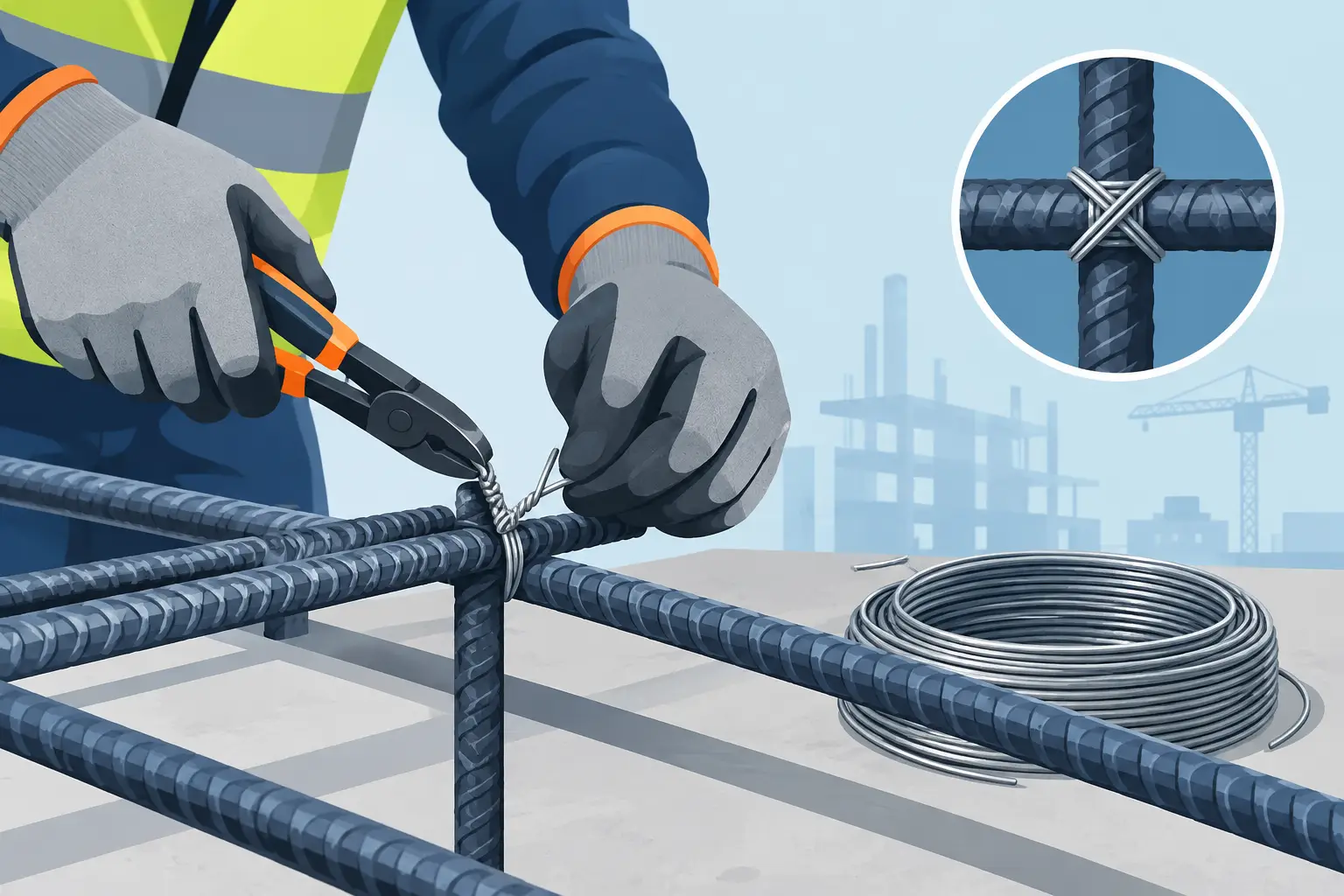
Learn how to secure tie wire on rebar and mesh with reliable twists, safe tool use, and checks that keep reinforcing cages stable before a pour on site.

Guide to Reinforcing Bar Grades
Pour day is not when anyone wants to find out the steel on site does not match the drawings. If you are ordering for footings, slabs, walls, columns, or formed elements, a clear guide to reinforcing bar grades helps you avoid delays, substitutions, and compliance issues that cost real time.
Rebar grade is not just a label on a tag. It tells you how the bar is expected to perform under load, especially in tension, and it affects what the engineer has designed into the structure. Size matters, spacing matters, cover matters, but grade matters too. If the specified grade is wrong, the whole reinforcement package can be wrong even when the bars look similar on the truck.
What reinforcing bar grades actually mean
At the simplest level, reinforcing bar grades indicate the steel’s mechanical properties, mainly yield strength and sometimes tensile strength and ductility. Yield strength is the stress level where the steel begins to deform permanently. That number matters because reinforced concrete relies on steel taking tension where concrete cannot.
In the US market, rebar grades are commonly identified by grade numbers such as Grade 40, Grade 60, and Grade 75. Those numbers generally refer to minimum yield strength in ksi. Grade 60, for example, means a minimum yield strength of 60 ksi. In metric terms, that is roughly 420 MPa. Grade 40 is about 280 MPa, and Grade 75 is about 520 MPa.
That sounds straightforward, but grade is only part of the picture. Rebar is also produced to specific standards, and those standards set chemical, mechanical, and dimensional requirements. So when someone asks for a certain grade, the right follow-up question is often which standard, what bar size, and what application.
A practical guide to reinforcing bar grades by common use
For most general building work in the US, Grade 60 is the standard choice. It is widely specified for slabs, footings, walls, beams, and columns because it balances strength, availability, and cost. It is also familiar to engineers, inspectors, and crews, which reduces friction during ordering and installation.
Grade 40 still appears in some applications, especially older projects, lighter-duty work, or where drawings specifically call for it. It is less common than Grade 60 in many markets. If a detail was designed around Grade 40, swapping to a higher grade is not automatically a free pass. It may sound like an upgrade, but bends, development length, splice requirements, and code assumptions can shift depending on the design.
Grade 75 and higher grades come into play where designers want more strength in a smaller steel area, where congestion is an issue, or on larger structural and civil jobs. Higher-grade bar can help reduce bar count or bar diameter in some designs, but it also needs to be handled carefully from a specification and fabrication standpoint. Not every shop, site, or design detail benefits from going higher.
Standards matter as much as the grade
When buying rebar, the grade should always be read alongside the governing standard. In the US, common standards include ASTM A615, ASTM A706, and ASTM A996. Bars may carry the same nominal grade while behaving differently in fabrication or seismic conditions.
ASTM A615 is the standard carbon-steel deformed rebar most buyers know. It is common, cost-effective, and suitable for a wide range of reinforced concrete work. ASTM A706 is low-alloy rebar developed for better weldability and controlled ductility, so it is often specified for seismic work or jobs where welding is part of the reinforcement detailing. ASTM A996 covers rail-steel and axle-steel bars, which may be allowed in some applications but are not always accepted for every project.
This is where mistakes happen. A buyer sees Grade 60 on the paperwork and assumes all Grade 60 bar is interchangeable. It is not. If the drawings call for ASTM A706 Grade 60 and standard A615 arrives instead, that can create a compliance problem even though the yield strength number matches.
How grade affects fabrication and placement
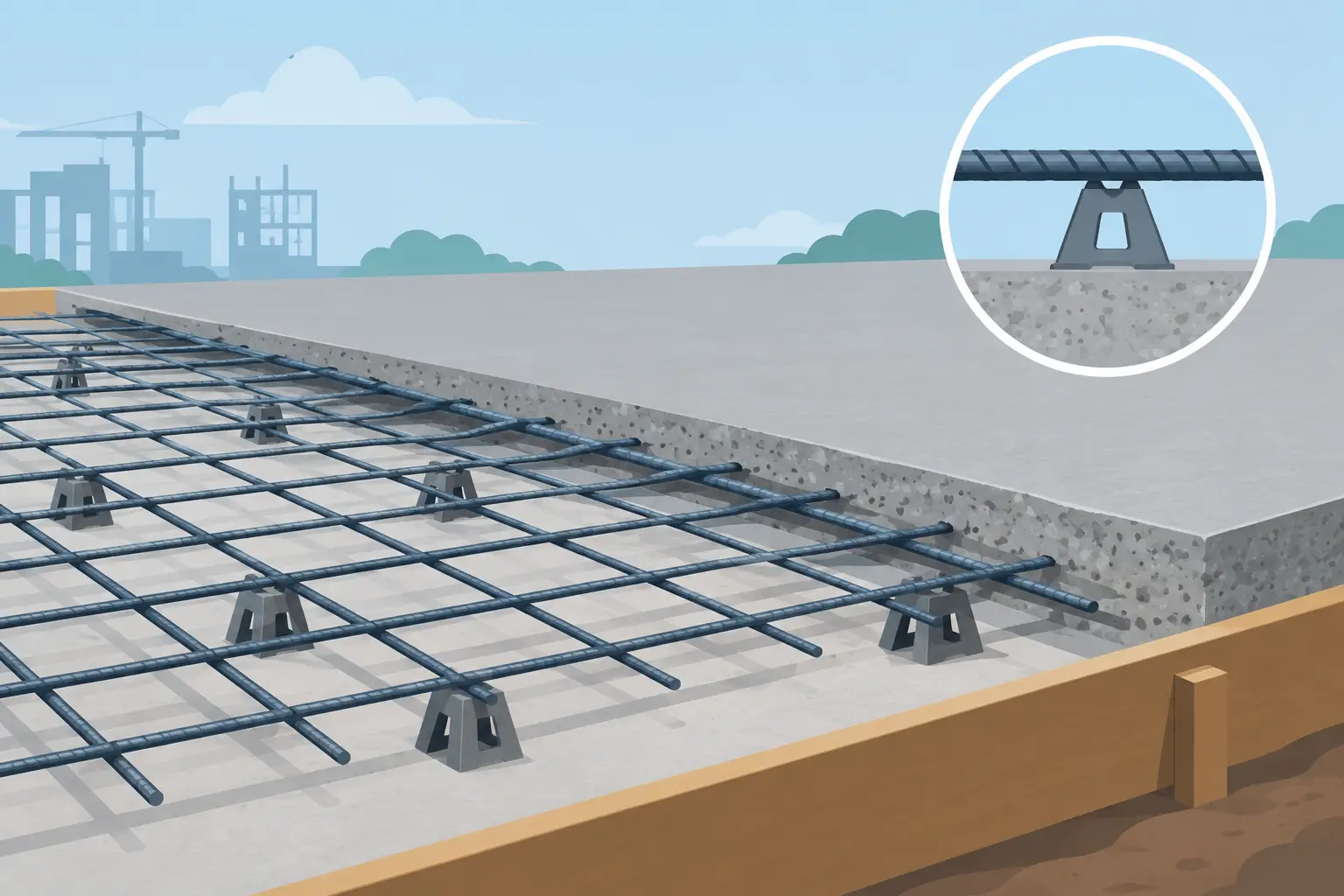
Rebar does not just sit in concrete. It gets cut, bent, tied, lapped, chaired, and positioned to match the design. Grade influences how all that works in practice.
Higher-strength bars can reduce the amount of steel required in some designs, which may ease congestion in heavily reinforced areas. That can help with concrete placement and vibration, especially in beam-column joints, walls with dense mats, or heavily reinforced footings. On the other hand, tighter bend requirements, longer development lengths in some cases, or stricter project-specific rules can offset those gains.
For field crews, the issue is usually simpler. The steel delivered to site needs to match the bar schedule, be clearly identifiable, and be suitable for the intended installation method. If bars are being bent or adjusted on site, or if there is any welding involved, the specification needs to support that. Guesswork is where rework starts.
Reading bar markings without slowing the job down
Every rebar buyer should know the basics of bar markings. Rebar is typically marked to show the producing mill, bar size, steel type, and grade. That marking is one of the quickest ways to confirm what has actually been delivered.
The exact marking system varies, but the principle stays the same. If the paperwork says Grade 60 to a specific ASTM standard, the physical bars and mill certificates should align with that requirement. On a busy site, this check often gets skipped because the bundle looks right and the pour is booked. That is understandable, but expensive if the inspector catches a mismatch later.
For procurement teams, this is why traceability matters. You want bar supplied with clear documentation, not just a verbal assurance that it is the usual stock. The larger or more time-sensitive the job, the more important that becomes.
Where buyers get caught out
Most grade-related problems are not technical. They are ordering and communication problems.
One common issue is assuming bar grade from habit instead of reading the drawings. Another is ordering by size only, such as asking for #4 or #5 bar, without confirming the specified grade and standard. A third is treating substitutions as harmless when lead times tighten. On some jobs, an engineer-approved substitute is workable. On others, it triggers redesign, delays, or rejected material.
Imported steel can add another layer. There is nothing wrong with imported product when it is compliant and properly documented, but buyers need to verify that the supplied material matches the required US standard, not just an equivalent claim. Close enough is not the same as compliant.
Choosing the right bar grade for the job
The safest answer is simple: follow the structural drawings and project specification exactly. That is the baseline. If there is any uncertainty, confirm with the engineer before the order is cut, bent, or dispatched.
From a purchasing standpoint, the right grade is the one that satisfies four things at once. It meets the design requirement, is available in the required sizes and shapes, comes with clear compliance documentation, and arrives when the crew needs it. If one of those pieces is missing, the job can still stall.
For smaller residential work and owner-builders, the risk is usually buying generic bar without checking what the permit set or engineer note actually calls for. For commercial and civil buyers, the challenge is often coordination across schedules, fabricators, and inspection requirements. In both cases, the fix is the same: specify clearly and buy from a supplier that understands reinforcement, not just steel as a commodity.
Guide to reinforcing bar grades for faster ordering
If you want fewer back-and-forth calls and fewer site issues, order rebar with the full description every time. That means bar size, grade, applicable standard, length or shape, quantity, and any fabrication requirements. If the project has special conditions such as seismic detailing, welding, epoxy coating, or strict traceability, say that at the start.
This is also where a specialist supplier earns its keep. A supplier focused on reinforcement can flag a mismatch before the truck is loaded, help confirm whether a standard stock item fits the spec, and move quickly when a job needs urgent delivery. Quality Steel Supplies works in that practical lane – compliant steel, clear pricing, and fast turnaround are not extras on construction jobs; they are the basics.
Rebar grades are not complicated once you strip away the noise. The grade tells you how strong the bar is meant to be. The standard tells you how that bar is made and where it is suited to be used. The job is making sure both match the design, the paperwork, and the material that reaches site.
If you are ordering reinforcement this week, the useful habit is not memorizing every standard by heart. It is checking the drawings, reading the spec, and confirming the grade before the pour is booked. That small step usually saves a much bigger problem later.
Related Posts