Rebar fabrication services reduce field cutting, support accurate placement, and help concrete crews keep schedules, inspections, and deliveries on track.
Concrete Slab Pod Guide for Smarter Slabs
Pods save concrete, speed up slab prep, and help crews build stiffened raft slabs efficiently – but only when the layout, support, and reinforcement are right. This concrete slab pod guide is aimed at builders, concrete contractors, and project buyers who need the practical side clear before materials hit the site.
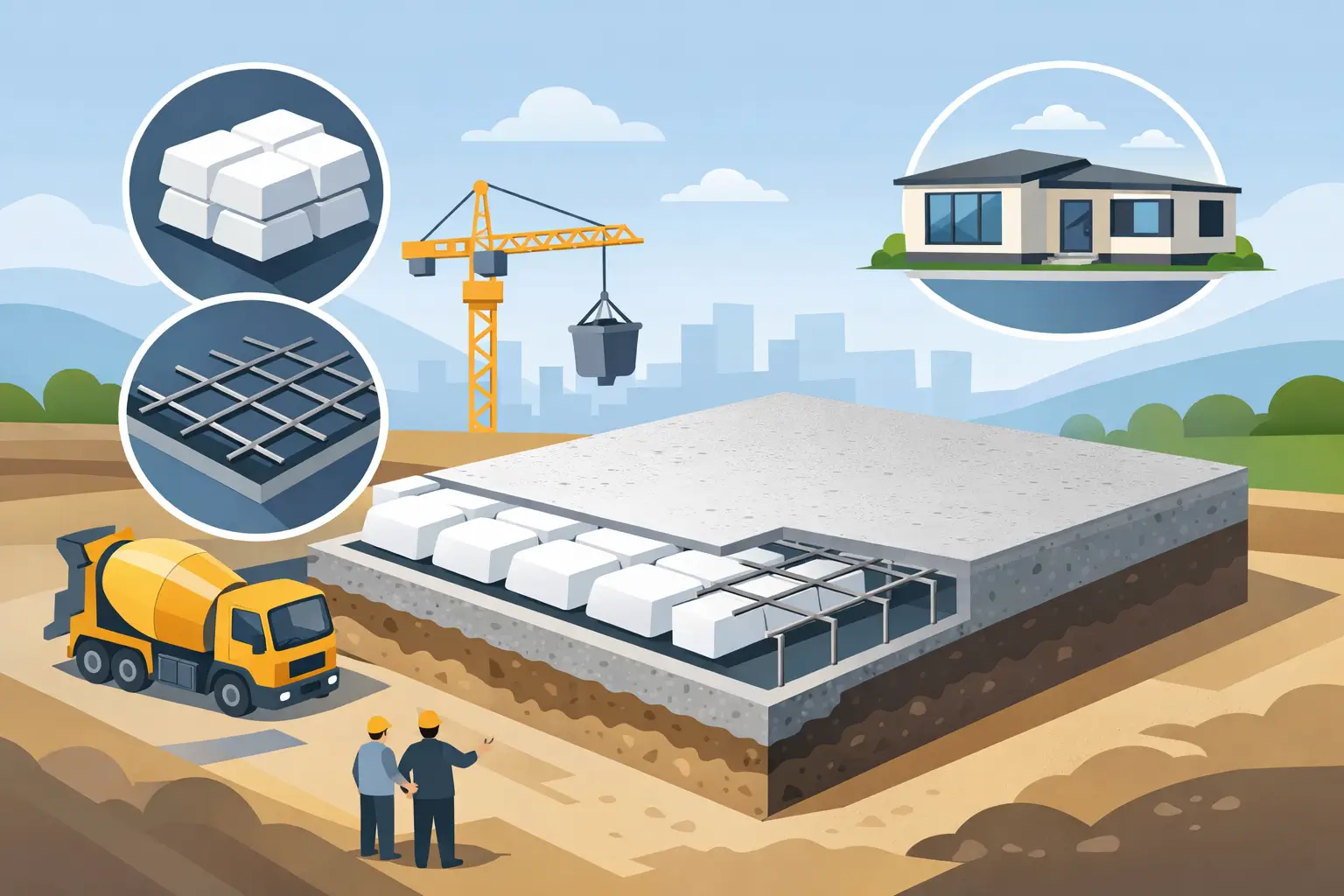
A pod slab system is straightforward in principle. Polystyrene pods create voids within the slab, leaving reinforced concrete ribs and beams to carry loads where the design requires it. That reduces concrete volume compared with a fully filled slab and can make the slab package faster to install. On site, though, the result depends on more than dropping pods into a grid. Set-out accuracy, bar support, edge thickening, moisture control, and sequencing all matter.
What a concrete slab pod guide should cover
The basic job of the pods is not structural in themselves. They are formers. The slab gets its strength from the concrete, reinforcing steel, and the way the whole system is designed and assembled. That distinction matters because pods are sometimes treated like a lightweight filler that can fix poor prep. They cannot.
If the subgrade is uneven, if the pods are not stable, or if reinforcement is not held at the correct height, the slab will not perform as intended. A pod slab can be an efficient system, but it is still a structural slab. The tolerances and the sequencing deserve the same attention you would give any reinforced concrete work.
For most crews, the value of pod systems comes down to three things. They can reduce concrete demand, simplify forming in some slab configurations, and make it easier to build beam-and-rib geometry consistently. The trade-off is that they introduce another layer of coordination. Pod dimensions, beam spacing, mesh laps, trench mesh placement, penetrations, and edge details all need to line up before the pour starts.
How pod slabs work on site
A typical pod slab starts with the prepared base. That usually means compacted fill or subbase trimmed to level, with moisture management and any required vapor barrier installed to suit the design and local code requirements. Once the set-out is established, pods are placed in a pattern that leaves concrete ribs between them and thicker beams where required.
Reinforcement is then fixed into those ribs and beams, often using a combination of mesh, bar, trench mesh, and tied intersections. Bar chairs and supports are what keep steel where the engineer intended. That point gets missed too often. Reinforcement sitting low or drifting during the pour changes cover and can affect durability and structural performance.
Concrete flows around the pods and into the ribs, beams, and slab topping. After curing, the finished slab acts as a structural system, with the pods simply having created void space where full-depth concrete was not needed.
Where pod slabs make sense
Pod slabs are commonly used in residential foundations, extensions, light commercial work, and some landscape or outbuilding applications where the engineering and soil conditions suit the system. They are especially useful where crews want an efficient slab package without the weight and volume of a full mass concrete slab.
That said, not every site is the same. Ground conditions, load paths, moisture exposure, slope, service penetrations, and edge restraints all affect whether a pod slab is the right choice. On problem ground or heavily loaded areas, the engineering may call for different beam depths, different reinforcement, or a different slab approach entirely.
The materials that matter most
Pods get the attention because they are visible, but they are only one part of the assembly. The slab package usually succeeds or fails on the less glamorous items.
Reinforcing mesh and bar do the real structural work. The specified grade, bar diameter, spacing, and lap lengths need to match the drawings. Substituting available stock without checking engineering is where avoidable problems start.
Bar chairs are just as important. If supports are too low, too weak, or too widely spaced, the steel can sag under foot traffic and during the pour. Tie wire matters too, because loose fixing lets the cage move when pump pressure and raking start. Edge forms, vapor barriers, penetrations, and concrete cover all need the same level of attention.
For procurement teams and site supervisors, this is where a reliable supplier makes a difference. Pods, reinforcement, chairs, and tying accessories need to arrive in sequence and in the right quantities. A slab crew waiting on missing trench mesh or extra chairs loses time fast.
Common mistakes this concrete slab pod guide can help you avoid
The first common issue is poor base preparation. Pods do not hide an uneven or soft base. If the support below is inconsistent, the pods can rock, reinforcement heights become harder to control, and the finished slab quality suffers.
The second is treating the pod layout as flexible when it is not. Once the design sets beam widths, spacing, and edge details, pod placement has to follow that plan. Trimming pods on the fly or shifting rows to suit services without checking the structural layout can reduce beam dimensions or interfere with steel placement.
The third is inadequate support for reinforcement. Mesh should not be left sitting on pods or pulled up by hand during the pour as a substitute for proper chairs. That approach is unreliable and usually leaves steel out of position.
The fourth is poor coordination around penetrations and rebates. Plumbing, electrical, sleeves, and step-downs can all interrupt the pod grid. If those details are not resolved before fixing starts, crews end up making rushed changes that affect slab geometry and reinforcement continuity.
The fifth is underestimating pour pressure and movement. Pods need to stay stable while concrete is placed and vibrated. If the system is not fixed and braced properly, components can shift. That is not just messy – it can alter cover, beam shape, and slab thickness.
Getting the sequence right
Most slab issues are sequencing issues before they are material issues. The cleanest jobs usually follow a simple order: confirm engineering and dimensions, prepare and trim the base, set forms and moisture barrier, place pods accurately, fix reinforcement with correct supports, check penetrations and clearances, then inspect before the pour.
That inspection step is where experienced crews save themselves rework. Check pod alignment, beam widths, reinforcement laps, chair spacing, edge cover, and service locations while it is still easy to fix. Once concrete arrives, the window closes quickly.
If you are managing supply, order with that sequence in mind. Pods may arrive first, but reinforcement, chairs, tie wire, and any specialty items should be scheduled so the crew is not short when fixing starts. Quality Steel Supplies works with that reality every day – fast delivery matters because slab prep does not pause politely for missing materials.
What affects slab performance after the pour
Even a well-built pod slab can be let down by poor curing or uncontrolled site traffic. Early-age concrete needs moisture retention and time. If curing is rushed, shrinkage and surface issues become more likely.
Load timing matters too. Heavy materials stacked on a fresh slab, especially near edges or around service penetrations, can create avoidable stress before the slab has reached strength. Site access plans should reflect the pour schedule, not fight it.
Long-term performance comes back to the original basics: suitable design, correct reinforcement placement, adequate concrete cover, proper jointing where required, and sound ground preparation. Pods help shape the system, but they do not replace any of those fundamentals.
Buying pods and reinforcement without slowing the job
For trade buyers, the practical question is usually less about theory and more about supply reliability. You need the right pod size, the specified steel, enough chairs to support the fixing pattern, and clear quantities before the truck rolls.
The safest approach is to order from the drawings, not from memory of the last slab. Pod configurations, beam spacing, and steel schedules change from job to job. A small miss in quantity can create a large delay once the crew is on site and the pour is booked.
It also pays to think in systems rather than line items. Pods, mesh, trench mesh, reinforcing bar, tie wire, and chairs all belong to the same operation. Buying them as disconnected items from different places can look cheaper until one late delivery holds up the whole slab.
A good slab starts before concrete placement. It starts with accurate set-out, compliant reinforcement, stable pod installation, and materials arriving when the crew needs them. Get those parts right, and pod slabs do what they are supposed to do – keep the build moving without cutting corners where structure matters most.
Related Posts