Rebar fabrication services reduce field cutting, support accurate placement, and help concrete crews keep schedules, inspections, and deliveries on track.
Best Asphalt Repair Materials for Lasting Fixes
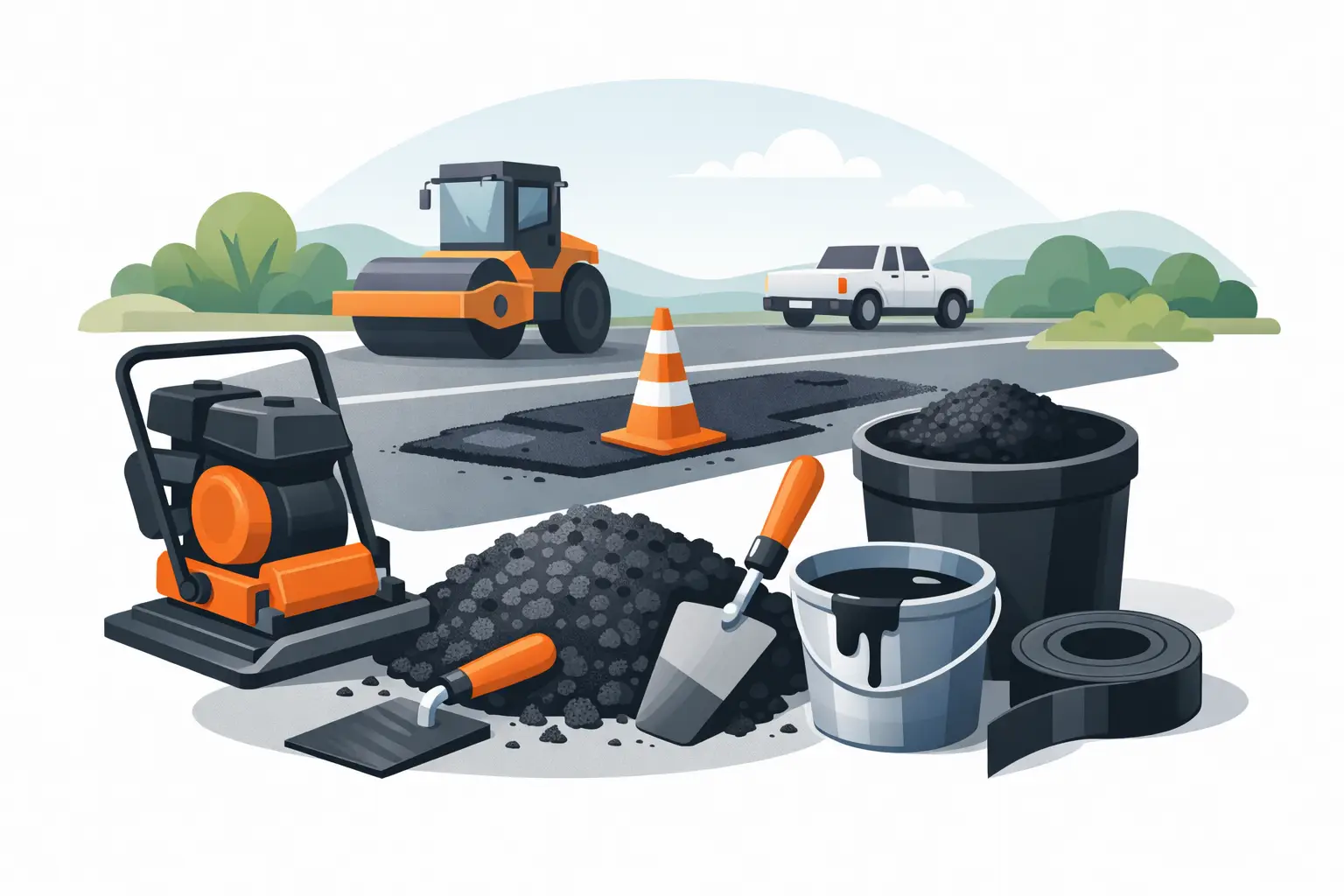
A pothole rarely shows up at a convenient time. It appears when traffic is already moving, water is getting into the base, and the site needs a fix that will hold without wasting a crew’s day. Choosing the best asphalt repair materials comes down to more than just filling a hole. Traffic load, weather, patch depth, edge condition, and how quickly the area needs to reopen all matter.
For contractors, facility teams, and project buyers, the wrong product usually fails in a familiar way. It shoves under traffic, ravels at the edges, or looks fine for a week and then opens back up after the next rain. The right material matches the job conditions, bonds well, compacts properly, and gives you a repair life that makes sense for the budget and the site.
What makes the best asphalt repair materials work
Asphalt repair products are not interchangeable. A cold mix that works acceptably for a temporary pothole in low traffic may not last at all in a truck yard, loading area, or access road with poor drainage. Some products are built for speed, while others are built for longer-term performance.
The best asphalt repair materials generally do four things well. They stay workable during placement, they compact into a dense patch, they resist water intrusion, and they hold under the expected traffic. If one of those factors is weak, the repair usually becomes a callback.
Material selection also depends on whether you are fixing a crack, a shallow depression, edge breakup, or a true pothole with failed base support. Repair compounds can only do so much if the sub-base is pumping, soft, or already washed out. In those cases, the patch material matters, but the prep matters more.
Best asphalt repair materials by repair type
Cold patch asphalt
Cold patch is the most common choice when speed and convenience matter. It is bagged or bulk supplied, easy to store, and can be placed without heating equipment. For emergency pothole repairs, service roads, parking lots, and small maintenance jobs, it is often the practical option.
Its strength is fast deployment. A crew can clean the area, place the material, compact it, and reopen quickly. That makes it useful for reactive maintenance and jobs where hot mix is not available in small quantities.
The trade-off is performance variation. Good cold patch products can hold surprisingly well when installed correctly, but cheaper mixes often loosen early, especially in wet conditions or high-turning traffic. If you are buying cold patch, gradation, binder quality, and proven field performance matter more than the lowest unit price.
Hot mix asphalt
For permanent repairs, hot mix is still hard to beat. If the weather, access, and plant availability line up, hot mix typically delivers the strongest and most durable patch. It compacts better, integrates more naturally with surrounding pavement, and performs well under regular traffic loads.
The limitation is logistics. You need access to hot material, suitable equipment, and enough volume to justify the run. On small jobs, the delay and transport cost can make hot mix less practical than a premium cold patch. But where durability is the priority, especially on roads, drive lanes, and commercial traffic areas, hot mix remains one of the best asphalt repair materials available.
Crack filler and crack sealant
Not every asphalt defect needs a patch. If the pavement is still structurally sound and the issue is cracking, a proper crack filler or hot-applied crack sealant is usually the better choice. These products are designed to stop water getting into the pavement structure, which is what turns a crack into a pothole later.
For narrow non-working cracks, pourable filler may be enough. For wider or moving cracks, a more flexible sealant is typically the better option. Using patch material on linear cracks is usually inefficient and can leave a rough finish that fails early.
Asphalt patch compound for shallow surface repairs
Some repair materials are made for skin patching, leveling low spots, and correcting minor surface damage rather than filling deep potholes. These compounds can work well on shallow defects where you need a smoother finish and better feathering at the edges.
They are not a substitute for full-depth repair. If the area is fractured, pumping, or broken through the base, a surface patch compound will not solve the underlying problem. It may improve appearance short term, but it will not create structure where there is none.
How to choose the right material for the site
The first question is whether the repair is temporary, semi-permanent, or intended to last. That sounds obvious, but it changes the buying decision straight away. If the area is scheduled for resurfacing in a few months, a premium permanent product may not be the best use of budget. If the patch is in a high-traffic entrance that cannot keep failing, short-term material usually costs more in the long run.
Traffic matters just as much as defect size. A small pothole in a warehouse driveway can see more punishment than a larger one in a quiet parking area. Turning movements, braking zones, and truck traffic put more shear stress on the repair, so the material needs to resist displacement.
Weather is another factor. Wet and cold conditions reduce your margin for error. Some materials are more tolerant of damp surfaces and low temperatures, while others need dry conditions and better compaction to perform well. If you are buying for maintenance stock, it makes sense to choose products that crews can use reliably in less-than-perfect site conditions.
Then there is repair depth. Deep potholes often need layered placement and solid compaction. Dumping one thick lift into a deep void and tamping the top is a common reason repairs fail. If the base is soft, the best answer may be to cut out the failed section, rebuild the support, and then patch with an appropriate asphalt mix.
Installation quality still decides the result
Even the best asphalt repair materials will fail if the patch is installed over loose debris, standing water, or broken edges. Product choice matters, but preparation decides whether the material can bond and compact as intended.
The repair area should be cleaned properly. Loose asphalt, dust, mud, and saturated material all weaken the patch. Squared-off edges generally help create a stronger repair than trying to feather into crumbled pavement. Where the product calls for a tack or primer, skipping that step to save time often shortens patch life.
Compaction is where many repairs are won or lost. Whether you are using a tamper, roller, or plate compactor, density matters. A patch that looks full but is not compacted will settle, shove, or open at the edges. For trade crews, that is usually the difference between a repair that lasts through the season and one that needs to be revisited next week.
Cost versus value on asphalt repair materials
The cheapest bag on the pallet is rarely the cheapest repair. Low-cost mixes can be fine for truly temporary work, but if the patch fails quickly, the real cost includes labor, traffic control, site disruption, and repeat visits.
That is why experienced buyers compare total repair cost, not just unit price. A more expensive product that places faster, compacts better, and lasts longer can reduce labor and callbacks enough to justify the difference. This is especially true on commercial sites where downtime carries a direct cost.
There is also a supply angle. The best material on paper does not help if it is unavailable when the job needs doing. Reliable stock, clear pricing, and quick delivery matter because repair work is often reactive. For project buyers and contractors, procurement delays can turn a small pavement defect into a bigger liability issue.
Common mistakes when buying asphalt repair products
One common mistake is buying one product for every repair type. Crack sealing, shallow patching, and deep pothole repair are different tasks. One material rarely handles all of them well.
Another mistake is ignoring traffic class. A product that performs in pedestrian or light vehicle areas may not survive forklifts, delivery trucks, or repetitive turning loads. Buyers also sometimes focus on cure claims without checking prep requirements. Fast reopen time sounds good, but only if the product can still achieve bond and density under actual site conditions.
It also pays to be realistic about repair intent. If the pavement is at the end of its life, no patch material will make it perform like new pavement. In those situations, the best choice may be a dependable interim repair product that safely carries the site until proper resurfacing or reconstruction is scheduled.
For contractors and site buyers, the best asphalt repair materials are the ones that match the defect, the traffic, and the timeframe. Premium cold patch is often the practical answer for fast-response work. Hot mix remains the stronger option for long-term repairs where logistics allow. Crack sealants are the right call when the pavement is still structurally sound and water exclusion is the priority. If you buy with the site conditions in mind and install the repair properly, you give that patch a fair chance to last.
When the job needs to move, dependable supply matters just as much as product choice, and that is usually what keeps a repair from becoming a repeat problem.
Related Posts