Choose concrete fixings for steel posts with more confidence. See anchor types, load limits, base plate factors, and common site mistakes.
Best Material for Pothole Repair
A pothole does not stay small for long. Once water gets into the pavement and traffic starts working the weak spot, what looked like a quick patch can turn into edge breakup, tire damage, and a callback nobody wants.
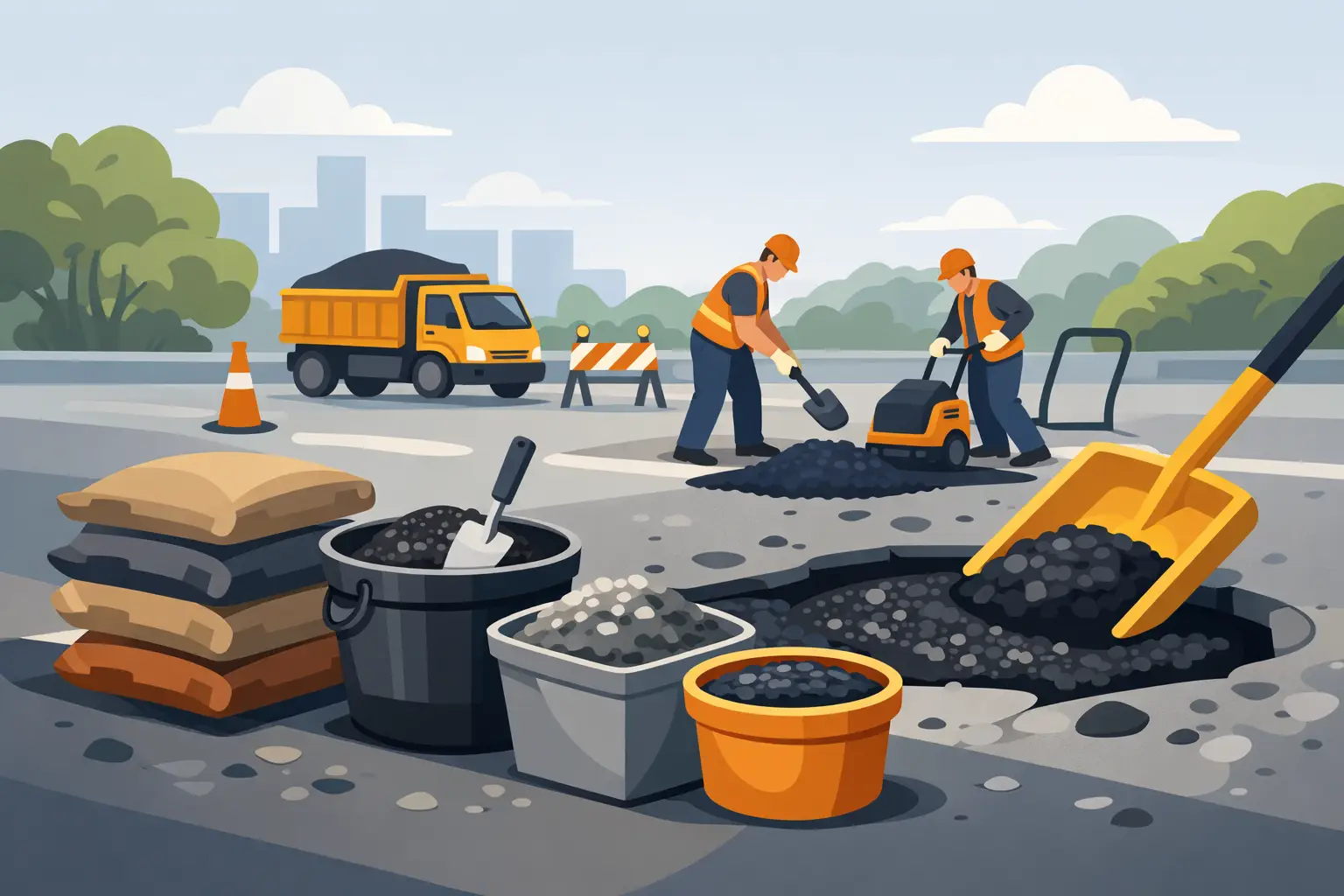
The best material for pothole repair depends on three things – traffic load, weather during installation, and how long the repair needs to hold. For a temporary fix or urgent maintenance, cold mix asphalt is usually the practical choice. For a longer-lasting repair on high-traffic pavement, hot mix asphalt is typically the better option. Spray injection can also work well for municipal-style maintenance when the right equipment is available.
That answer is not complicated, but choosing the wrong material for the conditions is where jobs go wrong. A patch that fails in a week is rarely a material problem alone. It is usually a combination of the wrong product, poor prep, and trying to force a long-term result out of a short-term fix.
What is the best material for pothole repair?
If you need one straight answer, hot mix asphalt is generally the best material for pothole repair where permanent performance matters. It compacts densely, bonds well when installed correctly, and stands up better under repeated traffic loads.
But most crews do not always have the luxury of using hot mix. Plant access, haul time, weather, crew size, and job urgency all affect the decision. That is why cold mix remains one of the most widely used pothole repair materials. It is easy to store, easy to transport, and can be placed fast when a site needs to stay operational.
For many contractors and maintenance teams, the real question is not which material is best in theory. It is which material gives the best result on this job, today, with the conditions and access you actually have.
The main pothole repair materials and where each fits
Cold mix asphalt
Cold mix asphalt is the most practical choice for fast-response repairs. It can be used straight from the bag or container, placed without specialized heating equipment, and installed in colder or wetter conditions than hot mix. If you are dealing with a parking lot, driveway, yard access lane, or an urgent patch on a live site, cold mix is often the material that gets the job done without delay.
Its biggest advantage is flexibility. You can keep stock on hand, send it out quickly, and repair isolated failures without coordinating with an asphalt plant. That matters when downtime costs more than the patch itself.
The trade-off is service life. Cold mix is not usually the top performer for heavily trafficked roads or areas with constant turning movements, braking, or truck loads. It can ravel or deform sooner if the base is weak or the pothole was not cut back properly.
Hot mix asphalt
Hot mix is the stronger long-term option when conditions allow proper installation. It is better suited to roadways, commercial access points, loading areas, and repairs where traffic volume or axle loads are high.
Because it is produced and installed hot, it compacts tighter and creates a more durable patch. That density helps reduce water entry and gives the repair a better chance of lasting through weather cycles and traffic stress.
The downside is logistics. Hot mix has to be placed within the right temperature window, and that means coordinating delivery, crew timing, and compaction. For small reactive repairs, it is not always the most efficient option. For planned maintenance, it usually is.
Spray injection patching
Spray injection uses equipment that cleans the pothole, applies tack, and blows aggregate and emulsion into the void. It is fast and can be effective for road maintenance operations covering multiple defects across a network.
This method is less common for small contractors because it depends on dedicated equipment and trained operators. When done properly, it can be productive and reduce lane closure time. When done poorly, it becomes just another short-lived patch. It is an equipment-driven method more than a bagged-material solution.
Concrete and specialty fillers
Concrete is generally not the best answer for standard asphalt potholes. It is slower to place, slower to cure, and behaves differently from the surrounding pavement. There are cases where rapid-set repair mortars or specialty compounds make sense, especially in rigid pavement or industrial settings, but for asphalt potholes they are not the default choice.
If the pavement is asphalt, the repair material should usually be asphalt-based unless there is a specific engineering reason to do otherwise.
How to choose the best material for pothole repair
Match the patch to the traffic load
Traffic is the first filter. A residential driveway and a truck entrance are not the same job, even if the potholes look similar. Light vehicle traffic gives you more flexibility. Heavy vehicles, forklifts, delivery routes, and repeated turning loads put the patch under far more stress.
If the area takes regular commercial traffic, hot mix is typically worth the extra coordination. If the repair is in a low-speed, low-volume area and needs to be done immediately, cold mix is often the smart call.
Look at moisture and temperature
Weather matters because potholes usually form where water has already compromised the pavement structure. Some materials are far more forgiving than others when the repair area is damp or ambient temperatures are low.
Cold mix performs better than hot mix when conditions are less than ideal, which is one reason it is used so often for emergency maintenance. That does not mean water in the hole should be ignored. Standing water, loose debris, and soft base material still need attention if you want the patch to stay in place.
Be honest about whether the repair is temporary or permanent
A lot of patch failures start with unrealistic expectations. If the requirement is to make the surface safe now and hold until a scheduled resurfacing, cold mix may be the right material. If the expectation is a permanent structural repair in a high-stress location, use a method and material that match that target.
Temporary does not mean poor quality. It means the repair strategy fits the program, budget, and timing of the site.
Material choice is only half the job
Even the best material for pothole repair will fail if it is thrown into a wet, broken hole and left uncompressed. Good prep is what separates a proper repair from a short-term fill.
Cutting or squaring back the damaged area gives the patch clean edges to bear against. Removing loose material matters just as much as the patch itself. If the base under the pothole has pumped out or softened, filling the top without correcting the support problem will usually lead to another failure.
Compaction is the other point that gets skipped too often. Asphalt patching needs confinement and density. A loose patch may look finished when it is placed, but traffic will quickly prove otherwise. Even cold mix needs proper compaction to lock in and resist displacement.
When cold mix is the right buying decision
For many site teams, cold mix is the material that makes operational sense. It is available when you need it, works for smaller repair quantities, and avoids waiting on plant production or minimum order constraints. That is why it remains a staple for contractors, facilities teams, and property maintenance crews.
It is particularly useful for reactive work where the priority is restoring access and reducing hazard exposure fast. If the product is designed for pothole repair, stored correctly, and installed with basic discipline, it can deliver solid results for the right application.
This is also where supply matters. Buying from a trade-focused supplier that understands jobsite turnaround is not just a convenience issue. It affects how quickly the repair gets done and whether you can keep material on hand for the next urgent patch. For crews needing dependable asphalt repair materials alongside other site products, Quality Steel Supplies supports that practical, fast-turnaround model at https://Qualitysteelsupplies.co.nz.
Common mistakes that shorten patch life
Most premature failures come from predictable issues. The hole is not cleaned out. The damaged edges are left ragged. The material is placed too deep in one lift without enough compaction. Or the wrong product is used in an area carrying more load than the patch can handle.
Another common mistake is treating all potholes as surface defects. If water is trapped below the pavement or the sub-base is unstable, the patch is being asked to bridge a structural problem. No bagged repair material can fix that on its own.
Best material for pothole repair on real jobs
On real jobs, the best material is the one that matches the performance requirement and can be installed properly with the resources available. For fast, practical repairs in variable conditions, cold mix asphalt is often the best choice. For high-traffic areas where long-term durability matters most, hot mix asphalt is usually the stronger option.
That is the call experienced crews make every day. They do not buy on claims alone. They look at traffic, moisture, timing, access, and the cost of a redo.
If you approach pothole repair that way, you will usually get better service life from the patch and fewer surprises after the site is reopened. And that is what matters – a repair that holds long enough to suit the job, the budget, and the conditions on the ground.
Related Posts