Rebar fabrication services reduce field cutting, support accurate placement, and help concrete crews keep schedules, inspections, and deliveries on track.
Choosing Driveway Crack Sealer Products
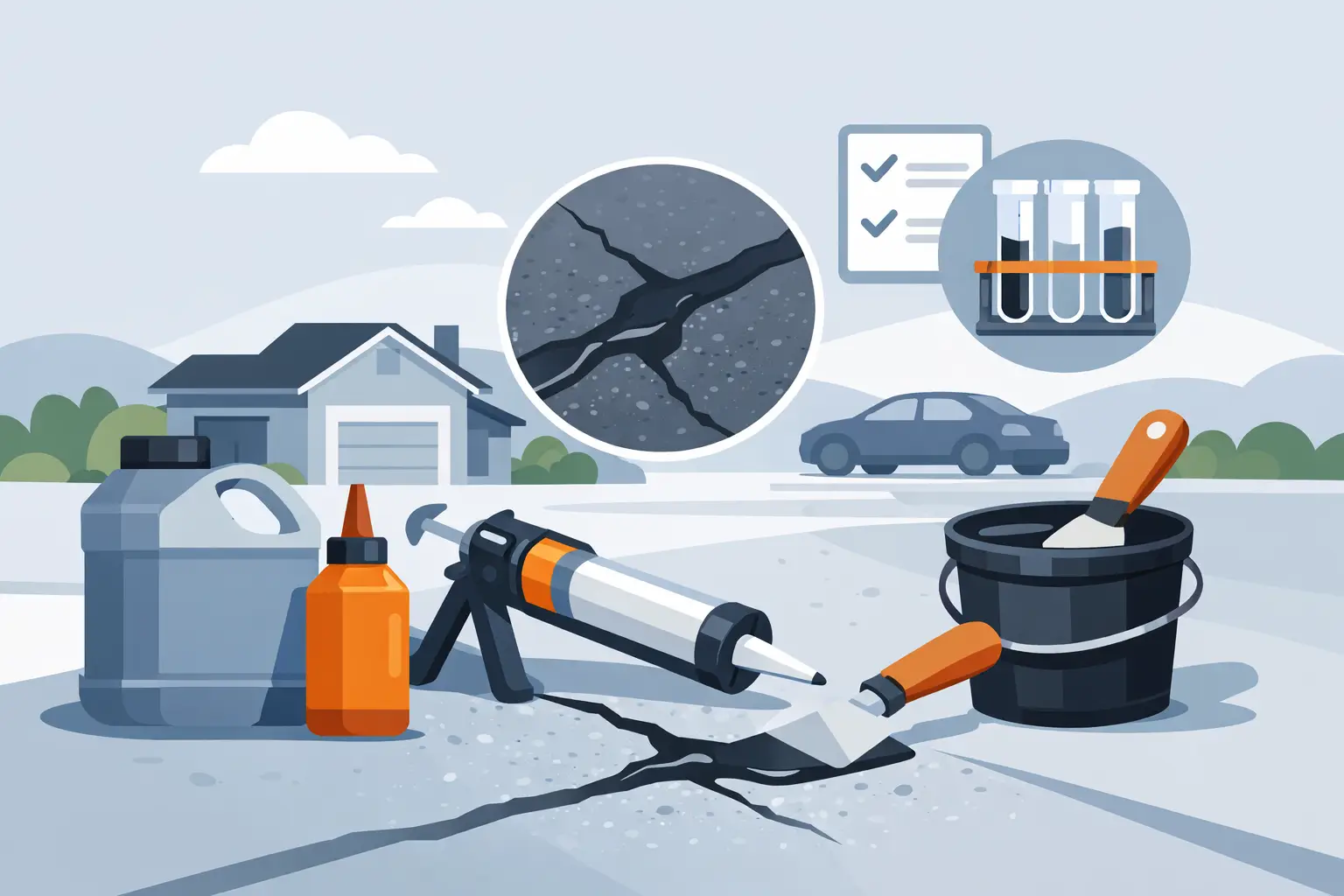
A callback for asphalt repairs usually starts the same way: the crack was small, nobody dealt with it, water got in, and now the edge is breaking out. That is why choosing the right driveway crack sealer products matters more than most property owners expect. For contractors, landscapers, and maintenance crews, the product choice affects not just the finish, but how long the repair holds under traffic, rain, heat, and freeze-thaw movement.
What driveway crack sealer products are meant to do
Crack sealer is not there to make damaged pavement look new. Its job is to keep water and debris out of the asphalt system while allowing some movement as temperatures change. When the right material is used on the right crack, you slow down deterioration and buy time before more expensive patching or resurfacing is needed.
That distinction matters on real jobs. A flexible sealant can perform well on active cracks that open and close with temperature swings. A harder filler might look tidy at first but fail early if the crack moves. Good repair work starts with understanding whether you are sealing a working crack, filling cosmetic surface damage, or dealing with a section that has already failed structurally.
The main types of driveway crack sealer products
Most driveway crack sealer products fall into two practical categories: cold-applied sealers and hot-applied sealants. Both have a place, but they suit different job conditions.
Cold-applied products
Cold-applied crack sealers are the easiest to handle for small to mid-size jobs. They usually come ready to use in bottles, jugs, or pails and are applied without specialized melting equipment. For owner-builders, small crews, and light maintenance work, that lower setup requirement is a real advantage.
The trade-off is performance. Many cold-applied products are best on narrower cracks and lighter traffic areas. Some cure slower than crews expect, especially in cool or damp conditions. Others shrink as they dry, which means a second application may be needed on deeper cracks.
They are often the right choice when access is tight, the repair area is limited, or mobilizing hot-pour equipment is not efficient. But they are not automatically the best long-term option just because they are convenient.
Hot-applied products
Hot-applied rubberized crack sealants are typically used where durability matters more and where crews have the equipment to install them properly. These materials are heated to application temperature and poured into cleaned cracks, where they bond and remain flexible.
For larger driveways, shared accessways, commercial lots, and higher-wear areas, hot-pour products often deliver better service life. They handle movement well and tend to perform better under repeated traffic loading. The catch is that installation standards matter. If the crack is dirty, damp, or poorly prepared, even a strong material can fail early.
Pourable sealers versus trowel-grade fillers
Some products are designed to flow into the crack, while others are heavier-bodied and used more like a filler. Pourable sealers work best when the crack is properly routed or open enough to accept material. Trowel-grade fillers can help on wider, irregular gaps, but they are not always ideal where movement is significant.
This is where many bad repairs start. A wide, deteriorated crack with broken edges may need patching, not just sealing. If the surrounding asphalt is crumbling, no sealer will fix the base problem underneath.
How to choose the right product for the job
The best product depends on crack size, movement, traffic, weather exposure, and how quickly the area needs to reopen.
Start with crack width and condition
Hairline cracking is one thing. A half-inch-wide crack with missing edges is another. Narrow, clean cracks may suit a lower-viscosity sealer. Wider cracks often need a product that can bridge gaps without sinking too far or pulling away after cure.
If the crack has vegetation, loose aggregate, or pumping moisture, preparation is going to decide the result more than the label on the container. Product selection cannot make up for a contaminated repair area.
Consider traffic and load
A residential driveway used by passenger vehicles places different demands on a sealer than a service lane used by delivery vans, trailers, or frequent turning traffic. Heavier loads and tighter turning movements put more stress on the repair.
On light-duty surfaces, a quality cold-applied product may be enough. On busier surfaces, hot-applied rubberized products usually make more sense. If the area sees repeated heavy traffic, it is worth being realistic: sealing may be a maintenance step, not a long-term fix.
Match the product to weather and season
Temperature affects both installation and cure. Some cold-applied products become difficult to place in cooler weather and may stay soft longer than planned. Hot-applied products have wider working reliability, but crews still need dry conditions and the correct pavement temperature for proper adhesion.
If rain is likely inside the cure window, that changes the decision. Fast skin-over times can help, but they are not a substitute for proper scheduling. On live sites, reopening too soon is one of the quickest ways to lose a repair.
Preparation makes or breaks the repair
Even the best driveway crack sealer products will underperform if the crack is not cleaned out first. Dust, weeds, loose stone, old failing filler, and moisture all interfere with adhesion.
Cleanout is not optional
At minimum, cracks should be blown out or wire-brushed clean before sealing. On better-quality repairs, routing may be used to create a more uniform crack reservoir. That gives the sealant a better shape and bond line, which can improve performance.
For trade crews, this is where labor decisions matter. Skipping prep saves time for an hour and can cost a callback later. On commercial or shared-access surfaces, that false economy usually shows up fast.
Depth matters too
Deep cracks should not always be filled solid from bottom to top with sealant. In some cases, backer material is used to control sealant depth and improve movement performance. Overfilling can leave a messy finish and increase tracking under tires. Underfilling leaves weak spots where water can still enter.
The cleanest-looking repair is not always the best one. The goal is a properly bonded seal, not a thick stripe sitting on top of the pavement.
Common mistakes when buying crack sealer
One common mistake is buying by price alone. Low-cost products can be fine for small, low-risk jobs, but on larger repair runs the installed cost matters more than the pail price. If a cheaper material needs multiple applications or fails after one season, it was not the cheaper option.
Another mistake is using crack sealer where patching is needed. If the asphalt is alligator cracked, badly depressed, or breaking apart at the edges, sealing will only dress it up temporarily. The repair method has to match the pavement condition.
Buyers also get caught out by cure time assumptions. A label may say traffic-ready in a certain number of hours, but that usually depends on temperature, humidity, crack depth, and application thickness. If you are planning around a tight handover or reopen window, build in margin.
What contractors and buyers should look for
For trade buyers, product selection is not just about chemistry. It is about supply reliability, packaging, consistency, and whether the material suits the equipment and crew you already have.
Look for clear application guidance, realistic coverage rates, and product information that tells you where the sealer should and should not be used. Consistency between batches matters if you are doing repeat maintenance work across multiple properties. So does availability. A repair program stalls quickly when the specified material cannot be sourced on time.
This is where working with a practical supplier helps. A company that already supports site-driven materials, urgent orders, and straightforward product selection is usually better positioned to help crews get the right asphalt repair items without wasting time. That is the same reason buyers rely on suppliers like Quality Steel Supplies for job-ready materials across demanding construction schedules.
When sealing is worth doing and when it is not
Crack sealing is worth doing when the asphalt is still fundamentally serviceable and the goal is to stop water intrusion early. It is one of the more cost-effective maintenance steps available, especially when handled before edge breakup and potholing start.
It is not worth pretending crack sealer is a full rehabilitation product. If the driveway has broad fatigue cracking, drainage issues, or base failure, sealing may only delay the bigger repair by a short window. Sometimes that is still useful. Sometimes it just shifts cost into the near future.
The practical approach is simple: pick driveway crack sealer products based on actual site conditions, not just ease of application or lowest upfront price. A clean crack, the right sealant, and realistic expectations will usually outperform a rushed repair every time.
If you are buying for upcoming work, treat crack sealing like any other material decision on site – match the product to the job, make sure supply is dependable, and give the repair a fair chance to last.
Related Posts