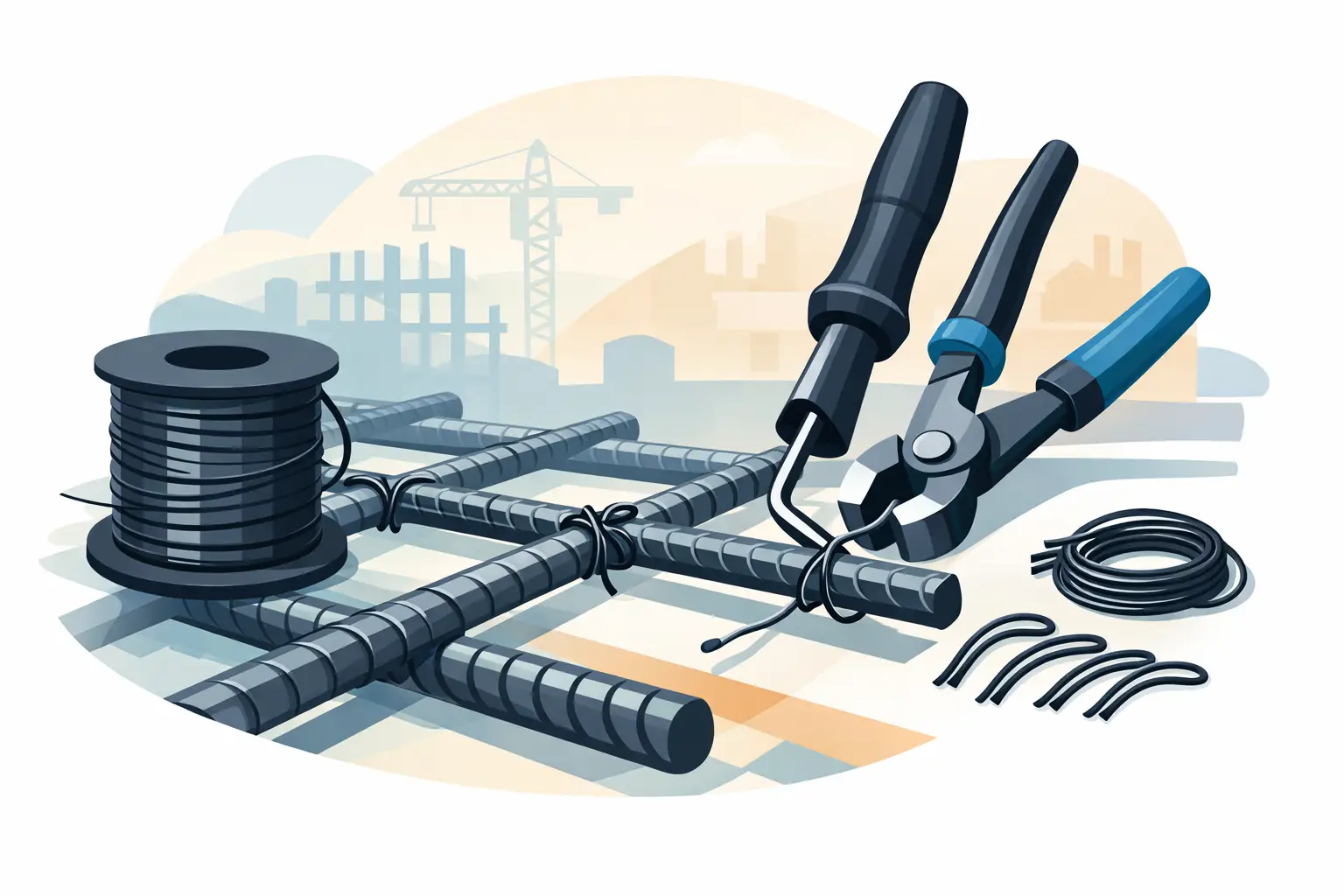
Tie wire for rebar keeps steel secure during placement. Learn wire types, gauges, coatings, and how to choose the right option for site work.
Rebar Mesh vs Rebar: Which One Fits?
A slab pour can go sideways fast when the reinforcement choice is wrong. Order mesh for a job that really needs bar, and you can lose time on site fixing details, adding extras, or dealing with failed inspections. When comparing rebar mesh vs rebar, the right answer usually comes down to the shape of the pour, the load requirements, the level of detail in the design, and how quickly you need to get steel in place.
For trade buyers, this is less about theory and more about fit for purpose. Mesh and bar both reinforce concrete, both help control cracking, and both can meet structural requirements when specified correctly. But they do different jobs well, and knowing where each one makes sense helps keep labor, waste, and procurement under control.
Rebar mesh vs rebar: the basic difference
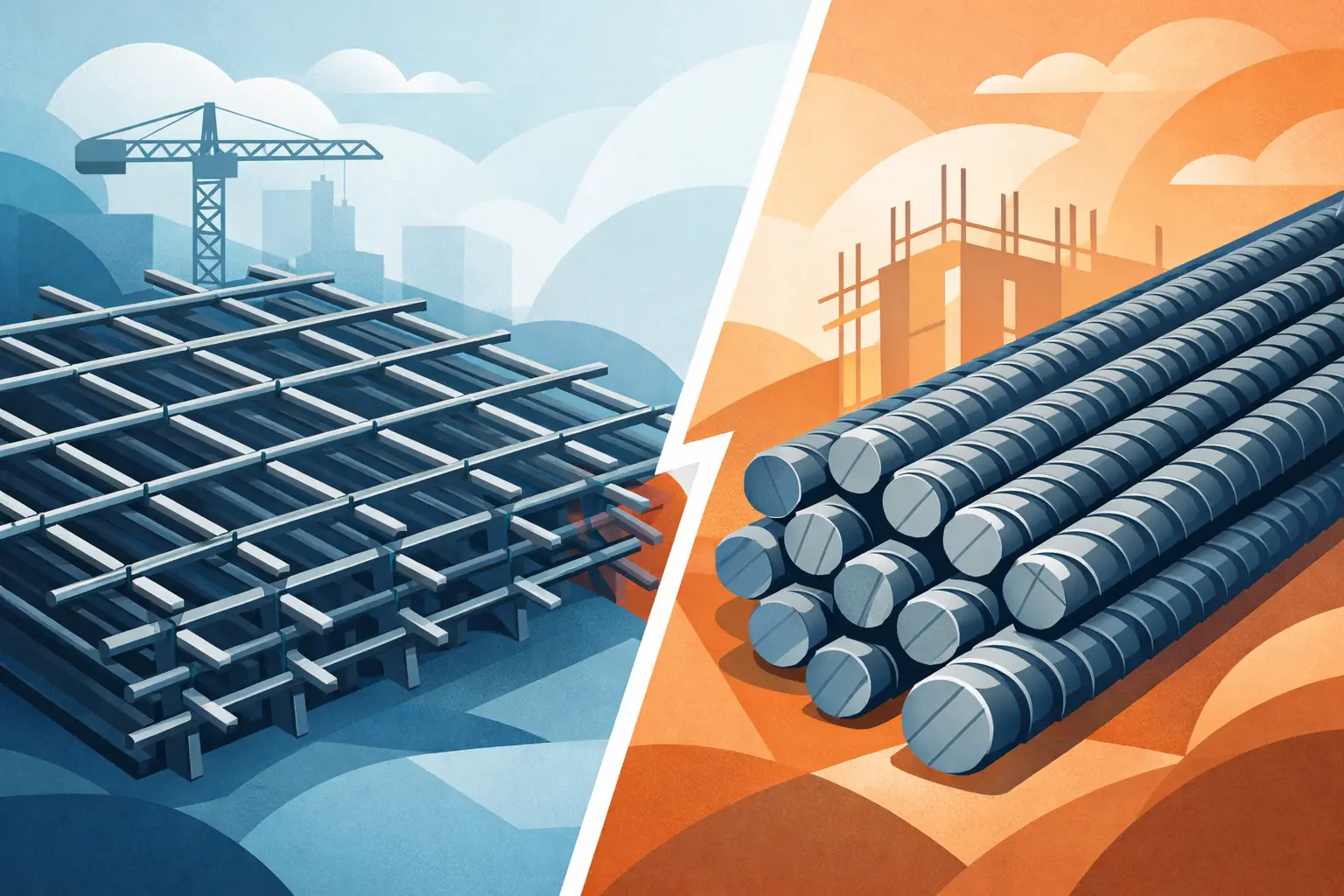
Reinforcing mesh is a factory-welded grid of steel wires or bars, supplied in sheets. It is designed to cover area quickly and consistently, which is why it is commonly used in slabs, driveways, paths, and other flatwork. You get repeatable spacing, faster placement, and less tying compared with laying individual bars across the same area.
Rebar, by contrast, is supplied as individual lengths of reinforcing steel in different diameters and grades. It gives you more freedom to place steel exactly where the engineer wants it, whether that means top steel over supports, extra bars around penetrations, starter bars for walls, or heavier reinforcement in footings and beams.
That is the core of the rebar mesh vs rebar decision. Mesh is efficient for broad coverage. Rebar is better when the reinforcement needs to be shaped, layered, bent, spaced differently, or concentrated in specific zones.
Where mesh usually makes more sense
If you are reinforcing a standard residential slab, patio, pathway, or driveway, mesh is often the practical choice. It is quicker to install over a large area, easier to estimate from plans, and generally more efficient on labor for straightforward pours.
The biggest advantage is coverage speed. A crew can set mesh sheets across prepared subgrade, support them on bar chairs, overlap to spec, and move on. That matters on jobs where time on site is tight and weather windows are short. It also helps with consistency. Because the grid is factory-made, spacing is controlled without measuring and tying every intersection by hand.
Mesh can also be cost-effective on simple slab work, but only when the design actually suits it. Buyers sometimes assume mesh is always the cheaper option. It can be, especially once labor is considered, but not if the job has awkward geometry, multiple cutouts, or a lot of edge detailing. In those cases, sheets may need trimming and patching, which creates waste and slows installation.
For smaller flatwork and repeatable slab areas, though, mesh remains a strong choice because it simplifies procurement and placement.
Best fit jobs for mesh
Mesh tends to suit residential floor slabs, garage slabs, footpaths, light commercial paving, and similar work where reinforcement is spread evenly across a relatively open area. It is also a good fit when your crew needs to move quickly and the reinforcement layout is not overly complex.
The key condition is that the engineer’s design allows for mesh. If heavier point loads, thicker sections, or special detailing are involved, mesh alone may not be enough.
Where rebar is the better option
Individual rebar is the better tool when the structural design needs control, not just coverage. Foundations, thickened edges, strip footings, beams, columns, retaining walls, suspended slabs, and high-load areas all commonly rely on bar because the steel needs to be positioned with more precision.
Bar also handles complex shapes better. If the pour has steps, corners, blockouts, service penetrations, or varying section thicknesses, individual bars are easier to place exactly where they are needed. You can lap, tie, bend, and build cages around the design rather than trying to make sheet mesh fit geometry it was never meant for.
This is also where future load matters. A slab supporting standard residential use is one thing. A slab or footing carrying concentrated loads from walls, machinery, vehicles, or retaining pressure is another. In those situations, rebar gives the engineer and installer more flexibility to build strength into the right locations.
The trade-off is labor. Cutting, tying, spacing, and supporting individual bars takes more time than placing mesh sheets. Material handling can also be slower if there are multiple sizes, bends, and bar schedules on the same job. Still, that extra time is often justified because bar solves detailing problems that mesh cannot solve cleanly.
Rebar mesh vs rebar on labor and install speed
On a clear, open slab, mesh usually wins on speed. Fewer pieces, faster coverage, and less tying all help keep a pour moving. If labor availability is tight, that can be a deciding factor.
Rebar takes longer, especially when the reinforcement arrangement includes bottom steel, top steel, ligatures, hooks, dowels, and congestion around corners or penetrations. But install speed is not the only labor issue. Correction time matters too.
If mesh is used on a job with too many odd details, crews can lose the time they saved. They end up cutting sheets, adding loose bars, trying to hold awkward offcuts in place, and reworking areas that are hard to support properly. In that case, bar may have been the cleaner and faster choice overall, even if it looked slower at first.
That is why experienced buyers usually price both material and site handling, not just the steel itself.
Compliance, cover, and performance
Whether you choose mesh or bar, placement matters just as much as product type. Reinforcement that ends up sitting too low, too high, or without enough cover will not perform as intended. That is why accessories such as bar chairs, tie wire, and stirrups are not side items. They are part of getting the reinforcement system right.
Mesh often gets dragged into position or left flat on the base if crews are rushing. Rebar can end up with inconsistent spacing or poor tying if the setup is not controlled. Neither product is forgiving when installation slips.
For that reason, the rebar mesh vs rebar decision should never be made in isolation from the detailing and placement method. Ask what the engineer has specified, what cover is required, how the steel will be supported during the pour, and whether the crew has the right accessories on hand to keep the reinforcement where it belongs.
Cost is not just the steel rate
Buyers often look at mesh and bar through a price-per-unit lens. That is understandable, but it is not enough. Real job cost includes material, labor, waste, freight, site handling, and the risk of delays.
Mesh can reduce labor cost on slab work and make ordering simpler. Rebar can reduce waste on shaped or heavily detailed pours and avoid the need for site fixes. If a product choice causes a half-day delay, extra fabrication, or urgent top-up orders, the headline steel price stops being the main number that matters.
This is where supply reliability matters too. A contractor may be able to work around a slightly higher line-item price if the material is compliant, available, and delivered when needed. Waiting on missing reinforcement is one of the easiest ways to lose productivity on concrete work.
How to choose the right option for the job
The fastest way to make the right call is to start with the drawings, then work backward from site conditions. If the reinforcement requirement is spread evenly across a simple slab area, mesh is often the practical answer. If the reinforcement needs to follow load paths, build cages, reinforce edges, or deal with structural details, bar is usually the better fit.
It also helps to look at the job as installed, not just as supplied. How much cutting is involved? How many penetrations are there? Is the slab open and regular, or broken up by corners and services? Does the pour require extra bars anyway? If the answer is yes, a mixed approach may be best.
That happens often. Many jobs are not really mesh or bar. They are mesh for the main slab area, with individual reinforcing bar at thickened edges, around openings, in footing beams, and anywhere the design calls for local strengthening. That approach can balance speed with structural control.
For buyers who need reinforcement without back-and-forth, it pays to use a supplier that understands the difference and can help match product to application. Quality Steel Supplies keeps the process practical by supplying reinforcing bar, reinforcing mesh, bar chairs, tie wire, stirrups, and other site essentials with clear pricing and fast delivery support.
The job should decide, not habit
Some crews default to mesh because it is familiar. Others prefer bar because they trust what they can tie themselves. Neither approach is always right. The better decision is the one that matches the slab or structural element, the engineer’s details, and the pace of the site.
If the work is broad, flat, and straightforward, mesh usually earns its place. If the work is structural, detailed, or carrying concentrated loads, rebar usually does. And when a project includes both conditions, using both is often the most efficient move.
The useful question is not which product is better in general. It is which one will get this pour reinforced properly, inspected without trouble, and ready on time.
Related Posts