Plan a bulk reinforcing steel order with fewer delays. Get sizing, quantities, compliance, delivery, and pricing right before steel hits site.
Tie Wire for Rebar: What to Use and Why
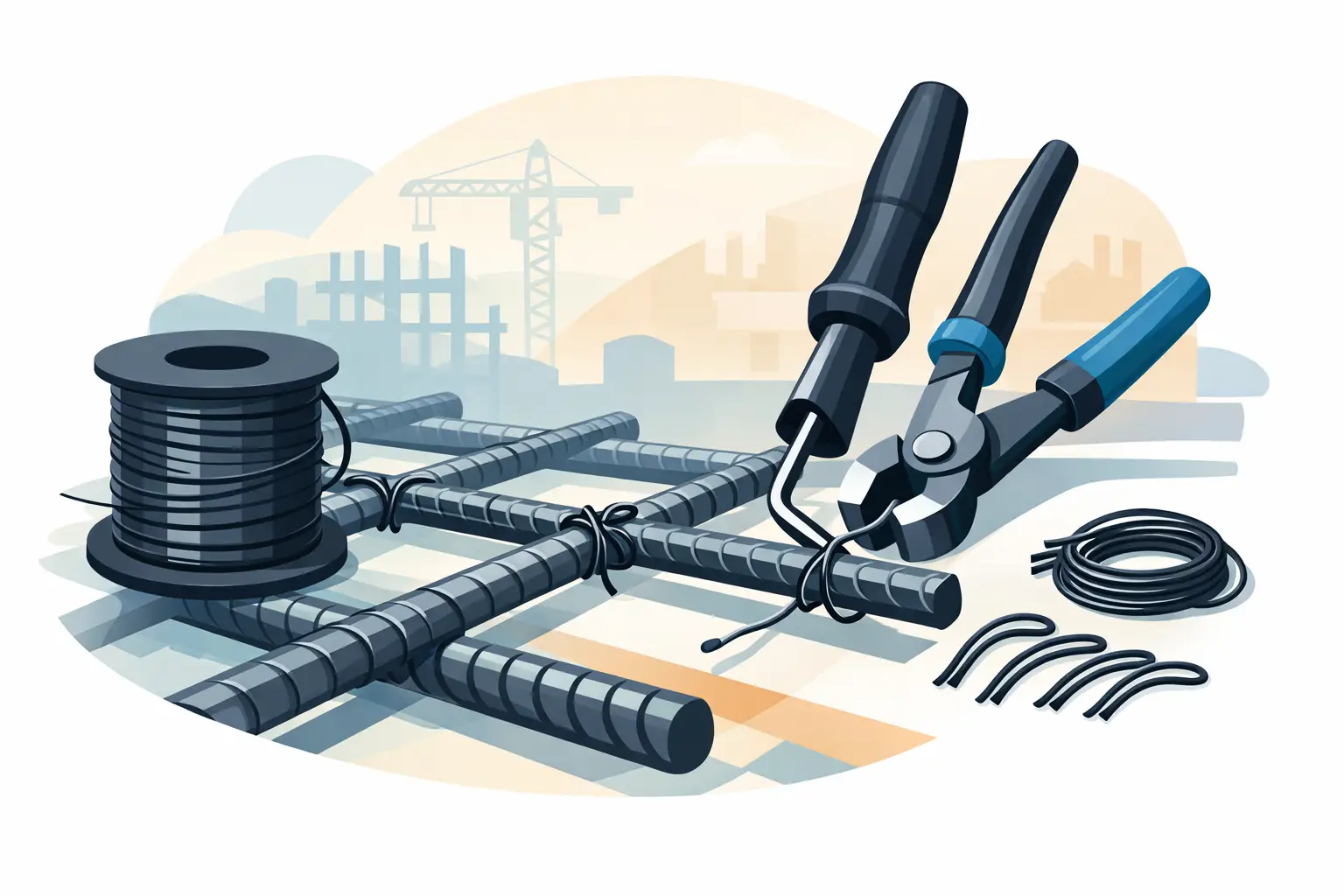
If a rebar cage shifts while concrete is going down, the problem usually is not the bar. It is the tie. Choosing the right tie wire for rebar is a small call that affects cage stability, labor time, and how smoothly placement runs once the pour starts.
On site, tie wire is doing a simple job, but it has to do it consistently. It needs enough strength to hold bars and mesh in position during handling, foot traffic, and concrete placement, without slowing the crew down or creating unnecessary waste. Get that balance right and the steel stays where it was designed to stay.
What tie wire for rebar actually needs to do
Tie wire is not there to provide structural strength to the finished concrete element. Its job is to secure reinforcement before and during the pour so the specified bar spacing, cover, and layout are maintained. That sounds straightforward, but site conditions change what “good enough” looks like.
A small residential slab with light mesh has different demands than a suspended slab, wall cage, footing beam, or heavy civil pour. If reinforcement is being prefabricated, lifted, moved, or walked on heavily before concrete arrives, the wire needs to hold up under more abuse. If the steel layout is simple and there is minimal handling, speed and ease of tying may matter more than extra holding power.
That is why tie wire selection is usually about fit for purpose, not buying the heaviest option every time.
Common types of tie wire for rebar
The most common option on construction sites is black annealed tie wire. It is widely used because it is flexible, easy to twist, and economical for general reinforcement tying. Annealing softens the wire, which makes it easier for crews to work with by hand or with tying tools.
Galvanized tie wire is another option, mainly used where corrosion resistance matters during storage, exposure, or in certain project conditions. It can be stiffer than black annealed wire, so it is not always the fastest to work with, but there are jobs where that trade-off makes sense.
PVC-coated or plastic-coated wire is less common for standard reinforcement work, but it may be specified in environments where the coating helps protect against aggressive conditions or avoids direct metal-to-metal contact in some assemblies. On general building sites, black annealed wire still does most of the work.
If the question is what most crews want for day-to-day reinforcing jobs, soft annealed tie wire is usually the starting point.
Gauge matters more than many buyers think
When buyers ask for tie wire, the next thing that matters is gauge. The right gauge affects both holding capacity and tying speed.
A thinner wire is easier to twist and faster to work with, which can help on larger slab jobs where the tying count is high and the steel is relatively light. The trade-off is that thinner wire can break more easily if over-twisted or if the reinforcement is shifted around after tying.
A thicker wire gives more strength and can suit heavier cages or applications where bars are being moved and lifted after assembly. The downside is that it takes more effort to twist, can be slower for crews, and may be harder to work with in tight intersections.
There is no single perfect gauge for every pour. It depends on bar size, cage complexity, how much the steel will be handled, and whether tying is done by hand or with a reel and tool. For many standard reinforcement jobs, buyers want a practical middle ground – flexible enough to tie quickly, strong enough to keep the steel in place.
Matching wire choice to the job
For mesh in residential slabs and light commercial work, crews usually want tie wire that is easy to pull, twist, and cut without fighting it all day. Speed matters here because the tying volume is high, and the reinforcement layout is often repetitive.
For beam cages, column cages, and heavier bar assemblies, wire strength becomes more important. The cage may be assembled off to the side, lifted into place, adjusted, and tied again. In those situations, wire that is too light can cost more in rework than it saves in upfront price.
Footings and ground beams often sit somewhere in the middle. They need secure tying, but site conditions usually play a big role. Mud, wet weather, uneven excavations, and repeated crew access can all put more strain on tied reinforcement than the drawings suggest.
For civil and infrastructure work, buying decisions are often more about consistency across volume. Large jobs need tie wire that crews already know how to use, available in quantities that keep pace with site demand. Running short on wire halfway through steel fixing is an avoidable delay, but it happens more often than it should.
Hand tying versus tool tying
The tying method should also influence what you order. If the crew is hand tying with nips or pliers, softness and workability matter a lot. Wire that is too stiff slows the process and frustrates the team.
If the job uses reel-fed systems or tying tools, the wire needs to feed cleanly and perform consistently under repetitive use. Not every wire behaves the same once it is running through a tool all day. That is one reason experienced buyers tend to stay with wire they know works for their site setup.
The cheapest wire on paper is not always the lowest-cost option on the ground. If it kinks, snaps, or slows tying rates, labor costs can wipe out any saving quickly.
What to look for when ordering tie wire for rebar
For trade buyers, the best purchase decision is usually the one that removes guesswork. That means checking the wire type, gauge, pack size, and suitability for the way the reinforcement will actually be built and placed.
It also means thinking beyond the wire itself. If you are ordering reinforcing bar, mesh, bar chairs, and tie wire at the same time, supply coordination matters. The job runs better when the consumables arrive with the steel, instead of turning into a second-order issue once fixing has started.
This is especially true on tight programs. A missing bundle of tie wire is a small item in procurement terms, but on site it can stop steel fixing just as effectively as a missing bar size. Reliable supply is part of choosing the right product.
Compliance, quality, and practical site performance
Tie wire does not carry the same attention as reinforcement grade or cover requirements, but poor-quality wire still creates problems. Inconsistent diameter, brittleness, rust from poor storage, or coils that are difficult to handle all affect productivity.
That is why buyers should treat tie wire as a site-performance product, not just an add-on. The goal is not premium packaging or extra marketing. The goal is wire that ties cleanly, holds securely, and shows up when needed.
For project buyers managing multiple materials, straightforward product information and clear pricing help. So does dealing with a supplier that understands reinforcement as a full package rather than as isolated line items. That is where a specialist supplier has an edge, because the advice is tied to how the steel is actually installed.
How much tie wire should you allow for?
Usage varies a lot depending on the reinforcement layout, tying frequency, and crew habits. A lightly tied mesh slab will consume far less wire than a heavily tied cage with close bar spacing and multiple laps. Some crews tie every intersection, while others tie selectively based on the engineer’s requirements and the stability needed during placement.
The safest approach is to estimate based on the reinforcement detail, then add a sensible margin. Under-ordering is usually more expensive than carrying a little extra stock, particularly when delivery timing affects labor continuity.
For repeat contractors, actual site history is the best guide. If a crew consistently uses a certain quantity for slab mesh, footings, or wall cages, those numbers are worth more than a generic allowance.
Why supply speed matters as much as product choice
Most buyers do not spend much time thinking about tie wire until they are short on it. Then it becomes urgent fast. Reinforcement work is sequential. If steel fixing stalls, follow-on trades, inspections, and pours start sliding.
That is why practical supply matters. Competitive pricing helps, but availability and delivery response are what keep the program moving. For Auckland jobs that need reinforcement materials without procurement delays, Quality Steel Supplies focuses on the basics that matter – compliant products, clear ordering, and fast turnaround.
A good tie wire choice is the one that suits the reinforcement, the crew, and the pace of the job. If it ties easily, holds properly, and arrives when the steel does, it is doing exactly what it should.
Related Posts