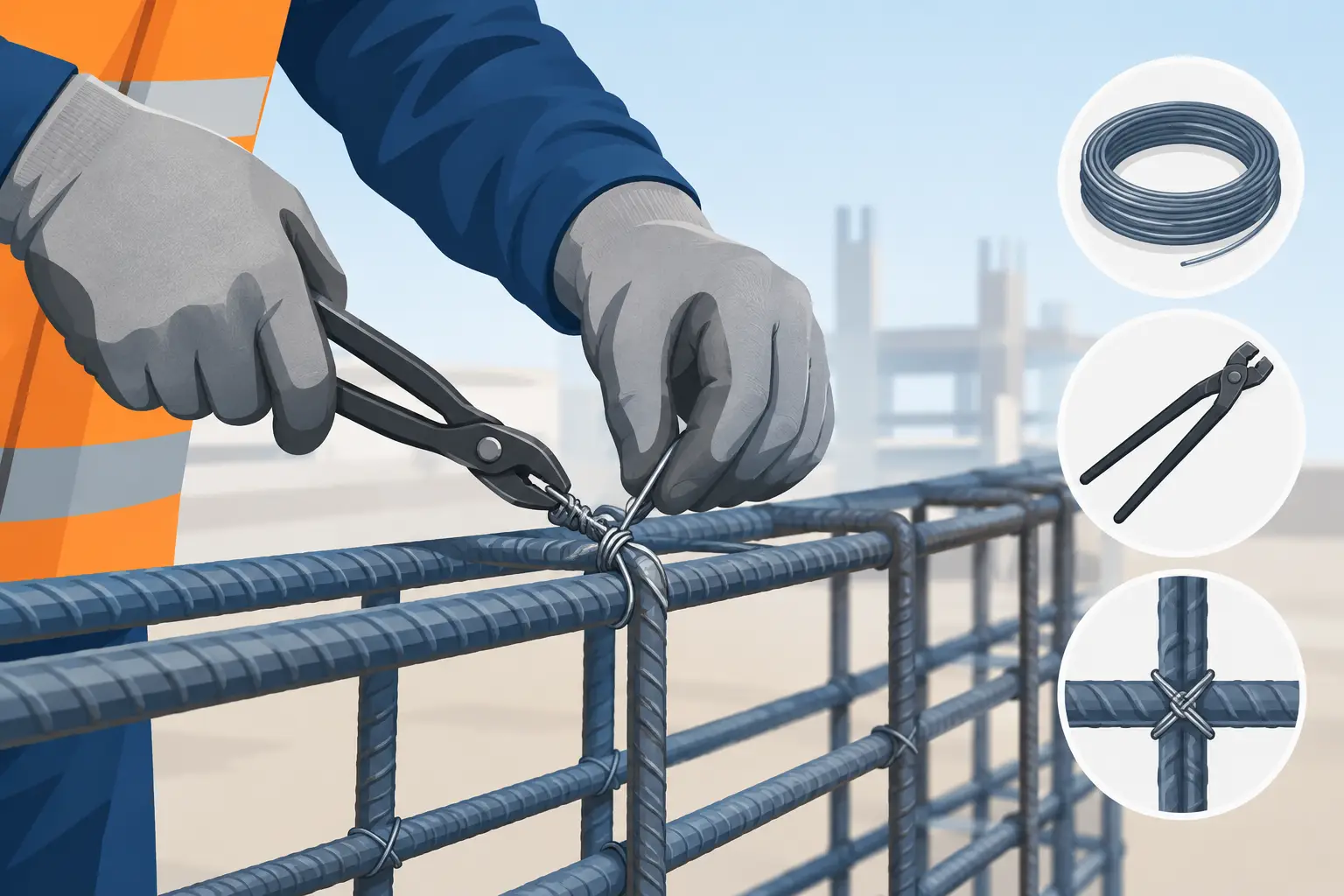
Learn how to install tie wire for rebar mats and cages with the right ties, tools, spacing, and checks to keep steel secure before concrete placement.

Urgent Site Material Ordering Done Right
A crew standing around a slab prep waiting on mesh, chairs, and tie wire is expensive within minutes. Urgent site material ordering is usually triggered by a missed takeoff, a scope change, weather compression, or a delivery that did not match what the site actually needed. The difference between a quick recovery and half a day lost comes down to how clearly the order is built, how practical the supplier is, and whether the materials arriving are right for the job.
On active construction sites, urgency is rarely about one item alone. It is usually a chain reaction. Mesh is short, so the pour shifts. Chairs are missing, so cover cannot be set correctly. Tie wire runs out, so fixing slows down even though the bar is on site. That is why urgent ordering needs to be treated as an operational process, not just a phone call asking what is available.
What urgent site material ordering actually involves
When time is tight, buyers tend to focus on availability first. That makes sense, but availability on its own does not solve much. The material also needs to be compliant, suitable for the specified application, and realistic to unload and use when it lands on site.
For reinforcing work, that usually means confirming the exact bar size, mesh grade, sheet quantity, chair type, tie wire requirement, stirrup dimensions, or fixing specification before the order is dispatched. If polystyrene pods or asphalt repair products are involved, the same rule applies. Fast delivery only helps if the material can go straight into the job without rework or substitutions that create another problem later.
This is where experienced trade supply matters. A supplier handling urgent orders properly should be asking direct questions, not just taking a rushed item request at face value. If the buyer says they need mesh immediately, the next step is not guessing. It is confirming grade, dimensions, quantity, access, and timing.
Why urgent orders go wrong
Most failed urgent orders are not caused by speed. They are caused by bad information. A site may ask for “a few sheets” without confirming the exact mesh type. Someone orders chairs but not the correct height for the specified cover. A procurement contact sends through bar requirements but misses the tie wire and fixings needed to complete installation.
There is also the issue of split responsibility. The person placing the order is not always the person installing the material. On busy projects, details get handed over quickly and assumptions fill the gaps. That is how a fast order turns into a second urgent order two hours later.
Delivery windows create another pressure point. Some sites can receive immediately. Others need coordination around crane time, traffic management, restricted access, or other trades working in the same zone. If urgent delivery is promised without checking those site conditions, the order can still fail even if the truck arrives on time.
How to handle urgent site material ordering without creating a second problem
The fastest way to improve urgent ordering is to make the order more complete before it leaves your hands. That does not mean slowing the process down. It means giving the supplier enough detail to send the correct material first time.
Start with the core product specification. For reinforcement, that means the exact mesh grade or bar diameter, lengths or sheet counts, and any related accessories needed to install it properly. If the job needs chairs, tie wire, stirrups, or concrete fixings, include them in the same conversation. Small omissions cause the biggest delays because they stop installation even when the major material is on site.
Then confirm the site reality. Is there forklift access? Does the delivery need to happen before a concrete booking, after a pump setup, or within a narrow time slot? Can the site take a full load, or does it need staged delivery because space is tight? These details matter just as much as SKU accuracy when the clock is running.
It also helps to say what cannot change. If the engineer has specified a certain grade or size, that should be stated upfront. If substitutions are acceptable in limited cases, define the limits clearly. That saves time on back-and-forth and protects the job from a quick fix that creates compliance questions later.
The materials that most often hold up a job
On concrete and structural work, urgent orders often revolve around reinforcing bar, reinforcing mesh, bar chairs, and tie wire because those items directly affect whether steel fixing can continue. Stirrups and concrete fixings can be just as critical on structural elements where sequencing is tight.
There is a practical lesson in that pattern. Jobs do not usually stop because of the most expensive line item. They stop because of the missing component that makes the installed system incomplete. One bundle of bar without the right chairs or enough tie wire is not really job-ready. The same applies to pods on suspended slab work or asphalt repair materials needed to make an area safe or serviceable quickly.
That is why experienced buyers often order around the task, not around individual products. Instead of asking only for mesh, they think in terms of what the crew needs to keep fixing, placing, or repairing without interruption.
Speed matters, but compliance matters more than people admit
When a project is under pressure, there is always a temptation to accept “close enough.” Sometimes that works for low-risk consumables. For structural materials, it is a poor habit. Reinforcement products need to meet the job requirements, and any mismatch can create delays that are worse than the original shortage.
If the wrong mesh grade arrives, the site has not saved time. If chairs do not provide the required cover, installation may need to be redone. If fixings are unsuitable for the substrate or load condition, the crew may stop again while alternatives are sourced.
Urgent ordering should reduce downtime, not transfer risk downstream. A dependable supplier understands that fast turnaround and compliance are not competing priorities. They need to sit together.
What trade buyers should expect from a supplier
For urgent work, buyers need direct answers. Is the product available? Can it be delivered today? What quantity is ready now, and what might need to follow? Are there any practical alternatives if stock is tight? Clear pricing also matters because rushed procurement still needs cost control, especially across multiple jobs.
A supplier serving contractors properly should be able to move between standard and urgent orders without making the process complicated. That means straightforward product identification, direct human contact, and realistic delivery commitments. Overpromising helps no one on a live site.
This is where a specialist reinforcement supplier has an advantage. When the product range is built around structural and concrete site needs, urgent orders are easier to assemble correctly. The buyer is not trying to explain basic site requirements to a generalist counter. They are dealing with people who understand what mesh, bar, chairs, tie wire, stirrups, pods, and fixings do on the job and why a missing line can stall the whole sequence.
Quality Steel Supplies operates in that practical lane – compliant reinforcement products, clear pricing, and fast delivery support for projects that cannot afford procurement drag.
A better way to reduce urgent ordering in the first place
Not every urgent order can be avoided. Scope changes, damaged material, and scheduling shifts are part of construction. But repeat emergency ordering is often a planning issue. If the same site is constantly short on chairs, tie wire, or standard mesh, the problem may be purchasing in isolation instead of building around the next stage of work.
A better approach is to look one step ahead. If bar is being ordered for the next pour, ask what accessory items will be consumed at the same time. If mesh is going out, check whether enough chairs and wire are going with it. If a commercial or industrial job will need repeat supply, it may be more efficient to align volumes and delivery timing early rather than placing multiple panic orders across the week.
That said, urgency is part of the trade. Good supply is not about pretending every order can be planned perfectly. It is about having a supplier that can respond fast, ask the right questions, and get job-ready material to site without turning speed into another risk.
When the pressure is on, the best urgent order is not the one placed fastest. It is the one that arrives ready to keep the crew moving.
Related Posts