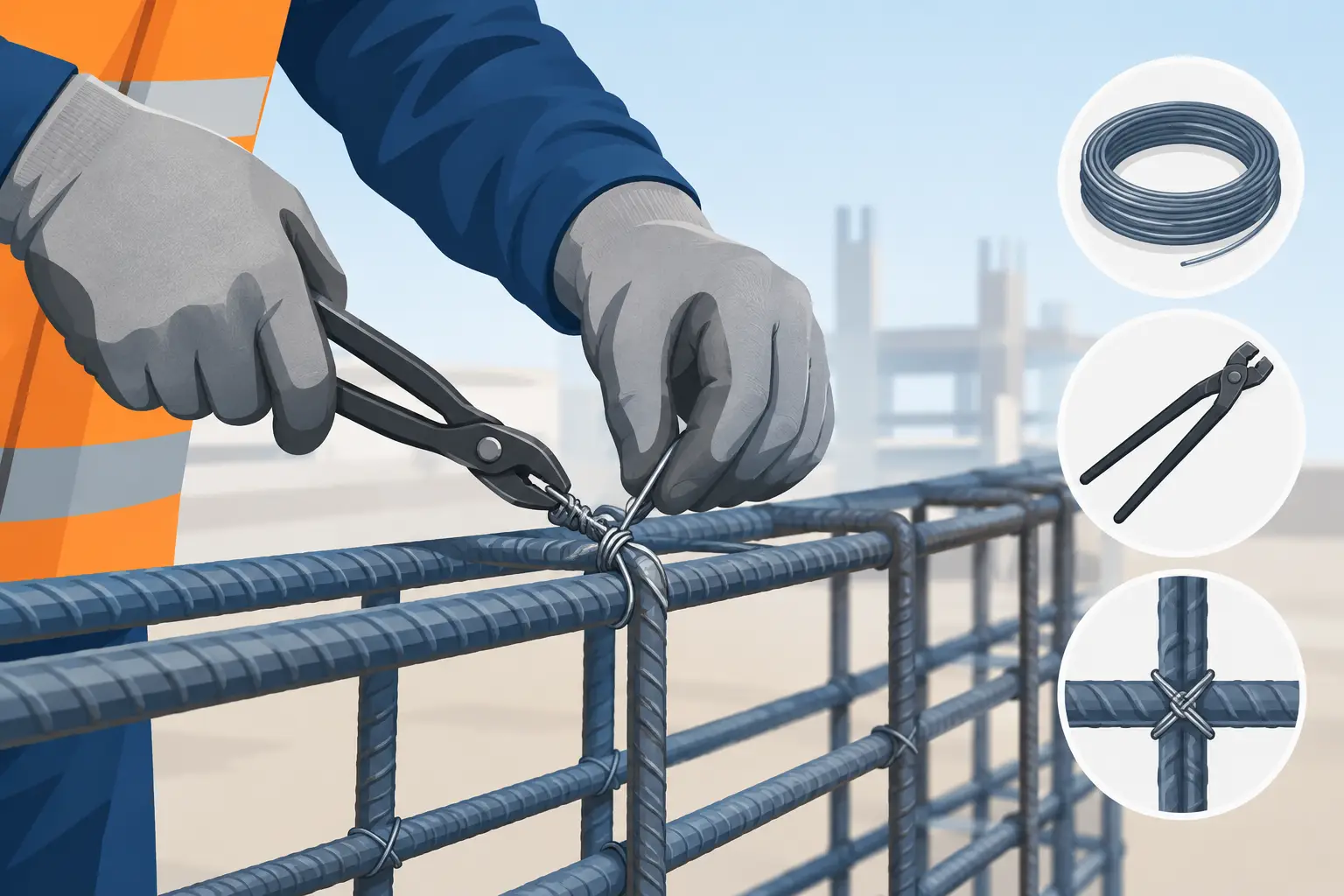
Learn how to install tie wire for rebar mats and cages with the right ties, tools, spacing, and checks to keep steel secure before concrete placement.

How to Choose Reinforcing Mesh
Pour day is expensive to get wrong. If the mesh is underspecified, poorly sized, or not suited to the slab design, the problem does not stay in the truck or on the trailer – it gets buried in concrete. That is why knowing how to choose reinforcing mesh matters before material hits site, not after.
For trade buyers, the right mesh comes down to three things: structural requirements, site practicality, and supply reliability. You need mesh that matches the engineer’s intent, fits the pour setup, and arrives when the crew is ready. Anything less creates delays, rework, or compliance issues that cost more than the steel ever did.
Start with the job, not the sheet size
The first mistake buyers make is choosing reinforcing mesh by habit. A standard residential slab, a driveway, a suspended element, and a commercial floor do not carry the same loads or face the same movement. Mesh selection should always start with what the concrete element is doing.
If you are reinforcing a basic slab-on-ground, the mesh is typically there to help control shrinkage cracking and distribute loads. If you are dealing with heavier vehicle traffic, point loads, edge stress, or commercial use, the reinforcement demand usually increases. In those cases, sheet size alone tells you very little. Wire diameter, spacing, grade, and placement all matter.
This is also where plans and engineering matter more than assumptions. If the drawings call for a specific mesh type, that is the answer. If there is no detailed engineering, then the right choice depends on slab thickness, subgrade condition, intended use, and local code requirements. A footpath for light pedestrian traffic is one thing. A driveway taking repeated vehicle loads is another.
How to choose reinforcing mesh by application
The cleanest way to work out how to choose reinforcing mesh is to match the mesh to the application first, then check dimensions, compliance, and handling.
For residential slabs, contractors often look for mesh that gives reliable crack control and is easy to place quickly across standard pours. For driveways and garage slabs, the expected wheel loads and edge conditions usually justify a closer look at wire size and reinforcement coverage. For paths, patios, and smaller hardscape pours, practical sheet handling can be just as important as the nominal reinforcement itself.
Commercial and industrial work raises the stakes. Higher live loads, machine traffic, racking, or repeated forklift movement can push you into heavier mesh, additional bar reinforcement, or engineered layouts. In those jobs, mesh is rarely a casual purchase. It needs to line up with the structural schedule exactly.
Civil work and landscaping can sit somewhere in the middle. Retaining elements, culverts, pavement sections, and formed concrete features may need mesh in combination with bar, tie wire, chairs, and fixings. The right buying decision is not just the sheet. It is the full reinforcement setup that gets the steel in the right place and keeps the pour moving.
Check the specification before you order
On site, the fastest way to avoid the wrong product is to read the reinforcement call-up properly. Mesh specifications are there for a reason. They tell you the wire size and spacing needed to achieve the required reinforcement area.
If your plans nominate a mesh grade or reference, stick to it. Substituting a lighter sheet because it is easier to source or cheaper per unit can create non-compliance straight away. Going heavier is not always a free pass either, especially if lap lengths, cover, placement, or slab thickness have not been considered.
When there is any doubt, confirm four things before ordering: the required mesh type, sheet dimensions, quantity, and whether accessories are needed for correct placement. Buyers often focus on the mesh and forget the chairs, tie wire, starter bars, or trench mesh required to complete the install properly.
Compliance is not optional
Reinforcing mesh is not a product category where near enough is good enough. It needs to meet the relevant standards and match the structural requirement. That protects the build, the inspection process, and the contractor carrying the risk.
For builders and procurement teams, compliance should be checked as part of the buying decision, not treated as paperwork that can be sorted later. If the source is unclear or the product traceability is weak, that can become a site problem very quickly. A lower price means very little if material gets rejected, delayed, or questioned during inspection.
A dependable supplier should be clear on what the mesh is, what standard it meets, and what related reinforcement products are needed alongside it. That matters just as much on a small residential slab as it does on a commercial program.
Think about handling, transport, and site access
One of the more practical parts of how to choose reinforcing mesh is whether the product can be moved and placed efficiently on your site. Not every job has open access, plenty of labor, or room to store full sheets.
If access is tight, the ideal mesh on paper may create headaches in practice. Full sheets can be awkward on confined residential sites, sloped sections, or jobs where the pour area is behind existing structures. Smaller formats or more carefully planned delivery can save time even if the material cost changes slightly.
This is where an experienced supplier adds value. Fast delivery is only part of the story. The real advantage is getting mesh to site in the right format, at the right time, with the supporting products needed to install it properly. If the job is staged, the supply should be staged too. Ordering all reinforcement at once sounds efficient until half of it is sitting in the weather or blocking access.
Do not ignore placement requirements
You can choose the correct reinforcing mesh and still end up with a poor result if it is not supported and positioned properly. Mesh that ends up sitting on the ground instead of in the designed part of the slab is not doing the job it was selected for.
That is why chairs, spacers, and tying matter. They are not add-ons. They are part of getting the reinforcement to perform as intended. The mesh needs correct cover, proper laps, and stable placement during the pour. If the crew is dragging sheets around after the pump starts, the reinforcement plan has already started to break down.
For procurement, this means buying the complete package, not just the steel sheet count. It also means checking that the site team has enough support accessories to maintain the required position across the pour area.
Price matters, but unit price is not the full cost
Trade buyers are right to compare pricing. Steel is a cost line, and margins are real. But reinforcing mesh should be judged on total job cost, not just sheet price.
Cheaper mesh that does not match spec, arrives late, or requires extra handling can cost more than a correctly supplied product with clear compliance and dependable delivery. The same applies when the wrong sheet size leads to more waste, more cutting, or slower placement. Good buying is not about finding the lowest invoice total. It is about keeping the pour on schedule and avoiding downstream cost.
That is where a supplier like Quality Steel Supplies fits the way trade customers actually buy. The priority is straightforward – compliant steel, clear pricing, and delivery that keeps jobs moving.
Common mistakes when choosing reinforcing mesh
Most reinforcement issues start with a basic purchasing error. The first is buying by memory instead of by drawing. The second is assuming one mesh type suits every slab. The third is leaving the order too late and then compromising on what is available.
Another common problem is forgetting the install side of the equation. Mesh without chairs, tie wire, or the right quantity of accessories can slow the job just as much as not having the mesh at all. It is also easy to underestimate lap requirements and end up short on coverage, especially on irregular pours or staged works.
None of these problems are complicated, but they are expensive because they happen at the worst time – when concrete, labor, and inspection timing are already locked in.
A practical way to make the right call
If you want a clean process, work through it in order. Confirm the structural requirement first. Check the nominated mesh type and quantity against the plans. Review access, handling, and staging on site. Then order the support items needed for placement at the same time.
That approach keeps the decision practical. It also reduces the risk of treating reinforcing mesh like a commodity when it is really a structural material with site-specific demands. Some jobs are straightforward. Others need a closer look. The point is to know which one you are dealing with before the truck arrives.
Good reinforcement buying is rarely about clever shortcuts. It is about getting the right steel, in the right format, on site when the crew needs it. That is what keeps the concrete work moving and gives you fewer problems after the pour.
Related Posts