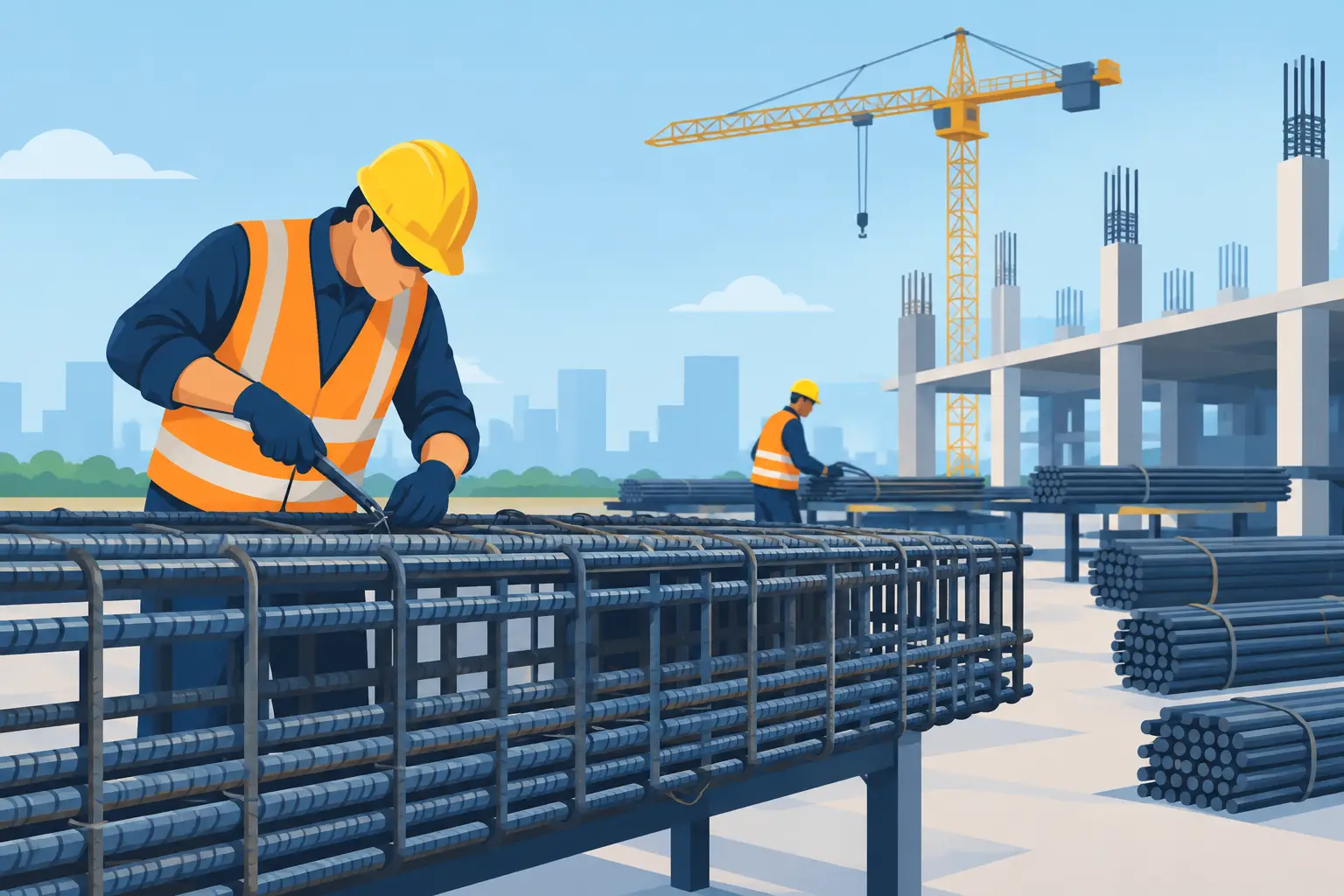
Rebar fabrication services reduce field cutting, support accurate placement, and help concrete crews keep schedules, inspections, and deliveries on track.
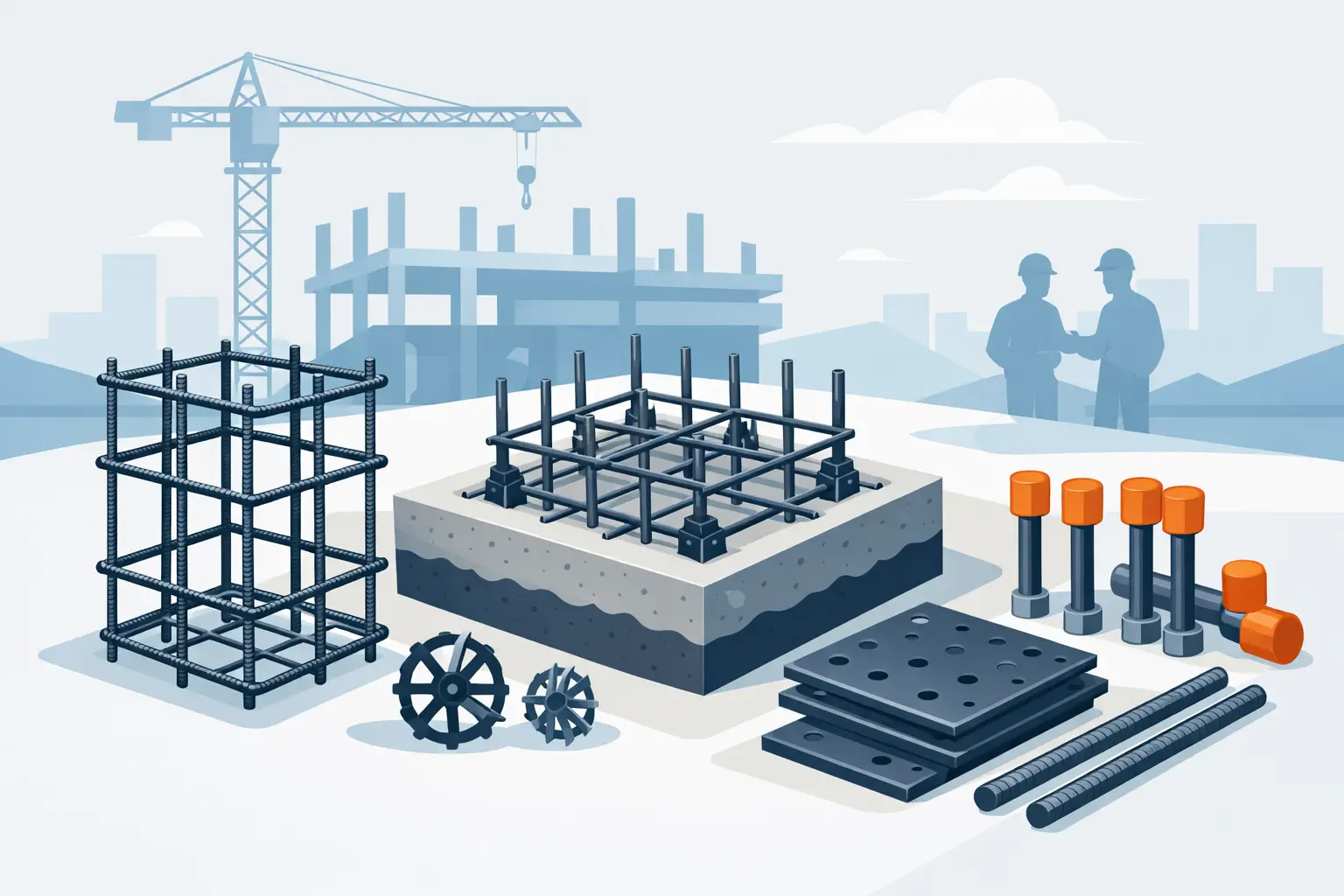
Reinforcement Accessories for Footings
Footing steel rarely fails because the bar size was wrong on paper. More often, the trouble starts on site when reinforcement shifts, loses cover, or ends up sitting where it should not. That is why reinforcement accessories for footings matter. They do the quiet work that keeps bars, mesh, and cages in the right position before and during the pour.
For builders, concrete crews, landscapers, and procurement teams, these are not optional extras added at the end of an order. They are part of getting the footing built correctly the first time. If the steel moves, the footing detail changes. If cover is inconsistent, durability and compliance can become a problem. If the pour is delayed because basic support items were missed, the cost is felt immediately on site.
What counts as reinforcement accessories for footings
When most buyers think about footing reinforcement, they focus on bar, mesh, and stirrups first. Fair enough – those are the main structural elements. But the accessories are what support that steel package and make it practical to install.
In footing work, the core accessories usually include bar chairs, tie wire, stirrups where specified, and in some slab and foundation systems, polystyrene pods or related support items. Depending on the detail, you may also be dealing with spacers and concrete fixings that help hold formwork or reinforcement positions where they need to stay.
The exact mix depends on the job. A simple residential strip footing does not need the same accessory package as a deep commercial footing beam or a pod floor foundation. That is where experience matters. Ordering only the obvious steel and leaving the smaller items until later is one of the fastest ways to create site delays.
Why footing accessories matter more than they look
Accessories tend to be low-cost compared with the steel itself, but they have an outsized effect on the finished result. Bar chairs maintain the designed cover between the reinforcement and the ground or formwork. Tie wire secures intersections so the cage or mat holds its shape during placement. Stirrups keep longitudinal bars aligned and provide the confinement the design expects.
Without that support, the reinforcement can sag, spread, twist, or lift during a pour. On paper, you still have the same quantity of steel. In reality, it is no longer sitting where the engineer intended. That gap between design and installation is where rework starts.
There is also a practical site issue. Crews work faster when the reinforcement package arrives complete. If the bars are on site but the chairs are missing, the whole sequence slows down. If there is not enough tie wire, workers start improvising. Improvisation is usually expensive by the time the concrete truck is booked.
Bar chairs for footing cover and support
Bar chairs are usually the first accessory to think about for footing work because cover is non-negotiable. The chair size needs to match the specified cover, and the chair type needs to suit the application. Ground-supported footings, suspended elements, and slab-related footing details do not all use the same support method.
For strip footings and pad footings, the main job of the chair is simple – keep the steel off the ground and maintain consistent spacing during the pour. If the chair is too low, the reinforcement sits too close to the soil. If it is too high, the steel may not sit within the design zone. Neither problem is hard to avoid if the correct accessory is ordered from the start.
Load matters too. Heavy bar cages need support that can handle the weight without collapsing or tipping over. Lightweight chairs might be fine for smaller residential work, but larger cages or denser reinforcement layouts can require a more suitable chair type and spacing pattern. It depends on the footing detail, bar diameter, and how much movement the cage will see during installation.
Tie wire keeps the cage together
Tie wire is easy to underestimate because it is cheap, small, and easy to carry around the site. It is also one of the items crews notice immediately when it is missing. In footing work, tie wire keeps intersections secure so bars and stirrups stay in position while the cage is handled, placed, and poured.
The right quantity matters. Ordering too little means lost time and partial assembly. Ordering enough means the steel fixer or crew can build and place reinforcement without interruption. For straightforward residential work, the need may be modest. For larger beam footings, pile caps, or commercial foundation details with dense tying points, consumption rises quickly.
There is no value in treating tie wire as an afterthought. If it is on the drawing, or if the cage needs to be assembled and held under movement, it belongs in the same order as the bar and chairs.
Stirrups and prefabricated footing reinforcement
Some footing systems rely on loose bars placed in simple layouts. Others use stirrups to hold beam shapes, maintain spacing, and meet structural requirements. In those cases, stirrups are not just accessories in the casual sense – they are part of the reinforcement assembly and should be treated that way in procurement.
For contractors, the practical issue is fit and readiness. Stirrups need to match the specified dimensions, bar size, and spacing requirements. If they arrive wrong, the cage build slows down or stops. If they arrive right and on time, the footing crew can keep moving.
This is one area where a supplier with reinforcement experience saves time. Footing reinforcement is not just about volume. It is about whether all the pieces work together on site without adjustment, substitution, or guesswork.
Reinforcement accessories for footings in pod systems
Not every footing detail is a conventional trench or pad. In raft and pod-style foundation systems, reinforcement accessories for footings can also include pod-related materials and supports that help create the overall slab and beam layout. Polystyrene pods are part of the system geometry, while reinforcement accessories help maintain steel placement through ribs, edge beams, and thickened sections.
The key point is coordination. Pod systems move quickly when materials are supplied as a complete package. They become frustrating when one category arrives and another is delayed. A footing package should be thought of as a working system, not a shopping list built item by item over several days.
Choosing the right accessories for the job
The best approach is to work backward from the footing detail and pour sequence. Start with the reinforcement design, then ask what is needed to hold that steel in the correct position from delivery through concrete placement. That usually points you straight to chair type, chair height, tie wire quantity, stirrup requirements, and any related support items.
Job size also matters. For a small residential footing, the risk is often under-ordering and losing half a day chasing basic items. For larger commercial or civil work, the risk shifts toward coordination, quantity accuracy, and delivery timing. Both situations cost money, just in different ways.
Ground conditions can affect accessory choice as well. Wet, uneven, or disturbed subgrade may require more attention to how the reinforcement is supported. Heavy cages may need closer chair spacing or a more stable support option. There is no single accessory set that suits every footing.
Common ordering mistakes that slow footing work
The most common mistake is buying reinforcement steel without the accessories required to install it properly. The second is ordering accessories in vague quantities because they look minor compared with the main steel package. The third is leaving them off an urgent delivery and assuming they can be sourced later without affecting the pour.
Another issue is mismatch. Chairs are ordered, but not the right height. Tie wire is included, but not enough for the cage build. Stirrups are listed, but not checked against the actual footing dimensions. These are basic problems, but they happen regularly when procurement is rushed.
A practical supplier helps reduce that risk by keeping the order focused on what the crew needs on site, not just what appears to be the main line items. That matters when timelines are tight and labor is already scheduled.
Supply matters as much as specification
Even when the accessory list is correct, the job still depends on supply. Footing work is sequence-driven. Excavation, formwork, steel placement, inspection, and pour timing all stack on top of each other. If reinforcement accessories arrive late, the whole chain feels it.
That is why dependable stock, clear pricing, and fast delivery are not side benefits. They are part of project control. Quality Steel Supplies works with trade buyers who need reinforcement materials and accessories delivered without unnecessary back-and-forth, especially when a footing job needs to keep moving.
The best footing package is the one that lands on site complete, compliant, and ready for installation. When the accessories are right, the steel stays where it should, the pour goes more smoothly, and the crew spends its time building instead of fixing preventable problems. Before the next footing order goes in, check the small items just as hard as the big ones.
Related Posts