Rebar fabrication services reduce field cutting, support accurate placement, and help concrete crews keep schedules, inspections, and deliveries on track.
What Is Trench Mesh Used For in Concrete?
If you are ordering steel for strip footings or ground beams, the question usually is not just what is trench mesh used for – it is whether trench mesh is the right reinforcement for the detail on your plans. On site, that matters because the wrong product slows the pour, creates fixing issues, and can put compliance at risk.
What is trench mesh used for?
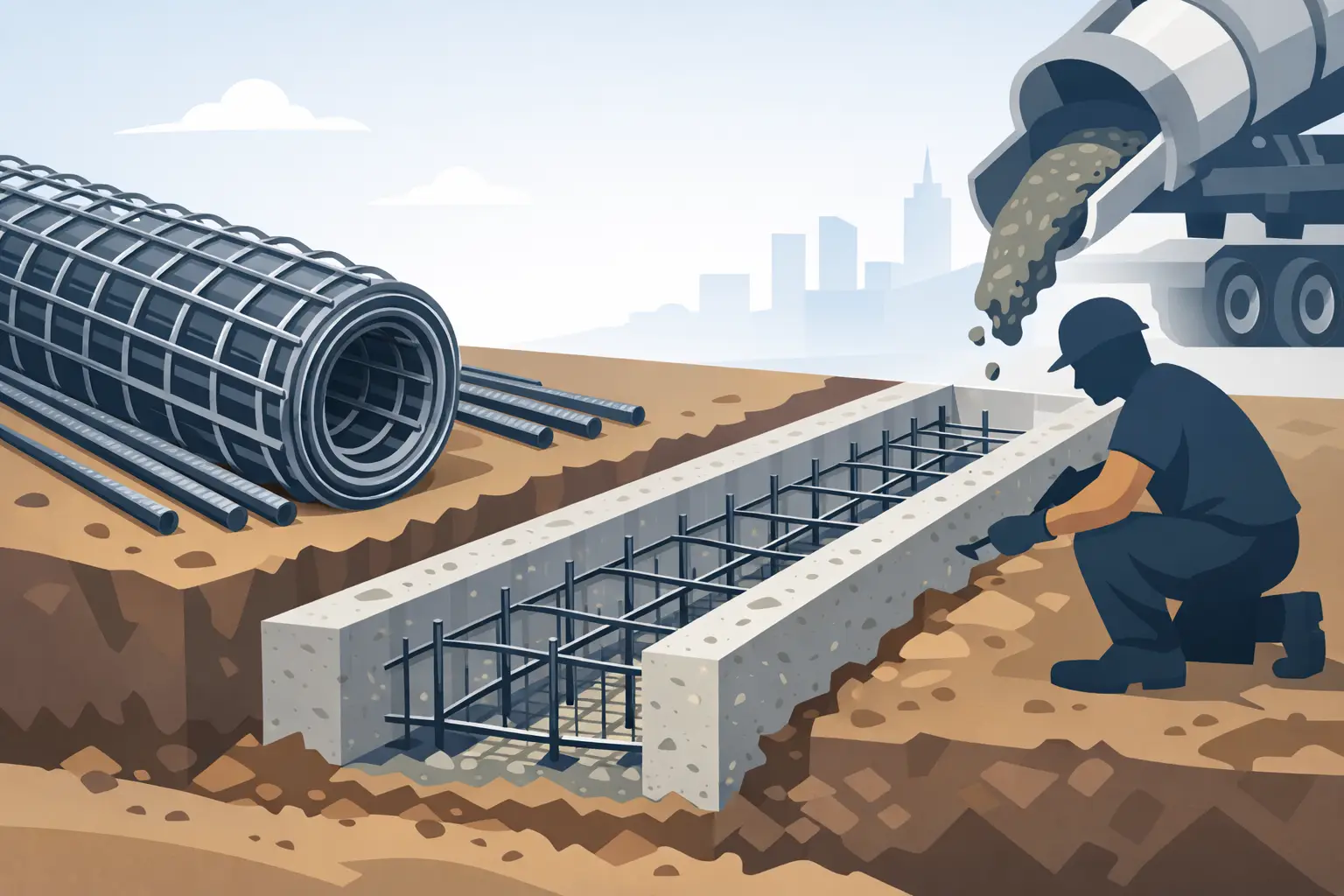
Trench mesh is used to reinforce concrete in long, narrow structural elements such as strip footings, edge beams, and some ground beams. Its job is to add tensile strength where plain concrete falls short, helping the concrete resist cracking, distribute loads more effectively, and perform as designed once the structure is carrying weight.
Unlike standard square reinforcing mesh sheets used across wide slab areas, trench mesh is manufactured in narrower widths to suit trenches and linear concrete sections. That narrower format makes it practical for footing trenches where full mesh sheets would be awkward to place or would require excessive cutting and lapping.
In residential work, trench mesh is commonly specified for house foundations, retaining wall footings, and perimeter beams. In commercial and civil work, it may also be used in linear footings and other continuous reinforced concrete elements where the section is long and relatively narrow.
Why trench mesh is used instead of standard mesh
The main reason is fit. Trench mesh is designed for the shape of the pour. When you are reinforcing a narrow trench, using standard slab mesh usually creates unnecessary waste and extra labor because the sheet width does not match the section.
Trench mesh also helps speed up installation. Crews can place it more efficiently in a footing trench, maintain more consistent cover, and tie laps with less cutting and fewer loose bars. That can make a real difference when excavation, inspections, and concrete delivery are all working to a tight schedule.
There is also a structural reason. Footings and beams are not reinforced the same way as a slab-on-grade panel. The steel arrangement in trench mesh is intended for those linear load paths, where the reinforcement needs to run continuously along the length of the footing or beam.
Typical applications for trench mesh
Strip footings
This is the most common use. Strip footings carry wall loads and transfer them into the ground. Because these footings run continuously under walls, they need reinforcement that follows that line. Trench mesh suits that geometry and helps the footing deal with bending stresses and cracking caused by soil movement, load concentration, or shrinkage.
Edge beams
In slab foundations, edge beams often take higher loads than the slab field. Trench mesh can be specified in these beam sections to provide reinforcement along the perimeter, especially where the design calls for a narrow cage-style solution rather than loose bar assembly.
Ground beams
Some ground beam details use trench mesh where the width and depth suit the product and where the engineer has detailed it that way. It is a practical option for continuous runs, but this always depends on the structural design. Not every ground beam should use trench mesh, and not every trench mesh size suits every beam.
Retaining wall footings and similar linear pours
Where a footing is long and narrow, trench mesh is often the efficient choice. Landscapers and concrete crews use it in many retaining wall base details, provided it matches the engineer’s schedule and site conditions.
How trench mesh helps concrete perform
Concrete is strong in compression but weak in tension. That is the core reason reinforcement exists. When soil movement, settlement, temperature change, shrinkage, or structural loading creates tensile stress, the steel takes that load and limits uncontrolled cracking.
Trench mesh does not stop concrete from cracking altogether. That is an important distinction. Reinforcement is there to control crack width, improve structural behavior, and help the element keep working as intended after minor cracking occurs. If someone expects trench mesh to deliver a crack-free footing in every condition, that is not a realistic expectation.
It also helps maintain continuity along the footing. In a long strip footing, loads are not always perfectly uniform. Openings, corners, wall junctions, and changes in bearing conditions can all affect stress distribution. Continuous reinforcement helps the footing respond more predictably across those changes.
What trench mesh looks like
Trench mesh is usually made from longitudinal wires with smaller cross wires welded across them, forming a narrow reinforcement sheet. The heavy wires run in the direction of the footing or beam, because that is where the main tensile demand typically sits.
Different trench mesh products are available in different widths, wire diameters, and configurations. The right selection depends on the engineering design, not just what fits in the trench. Width, depth of concrete cover, lap requirements, and load demands all need to line up.
That is why experienced buyers usually start with the plan schedule rather than guessing from the excavation size alone. A trench may look like it can take a certain mesh, but if the specified reinforcement, cover, or footing detail says otherwise, the plan wins every time.
Where trench mesh is not the right choice
Trench mesh is not a universal reinforcement product. It is efficient in the right application, but there are plenty of cases where standard mesh sheets, reinforcing bar, or fabricated cages are the better option.
For broad slab areas, slab mesh is generally the correct product because it gives better coverage across a wide surface. For deep beams, complex footing details, high-load columns, or heavily reinforced structural members, loose bar or custom cages may be required instead. If the design includes specific bar spacing, stirrups, hooks, or layered reinforcement, trench mesh may be too limited for the detail.
This is where site efficiency and compliance have to be balanced. Trench mesh is quick, but only when it matches the design intent. Using it as a shortcut where the detail calls for something else usually creates rework, failed inspections, or both.
Installation matters as much as product selection
Even the correct trench mesh will underperform if it is installed badly. The most common issues on site are poor cover, unsupported mesh sitting too low in the trench, inadequate lap lengths, and contamination from mud or collapse in the excavation.
Mesh needs to be supported properly so it stays in the correct position during the pour. That usually means using suitable bar chairs or other approved supports to maintain the specified cover from the ground and side faces. If the steel ends up hard against the soil, the concrete section will not perform as intended and durability can suffer.
Laps also matter. Where one length of trench mesh joins another, the overlap must follow the project specification or relevant standard. Too short a lap weakens continuity. Too much guesswork wastes material and can create congestion.
Crews also need to pay attention at corners and junctions. Linear reinforcement is straightforward on a straight run, but footing intersections often need extra bars or specific detailing. That is not something to improvise once the truck is booked.
Compliance and specification are non-negotiable
For trade buyers, the real question is usually less about what trench mesh is used for and more about whether the supplied mesh matches the engineer’s call-up and applicable standards. That is what keeps inspections moving and avoids last-minute substitutions.
You want to confirm the mesh designation, dimensions, steel grade, and quantity before delivery. It is also worth checking stock lengths, handling access, and whether the job needs complementary items such as tie wire, chairs, or additional reinforcing bar for laps, corners, and starters.
On faster-moving jobs, supply reliability matters just as much as technical fit. There is no advantage in choosing the right trench mesh on paper if it cannot get to site when excavation is open and the pour window is tight. That is why many contractors prefer dealing with reinforcement suppliers who understand footing schedules, common beam details, and the urgency that comes with concrete work.
Choosing trench mesh for the job
The practical way to choose trench mesh is simple. Start with the drawings, confirm the specified type and quantity, check the trench dimensions and cover requirements, and make sure the rest of the reinforcement package is aligned with the pour sequence. If the detail is unclear, get it clarified before steel is ordered or cut.
For owner-builders and smaller buyers, this is one area where trying to substitute by eye can cost more than it saves. Trench mesh may look straightforward, but reinforcement mistakes are expensive once concrete is placed.
Quality Steel Supplies works with buyers who need reinforcing steel that is compliant, clearly priced, and ready to move without unnecessary delays. On footing and beam work, that kind of straightforward supply support can make the difference between staying on program and losing a day to material issues.
The short answer is that trench mesh is used for reinforcing long, narrow concrete elements, especially footings and beams. The more useful answer is this: it works best when the product, placement, and specification all match, because in concrete work, the steel you cannot see is often what decides whether the job holds up the way it should.
Related Posts