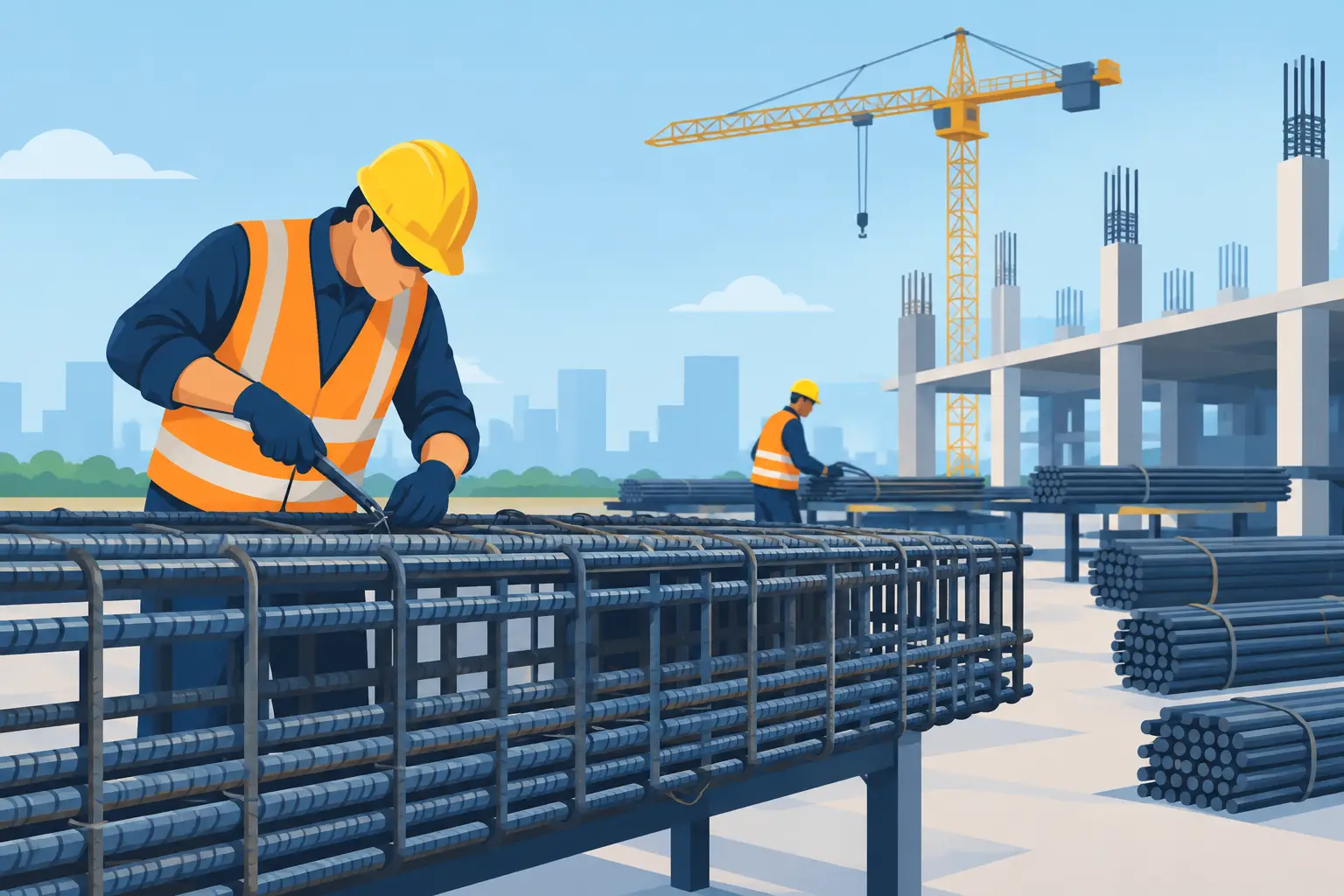
Rebar fabrication services reduce field cutting, support accurate placement, and help concrete crews keep schedules, inspections, and deliveries on track.
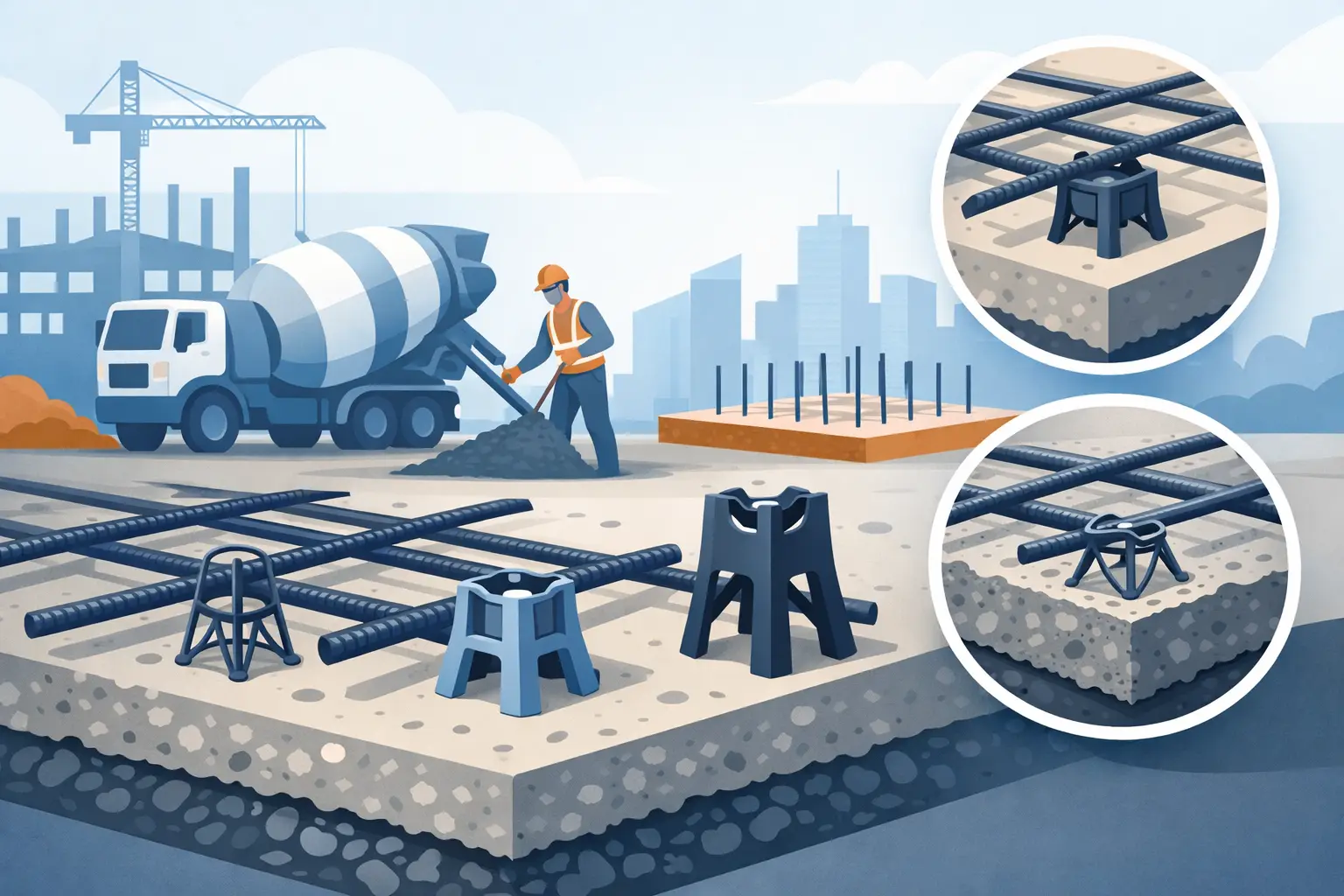
Bar Chairs Explained for Concrete Jobs
If steel ends up sitting on the ground, pushed too close to the formwork, or floating out of position during a pour, the whole reinforcement setup starts going off spec. That is where bar chairs come in. This guide to bar chairs explained covers what they do, why they matter, and how to choose the right type so your mesh and rebar stay at the correct height and concrete cover stays where it should.
What bar chairs actually do
Bar chairs are support components used to hold reinforcing steel in the right position before and during concrete placement. Their main job is simple – maintain cover and keep reinforcement stable.
On site, that matters more than it sounds. Reinforcement that shifts too low can end up with insufficient cover from the slab surface. Reinforcement that sits too high can create the same issue from the bottom side. Either way, you risk non-compliance, reduced durability, and unnecessary rework.
A bar chair is not just a spacer. It is part of the system that helps the slab, footing, driveway, wall, or suspended element perform as designed. If the reinforcement schedule is right but the steel moves during the pour, the install is still wrong.
Bar chairs explained by function
The easiest way to think about bar chairs is by what they are supporting and where they are being used.
In slab-on-grade work, chairs are often used under reinforcing mesh to maintain a consistent gap between the mesh and the subbase. In thicker concrete or engineered work, they may support bar mats, top steel, or layered reinforcement where one level of steel needs to be held above another.
On suspended slabs, precast elements, or more complex structural pours, chair selection gets more specific. Load from foot traffic, pump lines, and concrete placement can all affect whether a light chair will hold up or collapse under pressure.
That is why chair choice should match the reinforcement layout, concrete depth, and site conditions – not just whatever is closest in the truck.
Why correct cover matters
Concrete cover is the distance between the outer surface of the concrete and the embedded steel. That cover protects the reinforcement from moisture, corrosion, fire exposure, and long-term deterioration.
If cover is too shallow, the steel is more exposed to the environment and can corrode earlier. If cover is too deep, the reinforcement may not perform as intended structurally because it is no longer sitting in the design position.
Bar chairs help hold that cover consistently across the pour. They are especially important on jobs where mesh can sag under its own weight or where site traffic before the pour can push steel down into the base. A few millimeters might not look like much on site, but across a slab or structural element, poor support adds up fast.
Common types of bar chairs
When people search for bar chairs explained, they are usually trying to sort out which type they actually need. The main difference comes down to the reinforcement being supported and the environment the chair is sitting in.
Plastic bar chairs are common for many slab applications. They are lightweight, quick to place, and suitable where the specified use and load conditions match the product. They are widely used under mesh and light reinforcing setups.
Wire bar chairs are often used where more strength or different support geometry is required. They can be practical for heavier reinforcement or applications where the chair must handle more load during installation and pouring.
There are also specialized chairs for trench mesh, top mesh, or multi-level reinforcement. Some are designed to clip onto steel. Others are made to sit flat on vapor barriers or compacted base material with better stability.
The right choice depends on the job. A chair that works well on a standard residential slab may not be suitable for a commercial pour with heavier bar, deeper concrete, or more site traffic across the reinforcement before placement.
How to choose the right chair height
Chair height should match the required concrete cover and the position of the steel in the element. That means you are not choosing a chair based on guesswork or whatever keeps the mesh roughly off the ground. You are choosing it based on the engineer’s details and the slab or footing build-up.
For example, if mesh needs to sit at a certain depth within the slab, the chair has to hold it there after workers walk it, the pump starts, and the concrete begins flowing. A chair that is too low leaves the steel under-positioned. A chair that is too high can push it too close to the surface.
This is where mistakes happen on smaller jobs. Some crews rely on pulling mesh up during the pour instead of supporting it properly beforehand. That can work unevenly at best, and it is difficult to prove consistent cover across the slab afterward.
Spacing matters as much as height
A correctly sized chair still fails if it is spaced too far apart. Reinforcing mesh and bar need enough support points to prevent sagging, rocking, or collapse under load.
Chair spacing depends on the reinforcement type, the chair strength, and what the steel will be exposed to before and during the pour. If workers are walking over the mesh, if pump hoses are dragged across it, or if the subbase is uneven, wider spacing can quickly become a problem.
There is no universal spacing rule that fits every job. It depends on the product and application. What matters is that the reinforcement remains stable and at the specified position throughout the pour, not just when the chairs first go down.
Bar chairs explained for real site conditions
The clean version of a slab install on paper is rarely what happens in the field. Vapor barriers wrinkle. Basecourse has high spots. Mesh sheets overlap. Bars bunch up at laps and intersections. Then the pour starts and everything gets tested.
That is why chair performance in real conditions matters. A chair may be technically the right height but still be the wrong product if it sinks into soft ground, tips on plastic, or cannot handle concentrated load at mesh laps.
This is also why cheaper is not always cheaper. If low-grade chairs break, flatten, or shift, the cost of replacement, delays, and potential remedial work easily outweighs any saving on the unit price. For trade buyers, reliability on the pallet matters just as much as price per piece.
Common mistakes that cause problems
One common mistake is using too few chairs and assuming the mesh will hold itself. It usually will not, especially once site traffic starts. Another is mixing chair heights across the same area, which creates uneven steel placement.
A third issue is using a chair that does not suit the base. Narrow-footed chairs can sink into soft surfaces or puncture membranes if they are not designed for that condition. There is also the habit of substituting random offcuts, bricks, or jobsite scraps as supports. That is not a proper fix and can create compliance and durability issues.
The pattern behind most of these mistakes is the same – treating chairs as minor accessories instead of reinforcement essentials. They are low-cost items, but they do a structural job.
What buyers should check before ordering
If you are ordering bar chairs for a project, start with the reinforcement drawings and cover requirements. Confirm what steel is being supported, where it needs to sit in the concrete, and whether the job involves mesh, trench mesh, loose bar, or layered reinforcement.
Then look at the practical side. Consider slab depth, subbase condition, membrane use, expected foot traffic, and whether the pour is straightforward or congested. Those details affect both chair type and quantity.
It also helps to buy from a supplier that understands reinforcement rather than treating chairs as an afterthought. On active jobs, you want direct answers on sizes, stock availability, and fast delivery if plans change. That is the difference between keeping a pour moving and losing time waiting on basic site products.
Why bar chairs are worth getting right
Bar chairs are small compared with the steel they support, but they have a direct effect on whether that steel ends up where the design intended. That affects compliance, structural performance, and the finish quality of the concrete work.
For builders, concrete crews, landscapers, and procurement teams, getting chairs right is really about reducing risk. You protect cover, avoid obvious site shortcuts, and give the reinforcement a better chance of staying in place from setup to final placement.
If the steel matters, the support under it matters too. Treat bar chairs as part of the reinforcement package, not a last-minute add-on, and the rest of the pour usually goes a lot smoother.
Related Posts