What causes asphalt cracks? Learn how water, traffic, heat, poor drainage, and weak base preparation damage pavement - and how to plan lasting repairs.
How to Use Concrete Anchors the Right Way
Miss the hole depth by half an inch or choose the wrong anchor for the load, and a simple fastening job turns into a callback. That is why knowing how to use concrete anchors matters on real jobsites. Whether you are fixing sill plates, mounting brackets, securing handrails, or fastening temporary supports, the anchor has to match the base material, the load, and the install conditions.
Concrete anchors are not one-size-fits-all. A fastener that works well in a cured slab may be a poor choice in cracked concrete, hollow block, or edge-close applications. The right result comes from getting three things right up front: anchor type, hole preparation, and installation method.
How to use concrete anchors without guesswork
Start with the substrate. Solid concrete, grouted block, hollow block, and brick all behave differently under load. If you treat them the same, pull-out strength and holding performance can drop fast.
For solid concrete, wedge anchors, sleeve anchors, drop-in anchors, and concrete screws are common choices. For block or masonry, sleeve anchors and certain screw anchors are often more forgiving, especially where the material is less dense or has voids. If the fixing will carry a safety-critical load, you also need to check the manufacturer data and project requirements rather than relying on habit.
The next step is load. Light-duty applications like conduit clips or small brackets can often use concrete screws or light sleeve anchors. Medium to heavy-duty connections, such as structural ledgers, equipment bases, or steel posts, usually call for heavier mechanical anchors or adhesive systems. The trade-off is speed versus capacity. Concrete screws are quick and easy to remove, but wedge anchors generally offer stronger hold in solid concrete when installed correctly.
Hole size matters just as much as anchor selection. Most failures on site are not because the anchor was poor quality. They happen because the hole was drilled oversized, too shallow, full of dust, or too close to an edge. Concrete does not forgive lazy prep.
Choose the right concrete anchor for the job
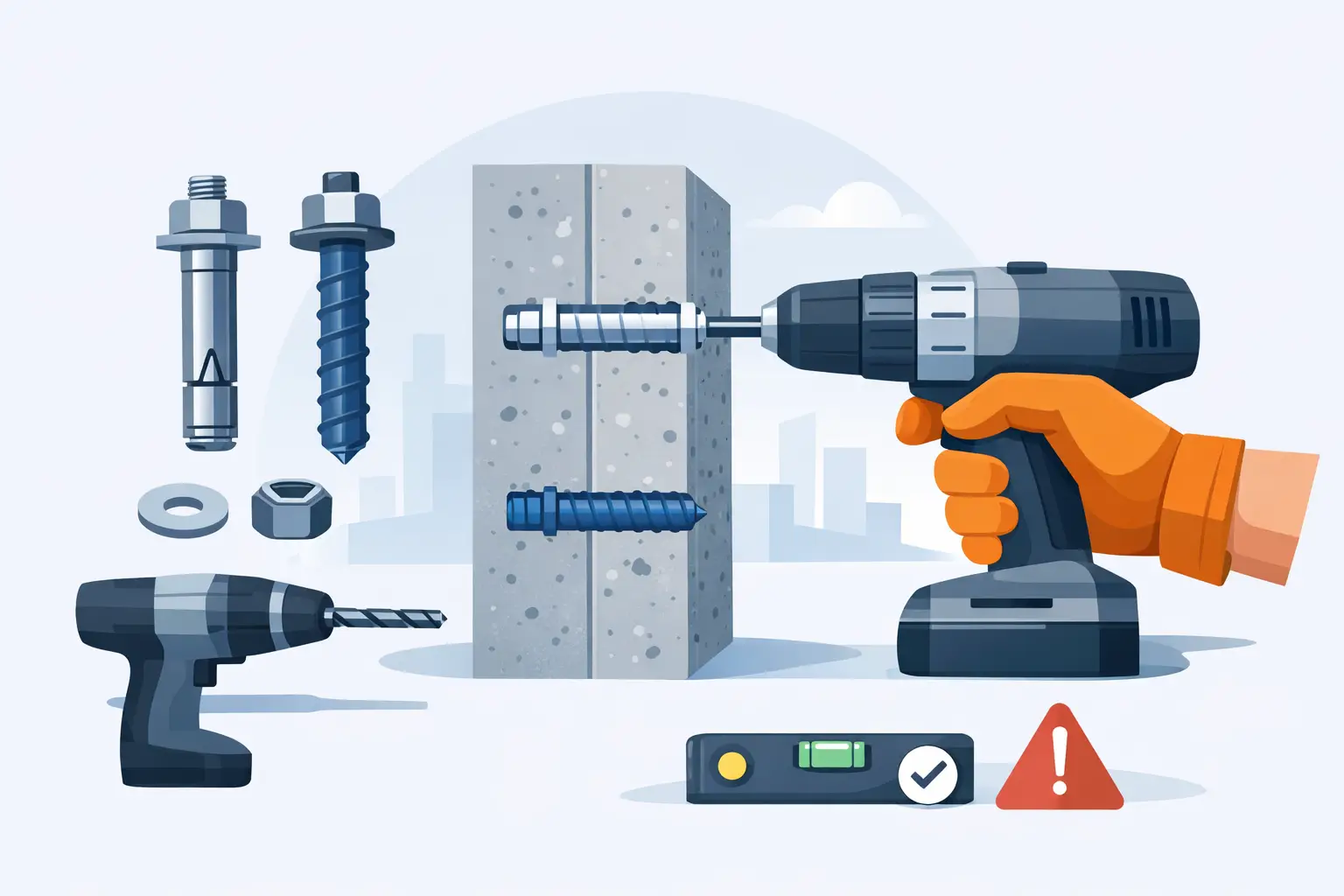
Wedge anchors are a standard option for solid concrete where you need strong holding power. As the nut tightens, the clip expands against the hole wall. They are dependable, but they are not ideal for weak masonry or applications where you may need easy removal later.
Sleeve anchors are more versatile across concrete, brick, and block. They expand over a larger area, which can help in lower-density material. They are often used for base plates, handrails, and general fixing work where the load is moderate and the substrate varies.
Concrete screws are popular because they install fast and do not require a nut-setting process. They cut threads into the concrete as they drive in. They are a practical choice for many builders and concrete contractors, especially when speed matters and loads are not extreme. The catch is hole accuracy. If the hole is wrong or dusty, the screw may not bite properly.
Drop-in anchors are usually used in solid concrete with machine bolts or threaded rod. They sit flush in the hole and need a setting tool to expand correctly. These are common when you want a cleaner finish or removable threaded attachment.
Adhesive anchors are another category entirely. They rely on epoxy or similar bonding compounds with threaded rod or rebar. These are often used for high-load or engineered applications, but installation is less forgiving. Hole cleaning, cure time, and temperature all matter. On a fast-moving site, that can be a benefit or a headache depending on the schedule.
The basic install process
Mark your fixing point carefully before drilling. Check edge distance and spacing first. If anchors are too close to the slab edge or too close together, concrete breakout becomes a real risk. This matters even more with heavier expansion anchors.
Use the correct hammer drill bit size specified for the anchor. Not close enough. Exact. A hole drilled oversize reduces expansion pressure and holding strength. A hole drilled undersize can stop the anchor from seating properly or damage the fastener during installation.
Drill to the required depth, allowing for embedment plus dust clearance where needed. Many crews mark the bit with tape or use a stop to avoid guessing. That saves time and prevents shallow holes, which are one of the most common installation problems.
Clean the hole. This step gets skipped far too often. Blow out the dust, brush it if required, and clear debris fully. For adhesive anchors, proper hole cleaning is mandatory. For mechanical anchors and concrete screws, it still makes a big difference to seating and performance.
Insert the anchor according to its type. Wedge and sleeve anchors are usually tapped into place, then tightened to the specified torque. Concrete screws are driven directly into the predrilled hole. Drop-in anchors need to be set with the proper tool before the threaded fastener is installed.
Do not over-tighten. More torque does not mean more strength. It can crack the surrounding concrete, strip the hole, or damage the anchor. If manufacturer torque values are available, use them.
Common mistakes that cause failures
Using the wrong anchor in the wrong base material is the biggest issue. A wedge anchor in hollow block, for example, is usually the wrong move. It may feel tight at first and still fail under service load.
The second issue is poor edge distance. Fastening close to the edge of a slab or wall can lead to spalling or breakout, especially with expansion anchors. If you are working near edges, corners, or joints, anchor choice becomes more important and adhesive or screw-type systems may be a better fit.
The third is dirty holes. Dust left in the hole reduces contact, affects expansion, and weakens thread engagement. It is a small step that has a big effect.
Another common mistake is ignoring concrete condition. Fresh concrete does not have the same strength as fully cured concrete. Cracked concrete also behaves differently from uncracked sections. If the fixing carries serious load, that difference matters.
Finally, there is overestimating what a light-duty anchor can do. A small anchor may hold a bracket in place today and loosen over time with vibration, weather, or repeated loading. Static load, shock load, and vibration all change the picture.
What changes by application
If you are fixing timber plates to a slab, speed and repeatability usually matter most. Concrete screws or sleeve anchors are often practical, depending on the load path and inspection requirements. If you are installing structural steel brackets, heavier wedge anchors or adhesive anchors may be more appropriate, especially where engineering calls for specific embedment and spacing.
For railings, gates, bollards, and exposed external fixtures, corrosion resistance matters as much as pull-out strength. Indoor zinc-plated anchors are not the right choice for all exterior work. Stainless options cost more, but replacement costs more too.
For overhead applications, use extra care with anchor type and install quality. Hanging services, strut, or suspended hardware from concrete introduces a different risk level. If there is any uncertainty around load or compliance, it is worth checking engineering requirements before drilling a single hole.
Landscapers and hardscape crews often work across concrete, block, and retaining systems in the same day. That is where carrying a narrow but suitable range of anchors saves time. One anchor for every surface sounds convenient, but it rarely delivers the best hold across all materials.
Tools and site conditions matter too
A worn drill bit can enlarge holes and reduce anchor performance. A weak drill can wander or fail to reach depth cleanly. Even weather plays a role. Wet holes, cold temperatures, and dirty surfaces can affect installation, especially with adhesive systems.
On busy sites, the pressure is always to get it fixed and move on. But anchoring is one of those tasks where the small details hold the whole job together. Quality Steel Supplies works with contractors who need site-ready materials without delays, and concrete fixings are a good example of why dependable supply matters. If the correct anchor is not on hand, crews often make do with what is available, and that is when problems start.
The best approach is simple. Match the anchor to the substrate, drill the right hole, clean it properly, and install to spec. If the load is critical, the edge distance is tight, or the base material is questionable, slow down and verify the detail before you commit. A concrete anchor is a small item on the invoice, but it carries a lot more than its share of the risk.
Get that part right, and the rest of the install tends to go the way it should.
Related Posts