What causes asphalt cracks? Learn how water, traffic, heat, poor drainage, and weak base preparation damage pavement - and how to plan lasting repairs.
A Guide to Concrete Reinforcement Supply
A slab pour rarely gets delayed because of the concrete truck alone. More often, the hold-up starts earlier – missing mesh, the wrong bar size, not enough chairs, or a delivery window that does not match the pour sequence. That is why a guide to concrete reinforcement supply matters for anyone buying steel and site essentials. Good supply is not just about getting material on site. It is about getting the right compliant products, in the right quantities, at the right time, without creating rework or downtime.
For builders, concrete contractors, civil crews, and procurement teams, reinforcement buying is usually straightforward until it is not. A residential driveway, a block wall, a suspended slab, and a commercial foundation all call for different products, different lead times, and different levels of coordination. The supplier you choose can either keep the job moving or add friction at the worst point in the schedule.
What good concrete reinforcement supply actually looks like
A lot of buyers focus first on price per sheet or per length, and that is fair. Material cost matters. But reinforcement supply works best when price sits alongside compliance, availability, and delivery reliability.
At a practical level, good supply means the reinforcing bar and mesh match the engineer’s drawings and relevant standards. It means accessories such as bar chairs, tie wire, stirrups, and fixings are available at the same time, instead of being chased separately. It also means the supplier understands that a jobsite is not a warehouse. Deliveries need to arrive in a usable form, in a workable timeframe, and with enough accuracy that crews can unload, place, and continue.
The strongest suppliers keep their offer simple. Clear product descriptions, visible sizing, transparent pricing, and direct contact for urgent or large-volume orders save time. For trade buyers, that clarity is often worth as much as a minor unit-price difference.
The core products in a guide to concrete reinforcement supply
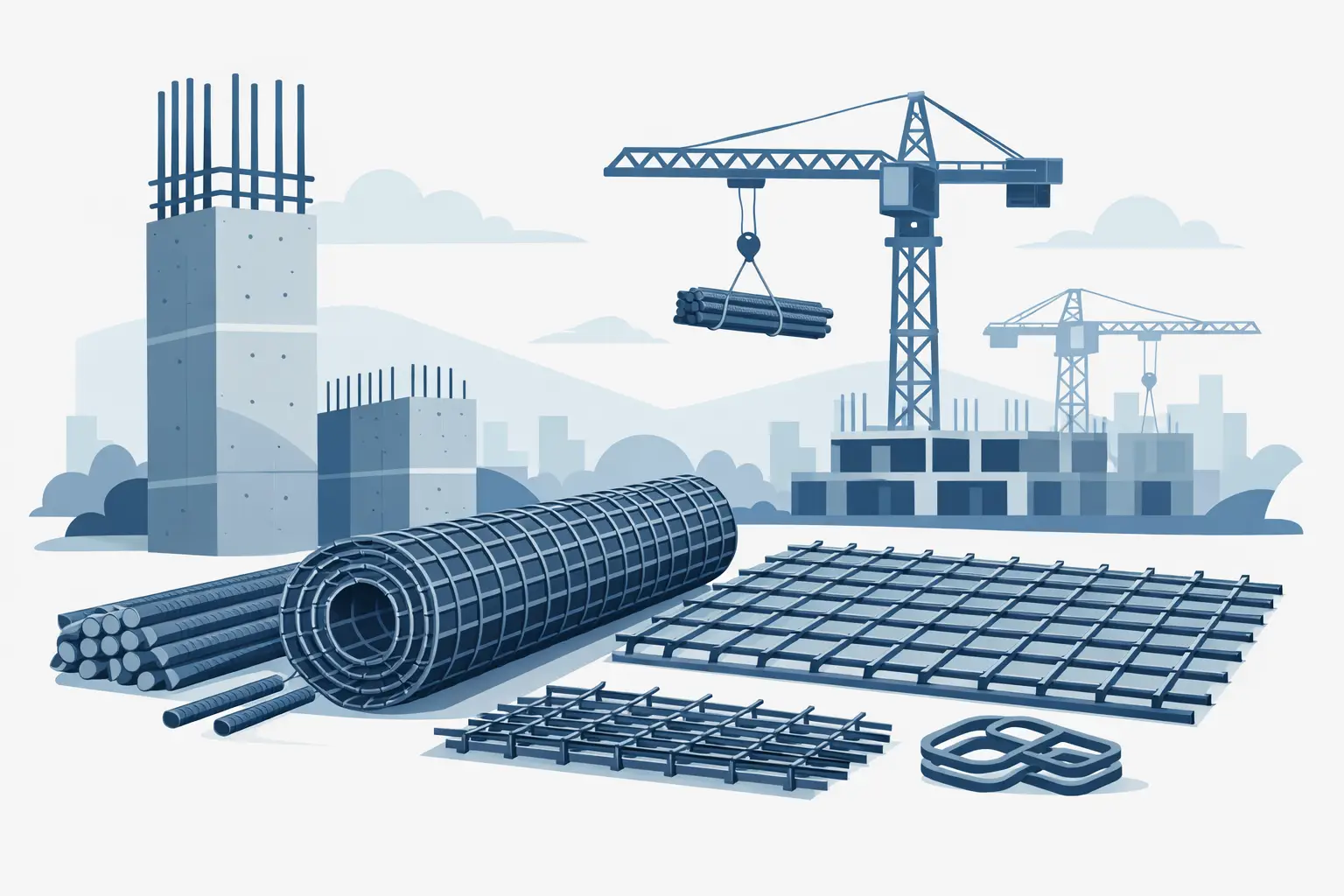
Most reinforcement orders fall into a few main categories, but each has details that affect both cost and install time.
Reinforcing bar
Rebar is the backbone of many structural concrete applications. Buyers usually specify by diameter, grade, length, and whether the bar is straight, cut, or bent. On some jobs, standard stock lengths are the most cost-effective option. On others, cut and bent material reduces site labor and waste. It depends on the scale of the project and how tight the labor program is.
For footings, beams, columns, retaining walls, and general structural work, getting the right bar size is obvious. Less obvious is making sure the bar schedule aligns with what can actually be supplied when you need it. If your job depends on a specific cut list or stirrup set, confirm lead times early rather than assuming it can be turned around at the same speed as standard stock.
Reinforcing mesh
Mesh is common on slabs, driveways, paths, and a wide range of flatwork. It can speed up placement compared with tying everything on site from loose bar, but only if the sheets are correctly specified and easy to handle. Buyers should check sheet dimensions, wire gauge, spacing, and grade against the drawings, not just the shorthand product name.
Mesh is also where delivery planning matters. Full sheets take space, and if site access is poor, unloading can turn into a bottleneck. On small urban jobs, that may matter just as much as the product price.
Bar chairs and spacers
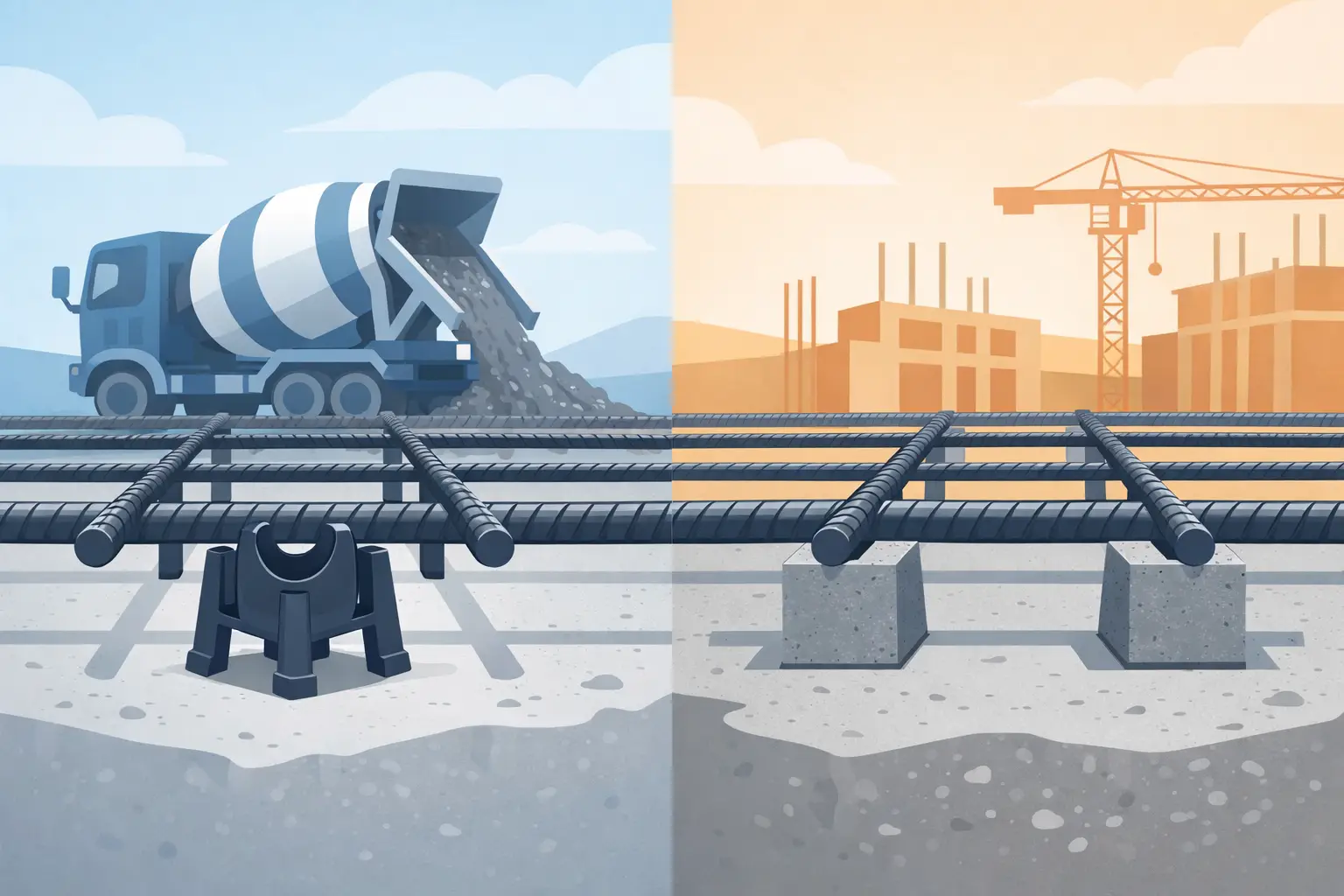
Chairs are cheap compared with steel or concrete, but getting them wrong can undermine the whole placement. Cover matters. If reinforcement sits too low, too high, or moves during the pour, the concrete element may not perform as designed.
Different pours call for different chair types and heights. Slab-on-grade, suspended slabs, and heavy-duty commercial pours all have different support needs. This is one of those product lines that should never be treated as an afterthought.
Tie wire and accessories
Tie wire, clips, and related accessories tend to be small-ticket items, but crews notice immediately when they are missing. The same goes for stirrups, trench mesh, and concrete fixings. A supplier that stocks the full reinforcement package saves buyers from splitting orders across multiple vendors, which usually creates more admin and more delivery risk.
Related site products
On many concrete jobs, reinforcement is only part of the procurement picture. Polystyrene pods, asphalt repair materials, and fixing products may all be needed around the same stage of work. Bundling those products through one reliable supplier can simplify purchasing and reduce freight coordination, especially on tight commercial schedules.
Compliance is not optional
Any serious guide to concrete reinforcement supply has to start with compliance. Reinforcing steel is not a place to take chances. Buyers need confidence that the product supplied is suitable for structural use, correctly graded, and aligned with project requirements.
That means checking more than a label. Product traceability, standard compliance, and supplier knowledge all matter. If the material is going into foundations, slabs, walls, or structural elements, there is no upside in buying from a source that cannot clearly confirm what is being supplied.
For experienced buyers, this is already standard practice. For smaller contractors and owner-builders, it is where a specialist supplier adds real value. You should be able to ask direct questions and get direct answers about product type, intended use, and availability without working through layers of sales talk.
Price matters, but total job cost matters more
Competitive pricing is important, especially on repeat work and larger volume buys. But low unit cost can become expensive fast if the order is incomplete, delivered late, or wrong for the specification.
A cheap sheet of mesh is not cheap if your crew loses half a day waiting for missing chairs. Discounted bar is not a good deal if the delivered lengths force extra cutting, wastage, or nonproductive labor. Material purchasing should be judged against installed cost and schedule impact, not just invoice line items.
This is why transparent pricing helps. When buyers can quickly compare per-item costs and see exactly what they are getting, procurement gets faster and cleaner. It also makes it easier to build complete orders, rather than price-checking one major item while overlooking the accessories that keep the placement compliant.
Delivery can make or break the pour
The best reinforcement supply operation understands site timing. Jobs do not always run to a perfect plan. Concrete dates move. Excavation reveals changes. Engineers revise details. A supplier that can respond quickly is often more valuable than one with a slightly lower list price and a slower process.
Fast delivery is not only about speed. It is also about reliability and communication. Buyers need realistic lead times, direct contact, and the ability to handle urgent requirements without confusion. On active sites, vague delivery promises are nearly as bad as no delivery at all.
Local supply capacity matters here. A supplier with practical delivery coverage and a direct contact model is often better positioned to support urgent and staged orders. That is one reason trade buyers tend to stick with reinforcement specialists that understand local job pressures rather than generalist sellers.
How to buy reinforcement supply with fewer problems
Start with the drawings and scope, then build the order around the actual installation sequence. If the pour is staged, order with staging in mind. If access is restricted, think about unloading before the truck arrives. If you need accessories, add them at the same time rather than relying on someone to remember them later.
It also helps to separate standard-stock items from fabricated or special-order items. Standard rebar lengths, common mesh sheets, and everyday consumables can often move quickly. Bent bar, custom stirrups, or large-volume project packs may need more notice. Mixing those categories in one last-minute conversation is where avoidable mistakes happen.
When in doubt, keep the conversation simple and specific. Confirm product type, size, quantity, compliance, and delivery timing. A dependable supplier should make that process easier, not harder.
Choosing the right supplier for repeat work
Over time, the best supplier is usually the one that reduces decision fatigue. You want product availability, fair pricing, and direct support without having to re-explain the basics on every order. For contractors running multiple jobs, consistency is a major advantage.
This is where specialists stand out. A supplier focused on reinforcement and related site products is more likely to understand practical buying patterns, common specification issues, and the urgency that comes with concrete schedules. Quality Steel Supplies, for example, positions its offer around compliant reinforcement products, clear pricing, and fast delivery support – which is exactly what most trade buyers are trying to secure.
The right reinforcement supply setup should feel predictable. You should know what you are ordering, what it costs, when it is arriving, and who to call if the site plan changes. That is not asking for much. On a busy project, it is the difference between keeping crews productive and watching the schedule slip over materials that should have been easy to source.
If you are buying for the next pour, treat reinforcement supply like part of the construction program, not a last-minute purchase. The jobs that run best usually start there.
Related Posts