Rebar fabrication services reduce field cutting, support accurate placement, and help concrete crews keep schedules, inspections, and deliveries on track.
Epoxy Anchors vs Mechanical: Which Fits?
When a detail calls for a post-installed anchor, the real question is not which one is stronger on paper. It is which one will hold the required load, suit the concrete condition, and get installed correctly under site pressure. That is where epoxy anchors vs mechanical fixings becomes a practical decision, not just a spec-sheet comparison.
For builders, concrete crews, and project buyers, the wrong anchor choice usually shows up later as lost time. Holes need re-drilling, inspections get delayed, or a straightforward bracket install turns into an engineering query. The better approach is to match the anchor type to the job conditions from the start.
Epoxy anchors vs mechanical fixings: the core difference
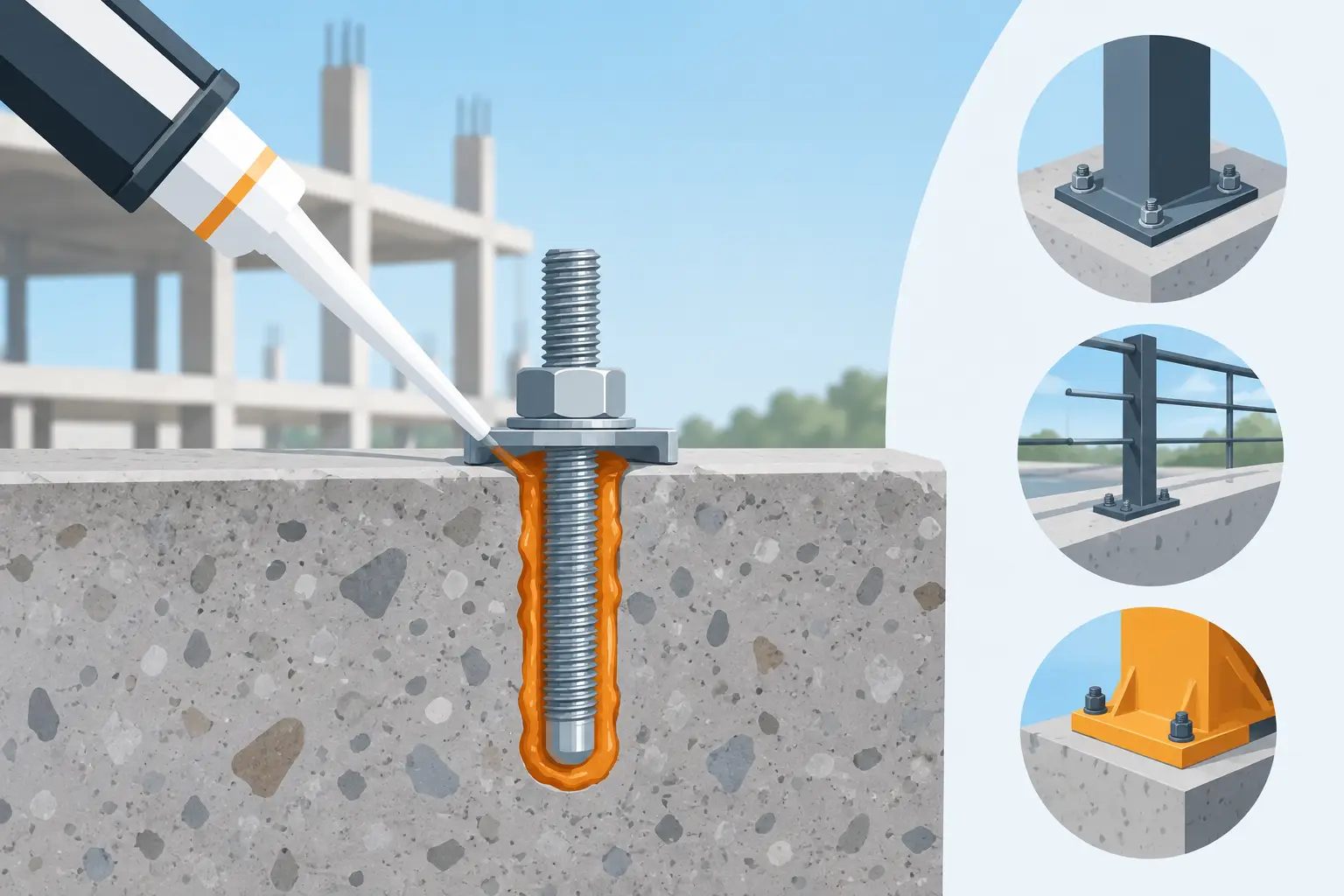
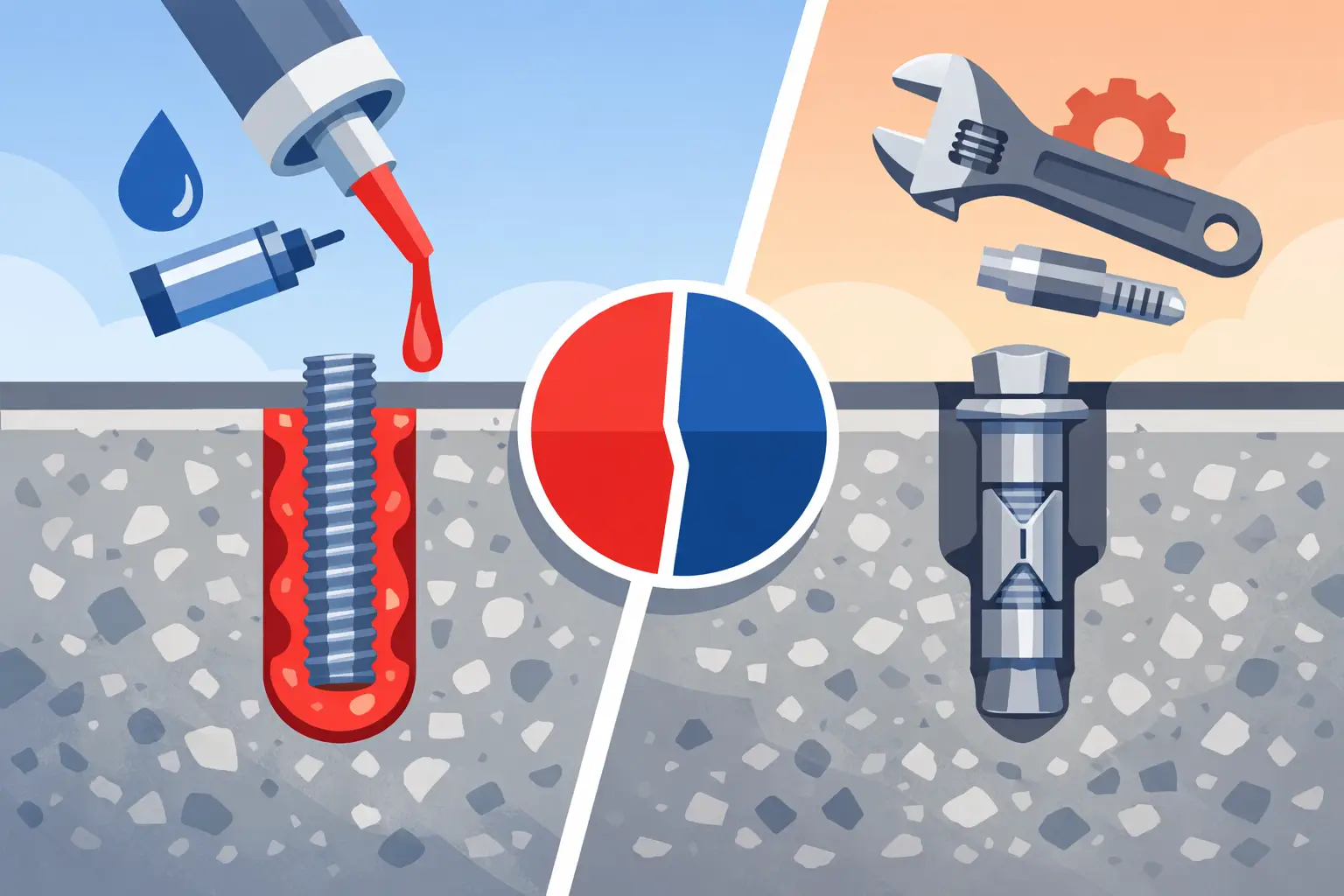
An epoxy anchor relies on a bonded connection. You drill the hole, clean it properly, inject adhesive, and set a threaded rod or rebar into place. The load transfers through the bond between the adhesive, the steel, and the surrounding concrete.
A mechanical anchor works by expansion, undercutting, or mechanical interlock. Common examples include wedge anchors, sleeve anchors, drop-ins, and screw anchors. Instead of bonding the steel into the hole, the anchor grips the concrete through pressure or thread engagement.
That difference matters because it affects installation speed, edge distance, curing time, performance in cracked concrete, and how forgiving the product is when site conditions are less than ideal.
Where epoxy anchors usually make more sense
Epoxy anchors are often the better choice when you need high load capacity, closer edge distances, or flexibility in embedment depth. They are also common when installing threaded rod or dowels into existing concrete for structural connections, handrails, base plates, retrofit work, and rebar starter bars.
One major advantage is reduced expansion stress. Because the adhesive bonds the rod in place rather than forcing an anchor body outward, epoxy systems are often better near slab edges or where anchor spacing is tight. On retrofit jobs, that can be the difference between making the detail work and having to redesign the connection.
They also give more freedom with rod diameter and embedment depth. If engineering requires a longer embedment to achieve the load, bonded systems can often accommodate that more easily than a standard mechanical anchor with a fixed geometry.
But epoxy anchors are not quick-fix products. Hole cleaning has to be done properly. The adhesive has to suit the substrate and temperature. Cure times have to be respected before loading. If the installer rushes any part of that process, performance drops fast.
Where mechanical anchors usually come out ahead
Mechanical anchors are often the practical choice when speed matters most and the application is straightforward. If you are fixing brackets, base plates, pipe supports, light structural steel, or site hardware into sound concrete, a mechanical anchor can get the job done quickly with fewer installation steps.
There is no adhesive mixing, no cure time, and generally less waiting around. Drill the hole, clean it as required by the manufacturer, set the anchor, torque it correctly, and move on. On jobs with repetitive fixing points, that speed adds up.
Mechanical anchors can also simplify inspection. Torque can be checked, embedment can be verified, and the anchor is usually loaded immediately after installation. For crews working through a punch list or trying to finish fit-off on a tight program, that is a real advantage.
The trade-off is that expansion-style anchors put stress into the concrete. Near edges, close to other anchors, or in weaker concrete, that can limit suitability. Some mechanical types handle those conditions better than others, but the general point stands: they are not automatically interchangeable.
Load capacity is only part of the answer
A common mistake is assuming the highest-rated anchor is the best anchor. Load tables matter, but the real decision depends on what kind of load you are dealing with and what the concrete can support.
Tension loads, shear loads, dynamic loading, seismic demand, cracked concrete, and sustained loads all affect anchor choice. Epoxy anchors can perform very well in high-load and sustained-load applications when the system is approved for that use. Mechanical anchors may be ideal for static loads and fast installations, but not every type suits long-term tension or heavily cracked concrete.
This is where reading the approval data matters more than going by habit. A wedge anchor that works fine for a simple bollard detail may not be the right pick for a structural hold-down. A bonded anchor that is excellent for a rebar dowel may be overkill for a light-duty fixing.
Concrete condition changes the decision
Not all concrete is equal on site. New slabs, older structural elements, suspended decks, block fill, and weathered exterior concrete all behave differently.
Epoxy anchors tend to be useful where the substrate is irregular or where a custom embedment is needed, but they are also more sensitive to moisture, dust, and temperature during installation. Some adhesive systems are rated for damp holes or water-filled holes, and some are not. If the crew does not match the product to the actual site condition, problems start before the rod is even set.
Mechanical anchors are often simpler in dry, sound concrete, but they can struggle if the substrate is weak, cracked, or too close to an edge. In those conditions, the concrete itself can become the limiting factor well before the steel capacity is reached.
If the slab is old, the cover is shallow, or there is any uncertainty about the concrete quality, it is worth slowing down and checking the detail rather than assuming a standard anchor will be fine.
Installation risk is where jobs are won or lost
On paper, epoxy anchors can look excellent. On site, they demand discipline. Hole diameter must be correct. Dust has to be removed with the specified brush-and-blow sequence or equivalent cleaning method. Adhesive has to be mixed properly, and the rod has to be inserted before gel time is reached. Then the anchor needs full cure before load is applied.
That is manageable on a well-run job, but it leaves less room for shortcuts.
Mechanical anchors usually reduce installation variables. That is one reason many crews prefer them for repetitive work. Still, they are not foolproof. Wrong hole size, inadequate embedment, over-torquing, or under-torquing can all lead to failure. With screw anchors, worn drill bits and poor hole cleaning can affect performance more than some installers expect.
So the better question is not which system is easier in theory. It is which system your crew can install correctly, every time, under actual site conditions.
Cost is more than the unit price
If you compare only the anchor price, mechanical fixings often look cheaper. In many cases, they are. But installed cost is what matters.
Epoxy anchors carry extra material cost, and installation takes longer. There may also be wastage from partial cartridges, nozzle changes, and cure delays. On the other hand, if they allow a tighter edge distance, avoid a redesign, or deliver the required load with fewer anchors, the overall job cost can still make sense.
Mechanical anchors are usually faster to install and easier to stage in volume. That can lower labor cost significantly. But if the detail is marginal and the anchors cause breakout, clashes, or failed inspections, those savings disappear quickly.
For procurement teams, the smart move is to price the anchor in context: product cost, labor time, tooling, inspection requirements, and the likelihood of rework.
Choosing between epoxy anchors vs mechanical on real jobs
For a simple non-structural fixing in sound concrete, mechanical anchors are often the cleanest answer. They are fast, available in a wide range of sizes, and easy to install with standard site tools.
For structural retrofits, rebar doweling, close-to-edge fixings, or applications needing higher design flexibility, epoxy anchors are often the better fit. They can solve details that would be awkward or risky with expansion anchors.
There is also a middle ground. Some jobs suit concrete screw anchors better than wedge anchors. Some adhesive systems are better for overhead work or damp conditions than others. The category decision gets you started, but the exact product still has to match the application.
That is why experienced buyers do not treat anchors as generic hardware. They look at the load case, the concrete condition, the spacing and edge distances, the inspection path, and the install sequence. Then they buy accordingly.
What to confirm before ordering
Before committing, check five things: the required load, the base material, whether the concrete is cracked or uncracked, the available edge distance and spacing, and whether the anchor can be loaded immediately or after cure. Those points usually narrow the field fast.
It also helps to confirm who is installing it and how tightly the work will be supervised. A bonded system may be technically right but operationally wrong if the crew is under time pressure and the area cannot be kept clear during cure. A mechanical anchor may be faster but unsuitable if the slab edge is too tight for safe expansion.
Suppliers that work with structural and concrete products every day can help cut through that early. That is especially useful when the anchor choice sits alongside reinforcement, starter bars, mesh, or other concrete-related materials on the same order. Quality Steel Supplies works with that kind of practical jobsite requirement every day, where the right product is the one that keeps the detail compliant and the schedule moving.
The best anchor choice is usually the one that fits the concrete, the load, and the way the job will actually be built – not just the one that looked quickest at takeoff stage.
Related Posts