Rebar fabrication services reduce field cutting, support accurate placement, and help concrete crews keep schedules, inspections, and deliveries on track.
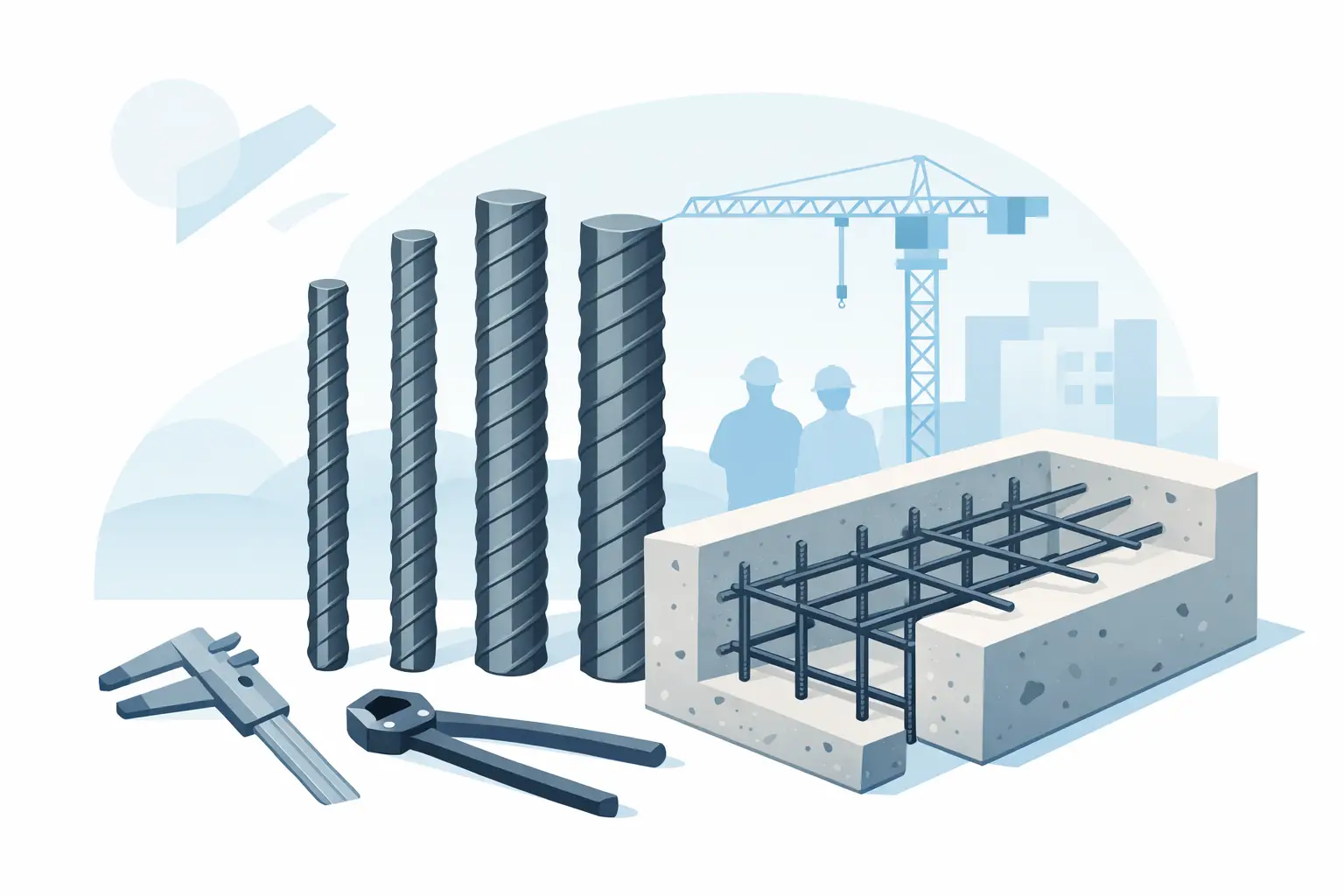
Rebar Sizes Selection Guide for Concrete Jobs
A slab that cracks early, a footing that feels overbuilt, or a wall cage that slows the pour usually comes back to one thing – the steel was sized without enough thought for the actual job. A good rebar sizes selection guide is not about picking the biggest bar available. It is about matching bar diameter, spacing, placement, and code requirements to the structure you are building so the concrete and steel work together the way they should.
On site, bar selection affects more than strength. It changes tying time, handling, lap lengths, congestion around corners and penetrations, and how cleanly concrete can flow through the cage. That is why experienced builders and concrete crews treat rebar sizing as a practical decision, not just an engineering detail.
How this rebar sizes selection guide helps on real jobs
For most trade buyers, the question is not what rebar is in theory. The question is what size makes sense for a driveway, house slab, strip footing, block wall, retaining wall, or heavier commercial element without creating delays or unnecessary cost.
Rebar size refers to the nominal diameter of the bar. As diameter increases, the bar provides more steel area and generally more capacity, but it also becomes heavier, harder to bend manually, and more likely to create congestion where spacing is tight. Bigger is not automatically better. In many cases, using more smaller bars at the right centers gives better placement and concrete consolidation than forcing in fewer large bars.
The right choice depends on the structural design, but there are consistent jobsite factors that should shape selection early. These include the thickness of the concrete element, the loads it will carry, the span, edge conditions, exposure to weather or ground moisture, and the amount of cover required. A slab on grade for light residential use has very different demands from a suspended slab, foundation beam, or retaining wall resisting soil pressure.
Start with the structure, not the stock rack
The fastest way to make the wrong call is to choose bar size based only on what is easiest to source. Availability matters, especially on tight programs, but the first filter should always be the type of element being reinforced.
In slabs, smaller diameter bar is often used where crack control and distributed reinforcement matter more than concentrated strength in one line. In beams and footings, larger bars are common because loads are being carried and transferred through specific zones. In walls, especially retaining or structural walls, bar size and spacing work together. A wall with heavier loads may need larger vertical bars, but if the spacing becomes too wide, crack control can suffer.
That is why the design intent matters. If the job is engineered, the schedule should govern. If it is a smaller non-structural or lightly loaded application, selection still needs to follow local code requirements and sound construction practice.
Common factors that change bar size selection
Load is the obvious one, but it is not the only one. A lightly loaded slab may still need careful reinforcement detailing if ground conditions are poor or shrinkage cracking is a concern. Footings on variable soil can require different reinforcement than footings on stable ground. A marine or highly exposed environment may not always change bar size first, but it can influence cover, coating requirements, and the broader reinforcement approach.
Buildability also matters. If bars are too large for a thin section, cover can become difficult to maintain. If spacing is too tight, aggregate can bridge and honeycombing becomes more likely. A reinforcement layout has to be strong on paper and practical during the pour.
Typical bar size logic by application
For residential slabs and paths, reinforcement is often selected with crack control, shrinkage, and local load concentration in mind. Depending on the design, mesh may be the primary reinforcement, or deformed bar may be used in thickened edges, load points, or areas that need extra strength. Where bar is specified, smaller diameters are often easier to place accurately and maintain at the correct height with chairs.
For footings, the load path is more direct. The reinforcement has to support the wall or structure above and deal with bending from the soil reaction below. That usually pushes selection toward bars that provide enough steel area without overcomplicating the cage. Strip footings, pad footings, and edge beams all have different demands, so bar size should be read alongside the footing width, depth, and load.
For beams and lintels, larger bars are common because the section is carrying concentrated bending forces. But this is also where congestion can become a real issue. Add stirrups, laps, hooks, and starter bars, and a cage can become crowded fast. Sometimes a design using fewer larger bars works well. Other times a more balanced arrangement with manageable diameters is easier to fabricate and pour.
For retaining walls, vertical and horizontal reinforcement have different jobs. Vertical bars generally resist the main bending from retained soil, while horizontal bars help with distribution, crack control, and cage stability. Here, the rebar sizes selection guide is less about one bar in isolation and more about the whole pattern – diameter, spacing, wall thickness, cover, and how the wall ties into the footing.
Why spacing can matter as much as diameter
A common mistake is to focus on diameter and ignore spacing. Two layouts can contain a similar total steel area but behave differently in placement and crack control. Closer bar spacing generally helps distribute stresses and control crack width, while larger bars at wider centers may reduce the number of pieces but create less even reinforcement.
There is always a balance. Tighter spacing increases tying time and can slow installation. Wider spacing may be faster, but it may not suit the performance required. On jobs where finish quality, durability, or water tightness matter, the spacing decision deserves as much attention as the actual bar size.
Cover, laps, and bends are not side issues
Bar diameter affects detailing downstream. Larger bars need longer lap lengths. They also require more room at bends and around hooks. In confined sections, that can push the cage outward and reduce cover if the layout has not been thought through properly.
Cover is critical because the steel needs protection from moisture, contaminants, and fire exposure while still sitting in the part of the section where it can do its job. If the chosen bar is too large for the section, maintaining compliant cover becomes harder. That can create inspection issues and durability problems later.
Rebar sizes selection guide for ordering and site efficiency
Procurement teams and site supervisors usually feel the impact of poor selection before anyone else. Oversized bars can mean slower cutting, harder handling, and delays in placing. Undersized bars can mean redesign, rework, or extra material being added late to make up the shortfall.
The practical approach is to confirm five things before ordering. First, check the engineer’s drawings and bar schedule against the actual build sequence. Second, confirm whether the specified size works with the section thickness and required cover. Third, look at lap zones, intersections, and corners to make sure the cage is buildable. Fourth, account for accessories such as chairs, tie wire, stirrups, and mesh so the reinforcement can be installed correctly. Fifth, order with delivery timing in mind so steel arrives when the crew can place it, not days early when it becomes a storage problem.
That last point gets overlooked. Reinforcement supply is not just about tonnage. It is about keeping a pour on schedule. If a job needs standard stock quickly, or a larger volume staged across multiple deliveries, a supplier that understands reinforcement and site timing makes the process a lot easier. That is where a trade-focused supplier such as Quality Steel Supplies can add real value – not by overcomplicating the order, but by helping crews get the right material on site when they need it.
When it makes sense to ask before you buy
Not every project needs hand-holding, but some do. Mixed-use sites, retaining structures, heavy load areas, and jobs with tight access or awkward detailing can all benefit from a quick check before the steel is cut and sent out. Even experienced crews will pause when drawings show congestion, unusual laps, or reinforcement crossing multiple trades.
A good question to ask is not just, what size bar is specified? It is, will this size work cleanly with the section, spacing, and pour method on this site? That small shift catches a lot of avoidable problems.
The best rebar choice is usually the one that satisfies the design, meets compliance requirements, and goes in without slowing the job down. If you can get all three right, the pour tends to run better, inspections are cleaner, and the finished concrete performs the way it should. Choose rebar with the structure in mind, but always keep one eye on the crew that has to place it.
Related Posts