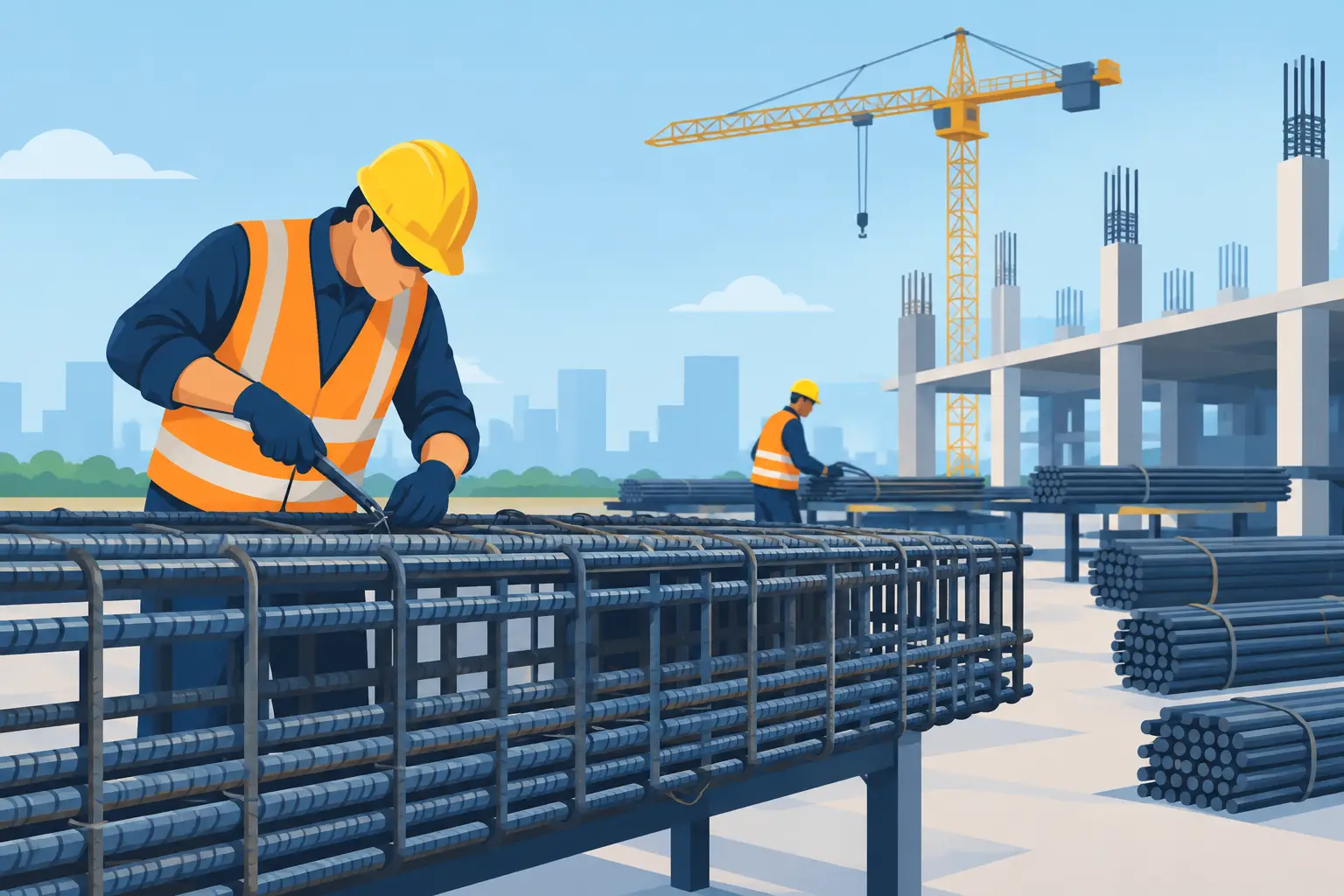
Rebar fabrication services reduce field cutting, support accurate placement, and help concrete crews keep schedules, inspections, and deliveries on track.
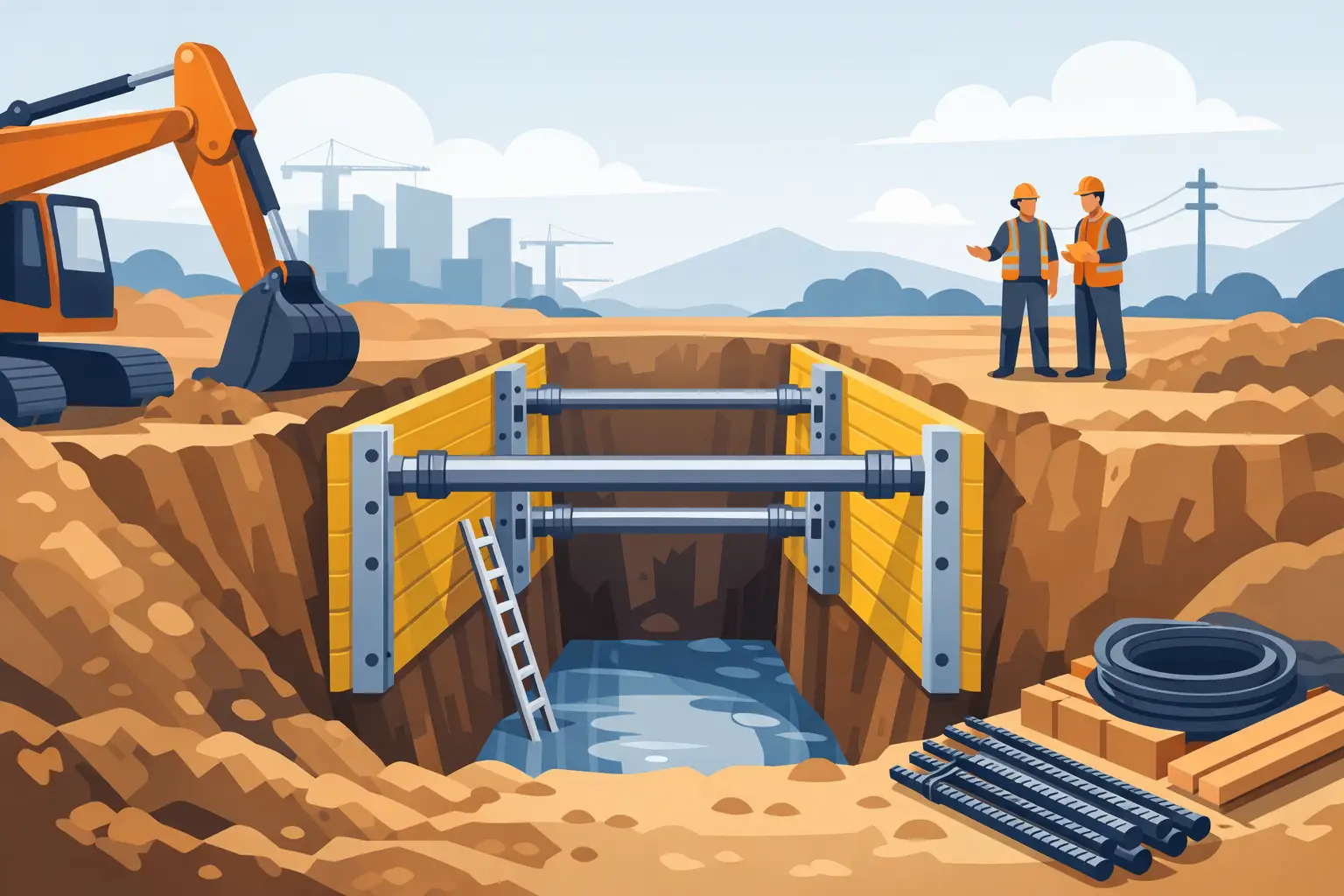
Guide to Trench Reinforcement That Holds Up
A footing trench can look simple right up until steel goes in. That is usually where delays start – wrong bar size, not enough chairs, poor cover, bent cages that do not fit the excavation, or a crew waiting on missing tie wire. A solid guide to trench reinforcement is really about avoiding those problems before concrete is booked.
What trench reinforcement is actually doing
Trench reinforcement is there to help concrete handle tensile forces, control cracking, and distribute loads through the footing or ground beam. Concrete carries compressive load well, but it is weak in tension. Once soil movement, point loading, settlement, or shrinkage come into play, the steel is what gives the trench footing its structural backbone.
On residential jobs, that may mean simple strip footings under foundation walls. On commercial or civil work, it can mean reinforced trenches carrying heavier wall loads, retaining elements, edge beams, or services-related structures. The principle stays the same. The reinforcement has to match the engineer’s design, sit at the correct height, maintain cover, and stay in position during the pour.
That sounds basic, but on site the difference between a clean pour and a rework often comes down to handling and supply. If the steel arrives late, arrives wrong, or is missing support items, the trench becomes a holding bay instead of a ready-to-pour footing.
A practical guide to trench reinforcement selection
The first rule is simple – follow the structural drawings. Trench reinforcement is not a product you substitute casually. Bar diameter, grade, spacing, lap length, stirrup spacing, trench mesh type, and cover requirements all come from design loads and site conditions.
In practice, most trench setups use some combination of reinforcing bar, trench mesh or assembled cages, stirrups, tie wire, and bar chairs. Which one dominates depends on the job.
Reinforcing bar
Loose bar is common where cages are tied on site or where details vary from one footing section to the next. It gives flexibility, especially around corners, step-downs, intersections, and penetrations. The trade-off is labor. If the crew has to cut, place, and tie everything in the trench, install time increases and errors become more likely.
Trench mesh or pre-assembled cages
For repeated footing runs, trench mesh or cage systems can speed things up. They help keep spacing more consistent and reduce tying time. That can be a real advantage on larger pours or jobs with repetitive footing lines. The limitation is fit. If trench widths vary or there are a lot of changes in depth and layout, pre-assembled sections may need more adjustment than expected.
Stirrups and ligatures
Where the design calls for beam action or extra confinement, stirrups matter. They keep longitudinal bars in place and help the cage perform as intended under load. Spacing is not a detail to guess at. Too wide, and the cage loses integrity. Too tight, and you may be adding cost and congestion without reason.
Getting trench reinforcement into the trench correctly
A lot of reinforcement issues are placement issues, not material issues. Steel can be fully compliant and still fail inspection if it is sitting on dirt, floating too high, or pushed hard against one trench wall.
Cover is the first checkpoint. Concrete cover protects the steel from moisture, contaminants, and corrosion while giving the footing the embedment depth it needs. Required cover varies by application, exposure, and code requirements, but the site reality is straightforward – if the steel is too close to the soil, you are asking for durability problems later.
Bar chairs and support accessories do the quiet work here. They keep reinforcement off the trench bottom and help maintain position while concrete is placed. On many jobs, chairs are treated like an afterthought until the crew realizes there are not enough on site. Then bars get propped on offcuts or whatever is nearby, which usually creates inconsistent cover and inspection trouble.
Tie wire matters for the same reason. A cage only works if it stays as designed during handling and pouring. Loose ties, rushed fixing, or not enough tie wire on site can let the assembly rack, sag, or shift when concrete hits it.
Common trench reinforcement mistakes that cost time
The expensive part of trench reinforcement is rarely the steel itself. It is the lost time when something simple was missed.
One common issue is ordering to nominal trench length without allowing for laps, intersections, corners, and waste. The result is a shortfall that does not show up until installation is halfway done. Another is ordering the main bars correctly but forgetting chairs, wire, stirrups, or fixings. A cage is only complete when all the small components are there.
There is also the problem of trench tolerance. Excavation widths and depths are not always as neat as the plan suggests. If the trench is overcut, undercut, or stepped differently than expected, reinforcement placement can become awkward fast. That does not mean you improvise with whatever steel is available. It means the trench and the reinforcement need to be checked together before pour day.
The other regular issue is poor handling. Bars dragged through mud, cages bent during unloading, or mesh stacked carelessly can create shape problems before installation starts. On a busy site, material can get damaged just by being in the wrong place at the wrong time.
Supply planning matters more than most crews admit
If trench reinforcement is needed for a scheduled pour, supply timing is part of the structural process, not just procurement. A missed delivery window can leave labor idle, concrete postponed, and downstream trades pushed back.
That is why experienced buyers usually work backward from the pour. They confirm the engineering details, quantify the full package, and check stock and delivery timing early enough to fix any gap. For standard residential work, that may be straightforward. For larger or staged projects, it often means coordinating bar, mesh, stirrups, chairs, and consumables across multiple deliveries so site storage does not become a problem.
Fast turnaround helps, but only if the order is accurate. Good supply starts with clear product callouts and realistic quantities. If there is any doubt over mesh grade, bar size, trench width, or accessory count, it is cheaper to sort it before dispatch than while the crew is standing in the trench.
That is where a supplier with reinforcement knowledge is worth more than a generic materials outlet. Trade buyers do not need a sales pitch. They need the right steel, the right support items, and delivery that matches the program. That practical approach is exactly why contractors work with companies like Quality Steel Supplies when jobs cannot afford procurement drift.
How to check a trench before concrete goes in
A final pre-pour check is where many avoidable problems get caught. The trench should be clean enough for the reinforcement to sit properly and for concrete to bond as intended. Bars and cages should match the drawings, laps should be in the right locations and lengths, and chairs should be supporting the steel at a consistent height.
It is also worth checking that the cage is centered in the trench where required and not leaning against excavation faces. If the trench has soft spots, slumping sides, water buildup, or loose spoil falling in, those site conditions need attention before the pour. Reinforcement does not correct a bad trench.
Where inspections are required, give yourself enough time to fix anything that gets flagged. Booking concrete too tightly against inspection timing is asking for trouble. A one-hour delay can turn into a lost day if changes are needed and materials are not available.
The best trench reinforcement choice depends on the job
There is no single best setup for every trench. A small residential footing may be handled efficiently with standard bar and a straightforward tie schedule. A long run of repetitive footings may benefit from trench mesh or pre-tied cages. Heavier structural sections may need more complex bar arrangements and tighter stirrup control.
The right choice comes down to design intent, labor availability, site access, and program pressure. If labor is tight, more pre-assembly may make sense. If access is limited or trench geometry changes constantly, loose bar may be easier to work with. If exposure conditions are severe, cover control and placement discipline become even more critical.
The crews who stay on schedule usually are not doing anything flashy. They are ordering compliant steel, accounting for the small items, checking trench dimensions early, and making sure reinforcement lands on site when it is needed, not after.
When trench work is moving quickly, that kind of preparation is what keeps concrete bookings intact and inspections from turning into rework. Get the reinforcement right, and the rest of the footing has a much better chance of going exactly to plan.
Related Posts