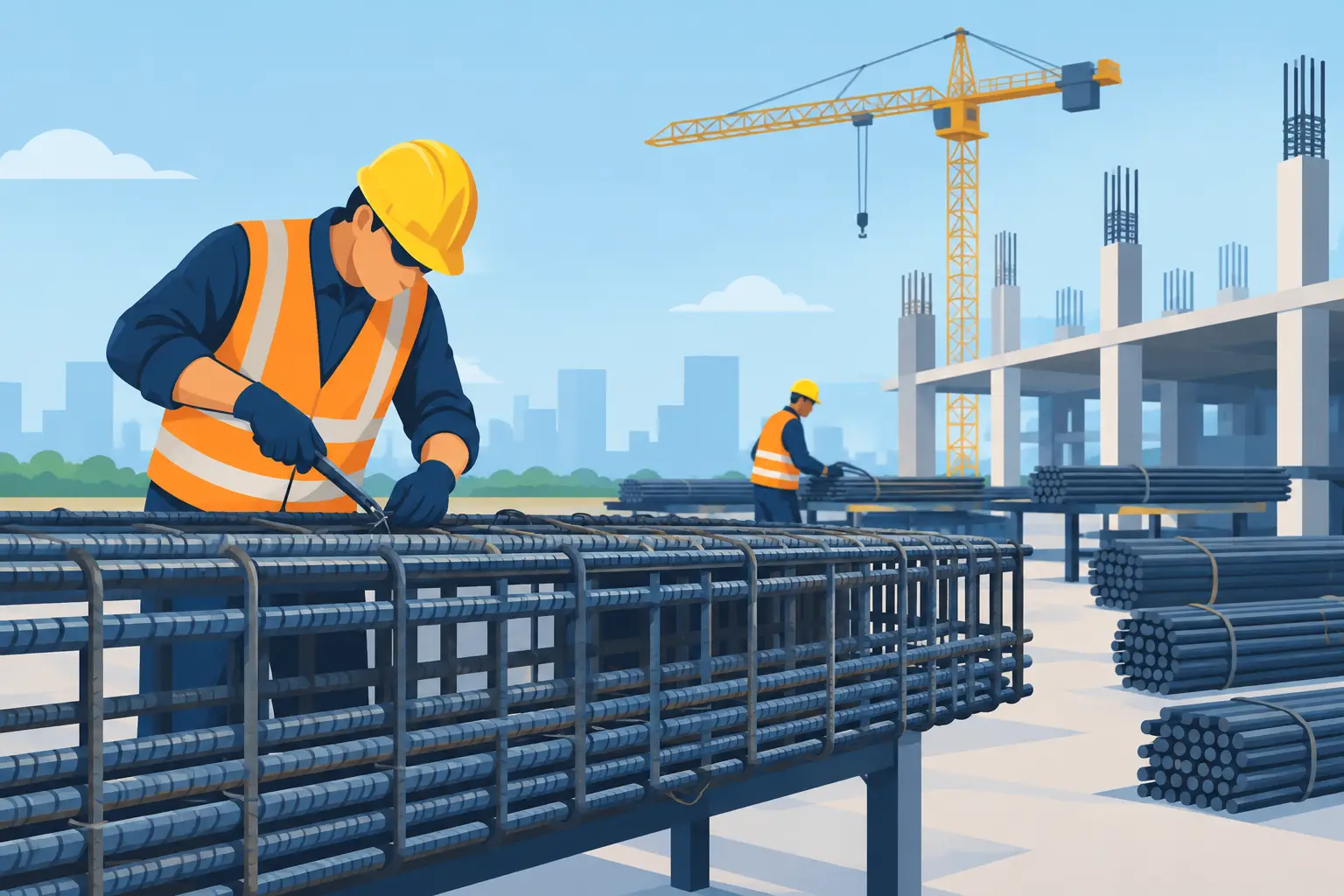
Rebar fabrication services reduce field cutting, support accurate placement, and help concrete crews keep schedules, inspections, and deliveries on track.
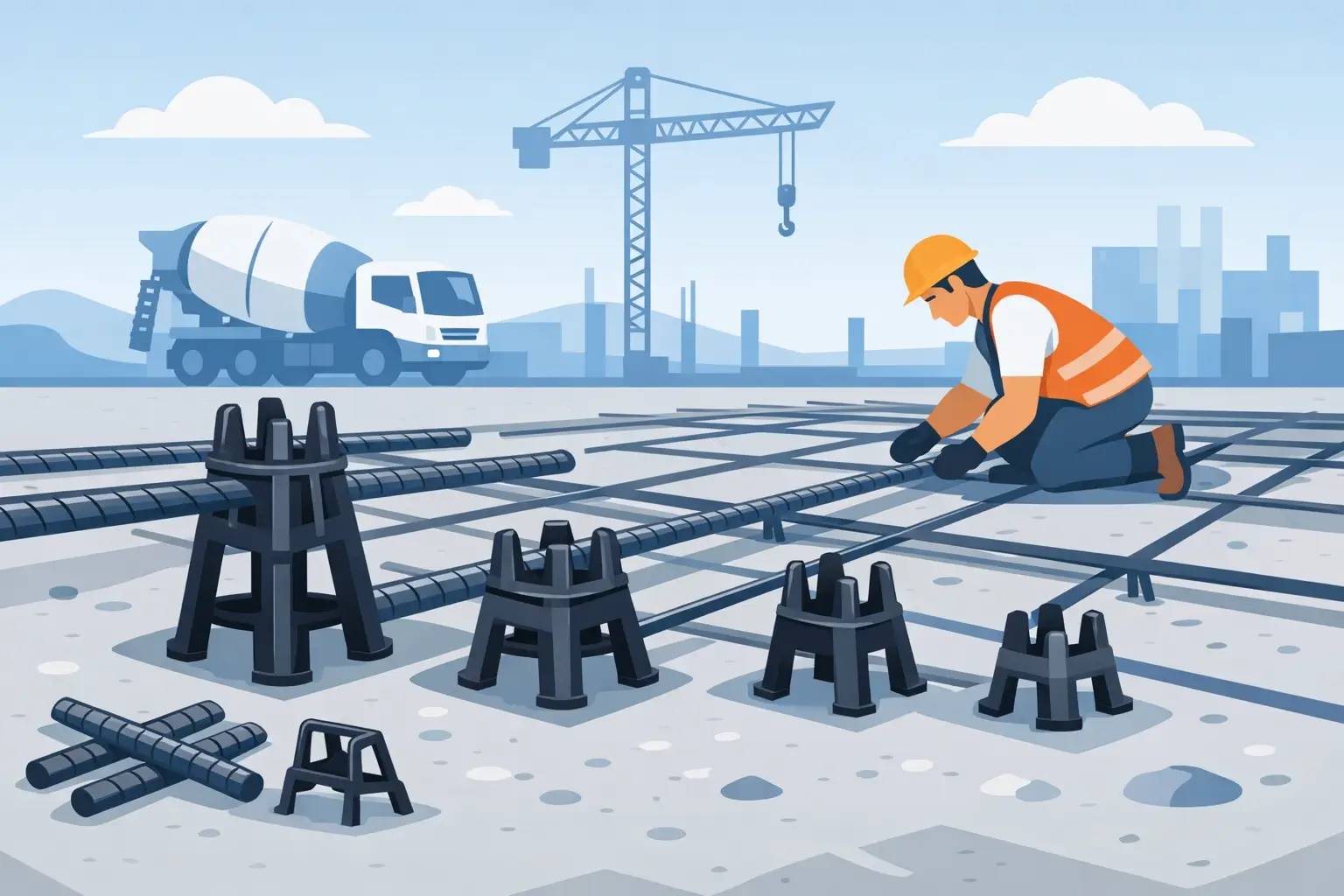
How to Use Bar Chairs on Concrete Jobs
Bar chairs are one of those small site items that only get attention when something goes wrong. Mesh ends up sitting too low, bars shift during the pour, cover is lost, and suddenly a straightforward slab turns into a compliance issue. If you need to know how to use bar chairs properly, the job is simple in principle – keep reinforcing steel at the correct height and hold it there until the concrete is placed and finished.
That sounds basic, but there is a difference between using enough chairs in the right positions and just scattering a few under the mesh and hoping for the best. On residential slabs, footings, patios, driveways, and larger commercial pours, correct chair placement helps protect concrete cover, maintain reinforcement spacing, and reduce movement when crews are walking the steel.
What bar chairs actually do
Bar chairs support reinforcing bar or mesh so it stays at the specified height inside the concrete. That height matters because reinforcement should not sit on the subgrade, vapor barrier, or formwork unless the design specifically allows it. It needs enough concrete around it to provide cover, durability, and structural performance.
In practical terms, bar chairs stop steel from sagging or being pushed down during placement. They also help crews set reinforcement faster because the target level is clear before the pour starts. On busy jobs, that saves time and cuts down on last-minute adjustments once the pump is running.
There are different types of chairs for different applications. Plastic bar chairs are common on slabs and mesh work because they are quick to install and resist corrosion. Concrete and wire options are also used depending on the project, loading, and specification. The key point is not just having chairs on site, but using the correct chair type and height for the slab or footing detail.
How to use bar chairs the right way
The first step is to confirm the required concrete cover from the drawings or engineer’s details. Chair height should match the reinforcement position needed to achieve that cover. If the chair is too low, the steel sits too close to the bottom. If it is too high, you can lose top cover or create placement issues around the steel.
Once the height is confirmed, place the chairs on a stable base at regular spacing so the mesh or bars are evenly supported. Spacing depends on the reinforcement type, the weight of the steel, and how much site traffic the area will take before and during the pour. Heavier bar, double layers, or areas with more foot traffic usually need tighter spacing.
After that, set the mesh or bar onto the chairs carefully so it bears evenly. If one chair is carrying too much weight or is sitting on uneven ground, the steel can rock or dip. It is worth checking the level by eye across the sheet or run of bar before concrete arrives. A few extra minutes here can prevent a lot of rework once placement starts.
Use enough chairs to prevent sagging
One of the most common site mistakes is under-chairing the reinforcement. The steel might look fine when first placed, then dip between supports once crews start walking it or dragging hose across it. That leaves parts of the slab under-covered even though the original setup looked acceptable.
As a rule, chairs should be close enough that the mesh or bar stays firm under normal site movement. There is no single spacing that suits every job. Light mesh on a small residential path will behave differently from heavier reinforcement in a commercial slab. If the steel flexes noticeably between supports, the chair spacing is too wide.
Keep chairs upright and seated properly
Chairs only work if they stay vertical and fully supported. On uneven compacted basecourse, soft fill, or wrinkled vapor barriers, a chair can tilt or punch down. That changes the reinforcement height and can create a domino effect across the section.
Before laying steel, make sure the base is trimmed and stable enough for the chair type being used. Wide-base plastic chairs help spread the load better on softer surfaces. If conditions are poor, simply adding more chairs may not fix the problem. You may need a different chair style or better preparation under the reinforcement.
Where bar chairs should sit on common jobs
On slab work, chairs are usually spaced evenly under mesh sheets or bar mats so the reinforcement stays centered at the required depth. Pay attention to laps, penetrations, edges, and any area where extra bar has been added. These spots often carry more steel and may need more support than open field sections.
In footings and beams, chairs are used to hold longitudinal bars and cages off the ground and maintain side and bottom cover. Placement matters even more in narrow sections because there is less room for error. A cage that shifts only a small amount can reduce cover quickly.
For driveways and patios, the temptation is often to use fewer chairs because the pour is relatively small. That can be a false saving. These are the same types of jobs where crews often step directly on the mesh during concrete placement. If the reinforcement is not properly chaired and tied where needed, it ends up at the bottom doing very little.
How to use bar chairs with mesh sheets
Mesh needs even support across the sheet, not just at the corners. Start by placing chairs in a grid pattern that suits the mesh weight and sheet size. Then lower the sheet onto the chairs without dragging them out of position. At laps, make sure both sheets are properly supported so one does not sit high while the other drops.
If you are using multiple sheets, do not assume the overlap area will support itself. That section often carries extra weight and can sag if there are not enough chairs under it. The same applies near cut edges where the sheet is less rigid than a full panel.
How to use bar chairs with loose reinforcing bar
Loose bar layouts need chairs positioned to support the actual load path of the steel. That usually means placing them under intersections, along runs where bars may bow, and under heavier bundled sections. Tying the bar helps keep spacing consistent, but tie wire is not a substitute for support.
If the reinforcement includes top and bottom layers, use the specified system to maintain separation between those layers. Standard chairs may support the bottom layer, but the upper reinforcement often needs additional support components. The drawings should guide that setup.
Common mistakes that cause problems
The biggest issue is treating bar chairs as optional rather than part of the reinforcement system. Steel on the ground is not correctly placed reinforcement. Pulling mesh up with a rake during the pour is also unreliable. It may lift some sections temporarily, but it rarely gives consistent cover across the whole panel.
Another mistake is using the wrong chair height because it is what was left on the truck or in the container. That shortcut can put the entire pour out of spec. Mixing chair heights in the same area creates uneven reinforcement levels and should be avoided unless the design calls for stepped placement.
Crews also run into trouble when chairs are installed correctly, then displaced by later work. Electricians, plumbers, pump hoses, and foot traffic can all move reinforcement before concrete goes down. A final pre-pour check is worth doing every time, especially around service penetrations and slab edges.
Compliance, durability, and site efficiency
Using bar chairs properly is not just about passing inspection. Correct cover helps protect reinforcing steel from moisture, corrosion, and early deterioration. That matters on exterior slabs, exposed work, and any structure expected to perform for years under load and weather.
There is also a site-efficiency angle. When the right chairs are ordered in the right quantities, crews install reinforcement faster and spend less time making adjustments. That is especially useful on jobs with tight concrete booking windows or urgent delivery schedules. A dependable supply of compliant reinforcement accessories keeps small problems from turning into delays.
For trade buyers, the practical approach is simple: match the chair type and height to the detail, use enough of them, and check the steel stays where it should before the pour starts. That is how bar chairs are meant to be used – not as an afterthought, but as a basic control for reinforcement position and concrete cover.
If the steel needs to stay where the drawings say it belongs, the chairs matter more than their size suggests.
Related Posts