Rebar fabrication services reduce field cutting, support accurate placement, and help concrete crews keep schedules, inspections, and deliveries on track.
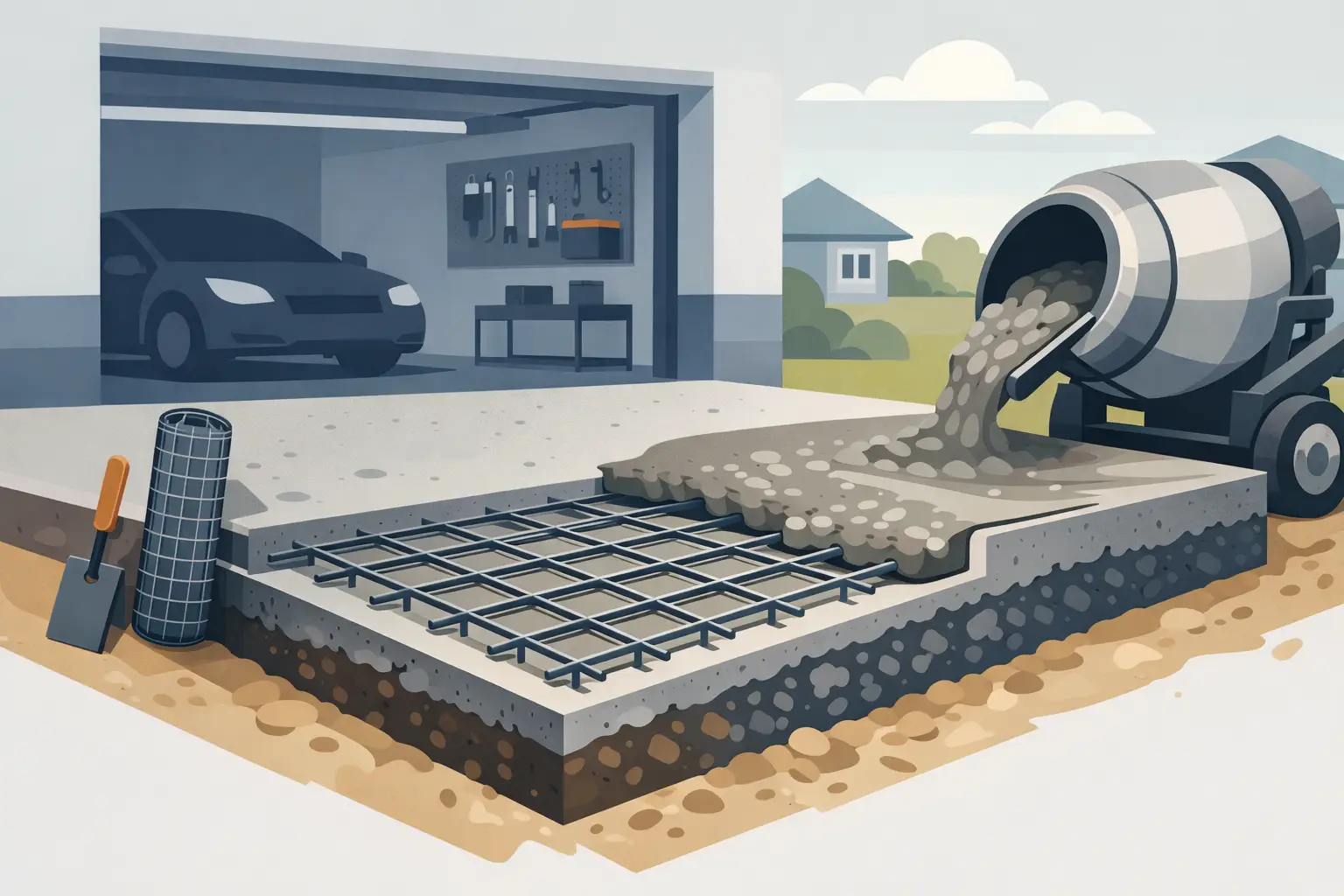
What Mesh for Garage Slab? Get It Right
A garage slab that cracks early usually does not fail because someone missed by a little. It fails because the reinforcement, slab thickness, base prep, or placement was wrong for the loads going on it. If you are asking what mesh for garage slab work, the honest answer is that mesh selection depends on how the slab will be used, what the subgrade looks like, and what the drawings or engineer call for.
For a basic residential garage, welded wire reinforcing mesh is commonly used to help control shrinkage cracking and support slab performance. But mesh is only one part of the system. A heavier vehicle, poor ground, soft fill, edge loading, or a workshop setup with point loads can all push the slab beyond what a light standard mesh can handle. That is where getting specific matters.
What mesh for garage slab jobs depends on
On most jobs, you are not choosing mesh in isolation. You are matching reinforcement to slab thickness, concrete strength, base course quality, joint layout, and expected loading. A slab for one or two passenger vehicles is a different job from a garage that will take a loaded pickup, a van, a lift, or regular pallet jack traffic.
The first question is load. If the garage is strictly for light domestic vehicle use, standard reinforcing mesh may be enough if the slab and subgrade are properly designed. If there will be heavier axle loads or concentrated loads from posts, hoists, or stored materials, the reinforcing often needs to step up, and in some cases the engineer may specify deformed bar rather than relying on mesh alone.
The second question is the ground under the slab. Good compacted base and stable subgrade reduce slab movement and help the mesh do its job. If the base is weak, wet, or inconsistent, even a stronger mesh may not make up for that. Reinforcement controls cracking. It does not fix poor support conditions.
The third question is compliance. For many garage slabs, especially where permits and inspections apply, the reinforcement type and size should follow project drawings, local code, and engineering requirements. If the plans call for a specific mesh grade or bar schedule, that is the specification to follow.
What reinforcing mesh actually does
There is a common misunderstanding on site that mesh stops concrete from cracking. It does not. Concrete will crack as it shrinks, cures, and responds to temperature and load. The role of reinforcing mesh is to control crack width, help hold the slab together, and improve performance after cracking occurs.
That matters in a garage because slabs deal with repeated wheel loads, edge traffic at door openings, and occasional impact from tools or equipment. Proper reinforcement helps limit visible cracking and reduces the risk of one crack opening up and turning into a service issue.
Placement is just as important as mesh size. Mesh sitting on the ground or buried too low in the slab does very little. It needs to be supported on bar chairs so it stays in the correct position during the pour. On real jobs, that is one of the most common failures – the right mesh delivered, but the wrong placement in the slab.
Common mesh choices for garage slabs
In residential slab work, welded wire mesh is often specified in light to medium grades for crack control. The exact designation varies by market and project spec, but the general idea is straightforward: lighter mesh suits lighter-duty slabs, while thicker wire and tighter spacing increase reinforcing capacity.
For a standard residential garage slab, many contractors use a common structural mesh suitable for light vehicle traffic when paired with the right slab thickness and sub-base. That can work well for everyday cars and SUVs. Once the job includes heavier vehicles, workshop use, or questionable ground conditions, the specification often moves to a heavier mesh or to a bar-reinforced design.
Garage slabs also tend to need extra attention at the perimeter and at door openings. These areas see higher stress, especially where vehicles cross the slab edge. It is not unusual for engineers to call for thickened edges, additional bars, or localized strengthening even when mesh is used through the field of the slab.
If you are ordering by habit rather than by drawings, that is where mistakes happen. A mesh that is fine for a patio is not automatically fine for a garage. A slab carrying vehicle loads needs reinforcement chosen for that use, not just whatever is available fastest.
Thickness and mesh go together
You cannot separate the question of what mesh for garage slab work from slab thickness. A typical light-duty residential garage slab may be around 4 inches thick, but that is not a rule for every site or every load case. Heavier use may call for 5 inches, 6 inches, or a different structural design altogether.
As loads increase, the slab itself usually needs to get stronger, not just the mesh. Simply putting heavier mesh into a thin slab is not a proper upgrade path. Reinforcement works with the concrete section. If the slab is undersized, mesh alone will not solve it.
This is especially relevant where vehicle lifts or post-supported equipment are involved. Those concentrated loads often need dedicated footings or thickened slab zones designed by an engineer. Standard slab mesh is not a substitute for that.
Why subgrade and base prep matter more than many think
A well-reinforced slab on bad ground is still a problem slab. If the base is not compacted properly, the concrete can settle, curl, or crack under wheel loads. Mesh helps hold things together, but it cannot stop movement caused by voids or weak support under the slab.
For garage work, the base should be uniform, compacted, and drained. Soft spots should be removed or stabilized before the pour. If fill has been placed, it should be compacted in proper lifts. If there is a history of expansive soils or moisture issues, that needs to be addressed in the slab design.
This is why experienced crews look at the whole system before ordering steel. Reinforcement is one line item, but slab performance is built from the ground up.
Mesh placement mistakes that cost time later
A lot of slab reinforcement problems come down to installation, not product quality. Mesh needs overlap where sheets join, it needs to stay at the specified height in the slab, and it should not be pulled into place by hand while the concrete is being finished unless that method is specifically controlled and accepted.
Bar chairs matter here. If the mesh ends up flat on the base because it was not supported correctly, the slab loses much of the benefit of reinforcement. Tie wire matters too, especially on busy pours where movement is likely. The small accessories are cheap compared with the cost of remedial work after cracking shows up.
Cutting mesh badly around penetrations or edges can also create weak points. If the slab includes drains, service penetrations, or unusual openings, those areas should be detailed and reinforced properly rather than trimmed on the fly.
When mesh is enough and when it is not
For many straightforward residential garage slabs, mesh is a practical and cost-effective reinforcing choice. It is quick to place, easy to price, and well suited to controlling normal slab cracking when the rest of the job is done right.
It stops being enough when the loads become more demanding or more concentrated. Heavy trucks, commercial use, workshop machinery, and poor soil conditions can push the design toward heavier reinforcement, additional bars, thicker sections, or engineered details. If there is any doubt, it is cheaper to confirm the design before the pour than to repair a failed slab later.
That is also why trade buyers tend to order reinforcement as a package, not as a single product decision. Mesh, bar chairs, tie wire, trench mesh, extra bar, and fixings all play a part in getting the slab built properly and keeping the pour on schedule.
Practical buying advice for garage slab mesh
If you are pricing a garage slab, start with the drawings. Check the mesh designation, sheet size, lap requirements, cover, and any added edge or footing steel. Confirm slab thickness and whether there are thickened sections at the perimeter or under load points.
If there are no drawings and this is a simple domestic slab, do not guess past your comfort level. Confirm the expected vehicle loads, ground conditions, and local code requirements before ordering. A small change in use can mean a real change in reinforcement.
From a supply point of view, the safest jobs run best when the reinforcement package arrives complete and ready for placement. That means the correct mesh, enough chairs to hold it at the right height, tie wire for fixing, and any additional bars required at edges or openings. That is the kind of order builders and concrete crews want – no missing pieces, no last-minute site delays, no scrambling once the pump is booked.
If you need a simple answer to what mesh for garage slab work, use this one: choose the mesh that matches the slab design, the load, and the ground conditions – and make sure it is installed where it can actually do its job. Get that right before the pour, and the slab has a far better chance of staying serviceable long after the truck has left site.
Related Posts