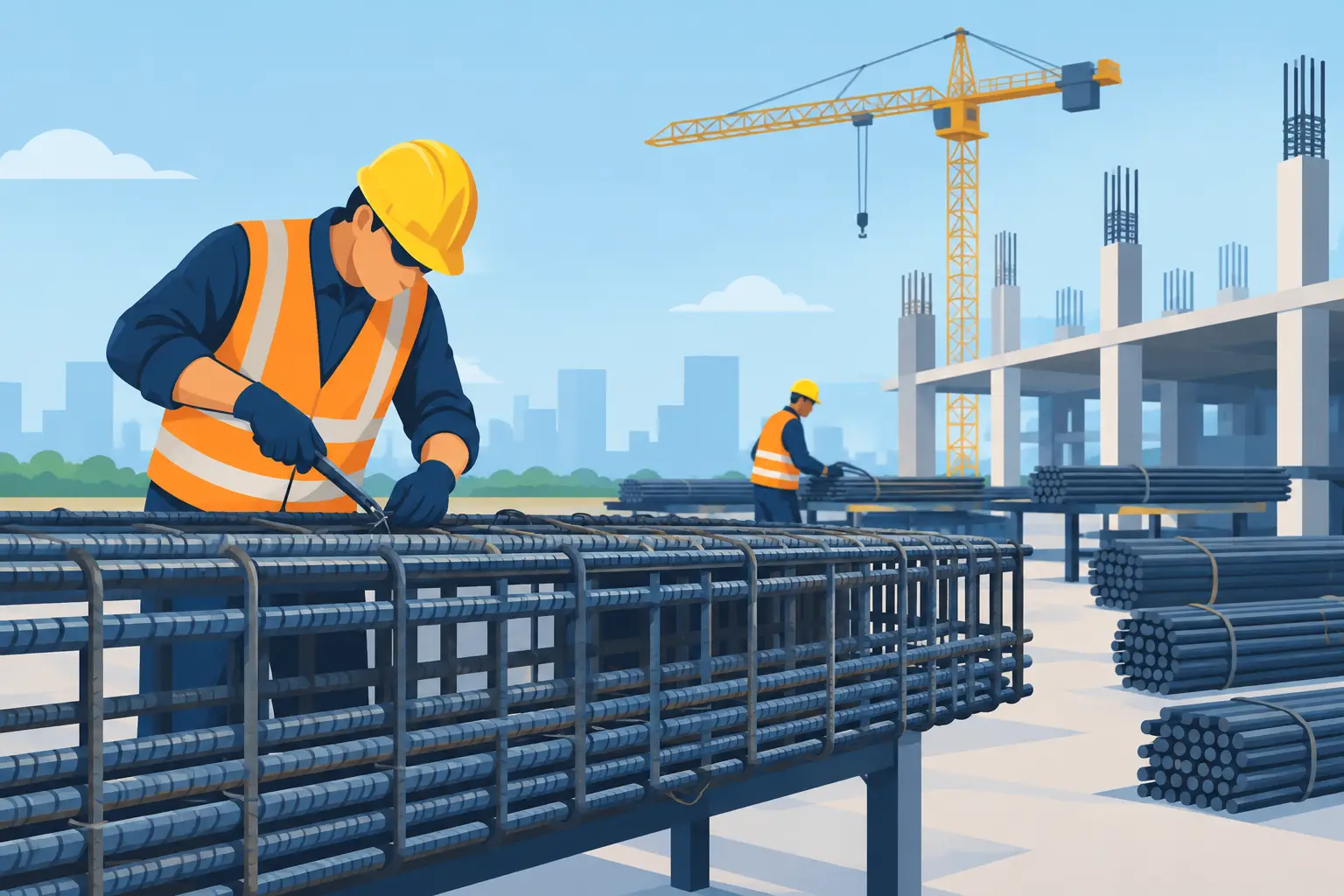
Rebar fabrication services reduce field cutting, support accurate placement, and help concrete crews keep schedules, inspections, and deliveries on track.

Fast Reinforcing Steel Delivery That Keeps Jobs Moving
A concrete crew can lose half a day waiting on steel, and once that happens the delay spreads fast. Formwork sits ready, labor burns time, pump bookings get pushed, and the next trade feels it too. That is why fast reinforcing steel delivery matters on real projects – not as a convenience, but as a basic requirement for keeping work moving.
On paper, reinforcement procurement looks straightforward. You need the right mesh, the right bar sizes, the right quantities, and delivery to site. In practice, timing is where jobs usually tighten up. A footing gets revised, a slab area increases, a drainage detail changes, or a crew gets ahead of program and suddenly needs material sooner than expected. When supply cannot respond quickly, site productivity drops and costs climb in ways that do not always show up neatly on a purchase order.
Why fast reinforcing steel delivery matters
For most builders and concrete contractors, steel is not a product you want sitting around site for weeks if you can avoid it. It takes up space, creates handling issues, and can complicate access on tight residential builds or active commercial sites. At the same time, leaving ordering too late creates obvious risk. The value in fast delivery is that it gives buyers more control over timing without forcing them to overstock.
That control matters across residential, commercial, and civil work. On a house slab, a missed mesh delivery can hold up the pour and throw off the entire week. On a commercial job, delayed bar or stirrups can affect sequencing across multiple crews. On civil work, even a small shortage can stop progress if the specified reinforcement is not on hand when inspection or installation is due.
Fast supply also helps when the issue is not total shortage but incomplete planning. Most experienced crews know their quantities well, but projects change. A quick top-up order for tie wire, bar chairs, extra mesh sheets, or a few lengths of reinforcing bar can be the difference between finishing the day and rescheduling work.
What good fast reinforcing steel delivery actually looks like
Speed on its own is not enough. If the wrong product turns up quickly, it still costs you time. Good service means the material arrives when needed, matches the order, and is suitable for the job without last-minute back-and-forth.
That starts with product availability. A supplier offering fast turnaround should have core reinforcement lines ready to move, including common mesh grades, standard bar sizes, bar chairs, tie wire, and related site essentials. If every urgent order depends on a special transfer or a long confirmation process, it is not really a fast delivery model.
It also depends on practical ordering. Trade buyers do not want to chase vague pricing or wait days for simple answers on stock. Clear product information, transparent per-item pricing, and direct contact for urgent or larger orders all shorten the time between identifying a need and getting material dispatched.
Then there is delivery coverage. Fast service is only useful if it is consistent across the actual work area. A supplier set up for Auckland-wide delivery, for example, can support builders moving between suburbs, infill sites, industrial jobs, and commercial projects without turning every order into a custom freight discussion.
Fast delivery still has to be compliant
No contractor wants to trade compliance for speed. Reinforcing steel is structural material, and getting it wrong is not a minor inconvenience. If a job calls for specific grades, dimensions, or mesh types, those requirements are not optional because the schedule is tight.
That is where specialist reinforcement supply makes a difference. A general building supplier may be able to move products quickly, but speed has more value when it comes from a team that understands reinforcement specifications and typical site use. Buyers should be able to order with confidence, knowing the supplied steel aligns with the needs of concrete and structural work.
There is also a practical point here. Correct material from the start reduces inspection issues, rehandling, and avoidable waste. Fast delivery that causes substitutions, confusion, or on-site workarounds is rarely a gain. Fast delivery backed by reinforcement knowledge is what keeps the program intact.
Where projects usually lose time
Delays around steel supply are not always caused by one major problem. More often, they come from a series of small breakdowns. Stock is not confirmed early enough. Quantities are estimated loosely. Accessories are forgotten. Site access is not communicated properly. Delivery windows are treated as flexible when they are not.
One of the most common issues is ordering the main reinforcement but missing the smaller items needed to install it properly. Mesh might be on site, but without enough chairs or tie wire, crews still slow down. The same applies when stirrups, fixings, or other supporting products are needed to complete the work sequence. Fast delivery works best when the supplier can cover the reinforcement package, not just one line item.
Another issue is assuming all urgent orders are equal. Sometimes a same-day or next-day requirement is realistic. Sometimes it depends on cutoffs, stock position, order size, and delivery location. A dependable supplier will be straight about that. Trade buyers usually prefer a clear answer over a vague promise, because they can plan around reality if they get the facts early.
How trade buyers can get better results from urgent orders
If a job is under pressure, the best orders are the clearest ones. Product type, size, quantity, site address, contact details, and delivery timing should all be confirmed up front. If access is tight, mention it. If unloading conditions matter, say so early. If the order is tied to a pour or inspection, that timing should be part of the conversation.
It also helps to think beyond the immediate shortage. If a crew is ordering extra mesh for tomorrow, check whether bar chairs, tie wire, or additional bar will also be needed. Bundling those requirements into one delivery can prevent the next avoidable delay.
For larger or repeating projects, there is value in working with a supplier that can handle both standard and volume-based orders without making the process harder. The goal is not complexity. It is getting structural materials to site with less friction, whether the order is a few sheets of mesh for a residential slab or a broader reinforcement package for commercial work.
Why local delivery support matters
Construction schedules rarely fail in dramatic ways. More often, they get chipped away by hours lost here and there. That is why local supply capacity matters so much. A supplier set up to move product quickly across the working region can respond better to revised plans, quantity changes, and short-notice requests.
For Auckland projects, fast local delivery has obvious value because traffic, site access, and booking coordination can all affect timing. A supplier that already operates around those conditions is generally better placed to give realistic lead times and respond when a job needs material urgently. That local operating knowledge is just as useful as product knowledge.
This is part of what makes a specialist supplier like Quality Steel Supplies useful to trade customers. The offer is straightforward: compliant reinforcing steel, competitive pricing, and fast delivery backed by direct contact when an order needs attention. For buyers under pressure, that kind of model removes unnecessary delay.
Price still matters – but downtime costs more
Every trade buyer watches material cost, and rightly so. Reinforcement is a core line item, especially on larger slab, footing, retaining, and structural jobs. Competitive pricing matters. But the lowest unit price on paper can become expensive if it comes with unreliable lead times, poor communication, or missing products.
The real comparison is not just steel price versus steel price. It is delivered value. If a supplier can provide compliant material, fair pricing, and fast turnaround that reduces labor downtime and keeps the pour on schedule, that has measurable value on site.
There is always an it-depends element here. For long-range planned procurement, buyers may have more flexibility. For short-notice jobs, remedial work, or active pours, delivery performance becomes far more important. The best supply setup usually balances both – competitive rates for standard purchasing and responsive service when the program tightens.
Fast reinforcing steel delivery is not about rushing for the sake of it. It is about keeping crews productive, protecting the schedule, and making sure the right structural materials arrive when they are actually needed. When supply works the way it should, the job keeps moving and the pressure on site stays manageable.
Related Posts