Rebar fabrication services reduce field cutting, support accurate placement, and help concrete crews keep schedules, inspections, and deliveries on track.
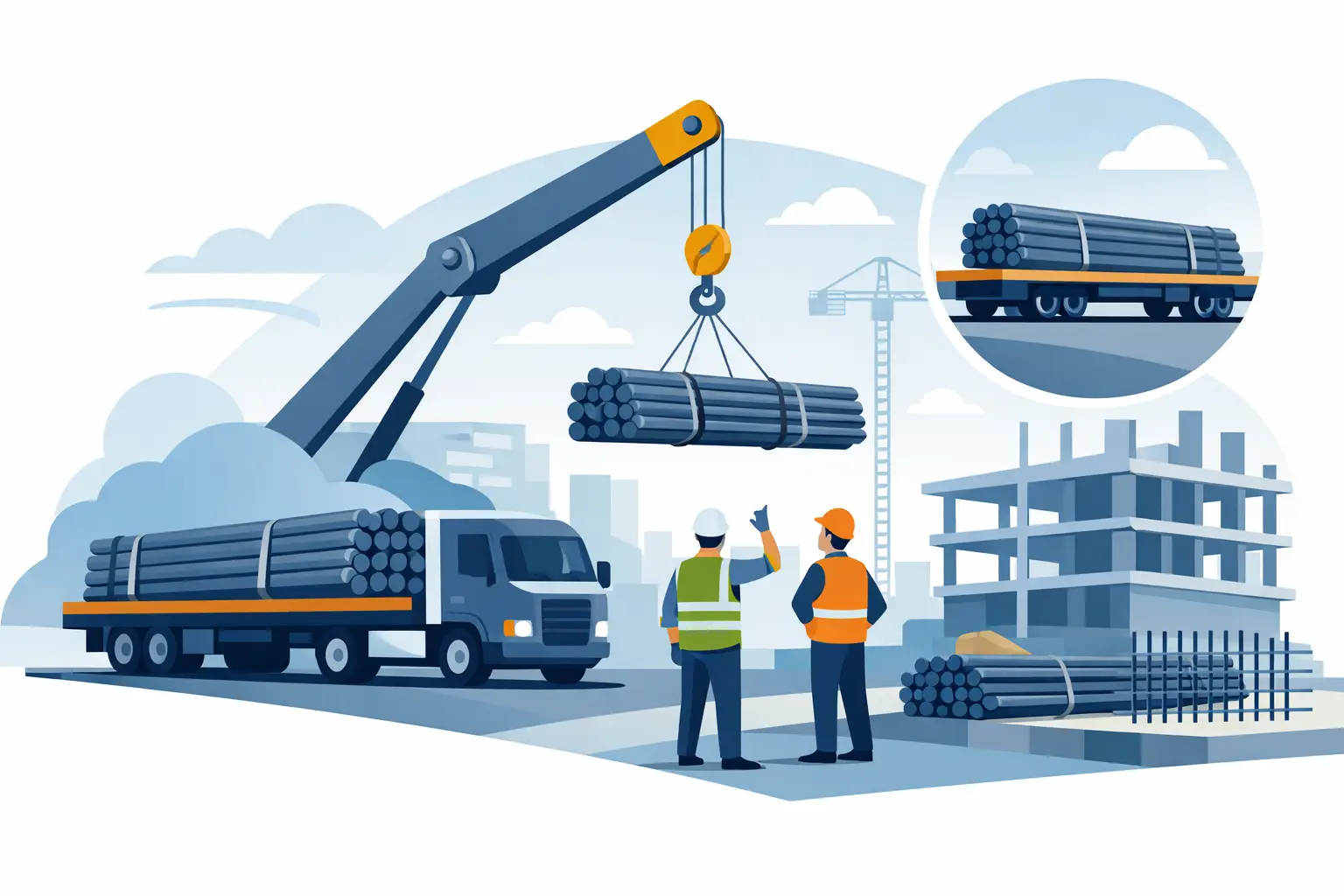
Rebar Delivery Options That Keep Jobs Moving
A concrete pour does not wait because reinforcing steel is stuck in a yard, on the wrong truck, or delivered before the site is ready to receive it. Rebar delivery options are not an afterthought in the buying process. They are part of the work plan, affecting labor, crane time, inspection dates, storage space, and the sequence of every trade that follows.
For builders, concrete crews, civil contractors, and owner-builders, the right delivery arrangement comes down to three things: when the material is needed, where it needs to land, and how it will be unloaded safely. A lower material price can quickly lose its value if the load arrives at the wrong time or creates an extra handling job for the crew.
Choose Rebar Delivery Options Around the Pour Schedule
The best delivery method depends on the stage of the project. A slab package needed before mesh placement has different requirements from cut-and-bent bars needed for a retaining wall, footing cage, or structural beam. Start with the installation date, then work backward from the time needed for site preparation, bar tying, inspection, and concrete placement.
For most planned work, scheduled delivery is the practical choice. It gives the supplier time to prepare the correct bar sizes, mesh sheets, stirrups, tie wire, chairs, and accessories as one workable order. It also gives the site team time to clear access, arrange labor, and make sure the reinforcement can be placed without shifting other materials around first.
A scheduled drop should be booked early where possible, especially when the order includes multiple bar diameters, long lengths, fabricated items, or a large quantity of mesh. These products take up space on a truck and on site. Planning ahead improves the chance of getting the delivery window that fits the job rather than forcing the job to fit the delivery window.
Urgent delivery has its place, but it works best for genuine site gaps. A missed bar size, additional mesh sheets after a quantity change, or replacement stock following a design revision can hold up a crew. Fast delivery support helps recover the day, provided the material is available and the site can receive it. It should not be the default ordering method for a major pour package when a scheduled delivery can reduce risk and cost.
Match the Load to Your Site Access
Before placing an order, look at the delivery route from the street to the unloading point. It sounds basic, but access issues cause many of the avoidable delays in reinforcing steel supply. Narrow driveways, soft ground, overhead lines, parked vehicles, steep entrances, locked gates, and shared accessways all affect what can be delivered safely.
Tell the supplier about any constraints before dispatch. A crew working in a tight residential subdivision may need a different delivery arrangement than a commercial site with open hardstand and a telehandler on standby. Civil work may have plenty of room but limited access around live traffic or excavation areas. The more accurately the delivery conditions are described, the easier it is to send the right load and avoid a failed drop.
Long rebar deserves particular attention. Full-length bars can be efficient for reducing laps and cutting on site, but they need room to maneuver and unload. If access is restricted, shorter lengths, cut bars, or staged deliveries may be more workable. That can add product or handling cost, so it is a trade-off worth discussing before the order is finalized.
The unloading area should be level, clear, and close enough to the work face that the crew is not carrying steel across the site twice. Rebar is heavy, and mesh sheets are awkward even when the quantity is small. Material dropped at the front gate because the designated laydown area was blocked creates unnecessary manual handling and wastes time when the crew should be fixing steel.
Confirm Who Is Handling the Unload
Delivery vehicles transport the order, but site unloading arrangements vary. Some jobs have a forklift, telehandler, crane, or excavator available. Others rely on labor crews to unload smaller quantities by hand. Confirm the plan before the truck arrives, including who will be present and what equipment is available.
Do not assume a driver can place material exactly where the crew wants it. Site conditions, vehicle reach, safety requirements, and available equipment all set limits. If the order needs mechanical unloading or must be lifted over an obstruction, raise that requirement at the time of booking.
For large mesh orders or bundled reinforcing bar, mechanical handling is usually the safer and more efficient approach. It reduces unloading time, keeps the delivery vehicle moving, and lowers the chance of damage to the product or the site. Where manual unloading is appropriate, make sure enough capable workers are ready at the scheduled time.
Order in Installation Sequence, Not Just by Product Type
A reinforcement takeoff may be organized by bar size, mesh type, or drawing reference. That is useful for pricing, but it does not always make for an efficient delivery. On a working site, the crew needs materials in the sequence they will install them.
For example, footing bars and starter bars may be needed first, while slab mesh, bar chairs, tie wire, and edge reinforcement can follow once formwork is ready. Delivering everything at once can suit a larger site with secure storage. On a constrained residential job, it can leave the crew climbing over material that will not be used for another week.
Staged deliveries are a good option when site space is tight, the work is broken into separate pours, or theft and damage are concerns. The trade-off is that multiple drops require better coordination and may involve additional delivery charges. They are often worthwhile when they reduce double handling and keep the laydown area clear.
Bundling related items also prevents small shortages from stopping a placement crew. A rebar order is rarely just rebar. Check whether the installation also requires mesh, chairs or spacers, tie wire, stirrups, concrete fixings, or other specified accessories. One missing pack of chairs can create a bigger problem than the cost of the product suggests, particularly when cover requirements must be maintained before inspection.
Give the Supplier Details That Prevent Mistakes
Clear ordering information is the fastest way to avoid a delivery that is technically correct but unusable for the job. Include the project address, contact name and phone number, requested delivery date, access notes, and unloading requirements. If there are site hours, gate codes, traffic restrictions, or a required call-ahead procedure, make those clear from the start.
The material description needs the same level of care. Confirm bar diameter, grade, length, quantity, mesh type, sheet size, and whether bars are straight, cut, bent, or fabricated to a schedule. If the order is based on structural drawings or a bar bending schedule, check revisions before dispatch. Sending the old revision can lead to costly rework even if the steel itself meets specification.
For larger or more complex orders, it is sensible to separate the delivery instruction from the product list. That gives both the supplier and the site team a clean record of what is arriving, when it is arriving, and how it is to be handled. It also makes it easier to check the load against the order before the truck leaves.
Plan for Weather, Storage, and Site Changes
Delivery planning does not stop once the truck is booked. Weather can close access routes, turn a laydown area into soft ground, or delay formwork and reinforcement placement. If rain, wind, or a schedule change affects the site, contact the supplier early. A short notice call may allow the load to be rescheduled before it is dispatched.
Rebar can be stored outdoors, but it should be kept off mud and standing water where practical. Use dunnage or timber supports so bundles remain accessible and identifiable. Keep different bar sizes separated, protect tags and fabrication marks, and avoid stacking material where it may be buried under other supplies. The goal is simple: the crew should be able to pick the correct steel when it is time to tie, without sorting through mixed bundles.
Inspect the delivery when it arrives. Check quantities, bar sizes, mesh type, visible damage, and any fabricated pieces against the packing information. Raising a discrepancy immediately gives the best chance of fixing it before the crew reaches that stage of the work.
Delivery Is Part of the Reinforcement Package
Buying compliant reinforcement at a competitive price matters, but dependable supply is what keeps the job moving. Quality Steel Supplies approaches delivery as part of the material service, not a final box to tick after the order is paid for. Clear pricing, direct contact, and practical support are especially valuable when a site needs standard stock quickly or a large-volume order coordinated around a program.
The best result is not always the earliest possible drop. It is the delivery that arrives with the correct materials, reaches a safe unloading point, and leaves the crew ready to start fixing steel. Set that plan before the pour pressure builds, and delivery becomes one less variable on a job that already has plenty.
Related Posts