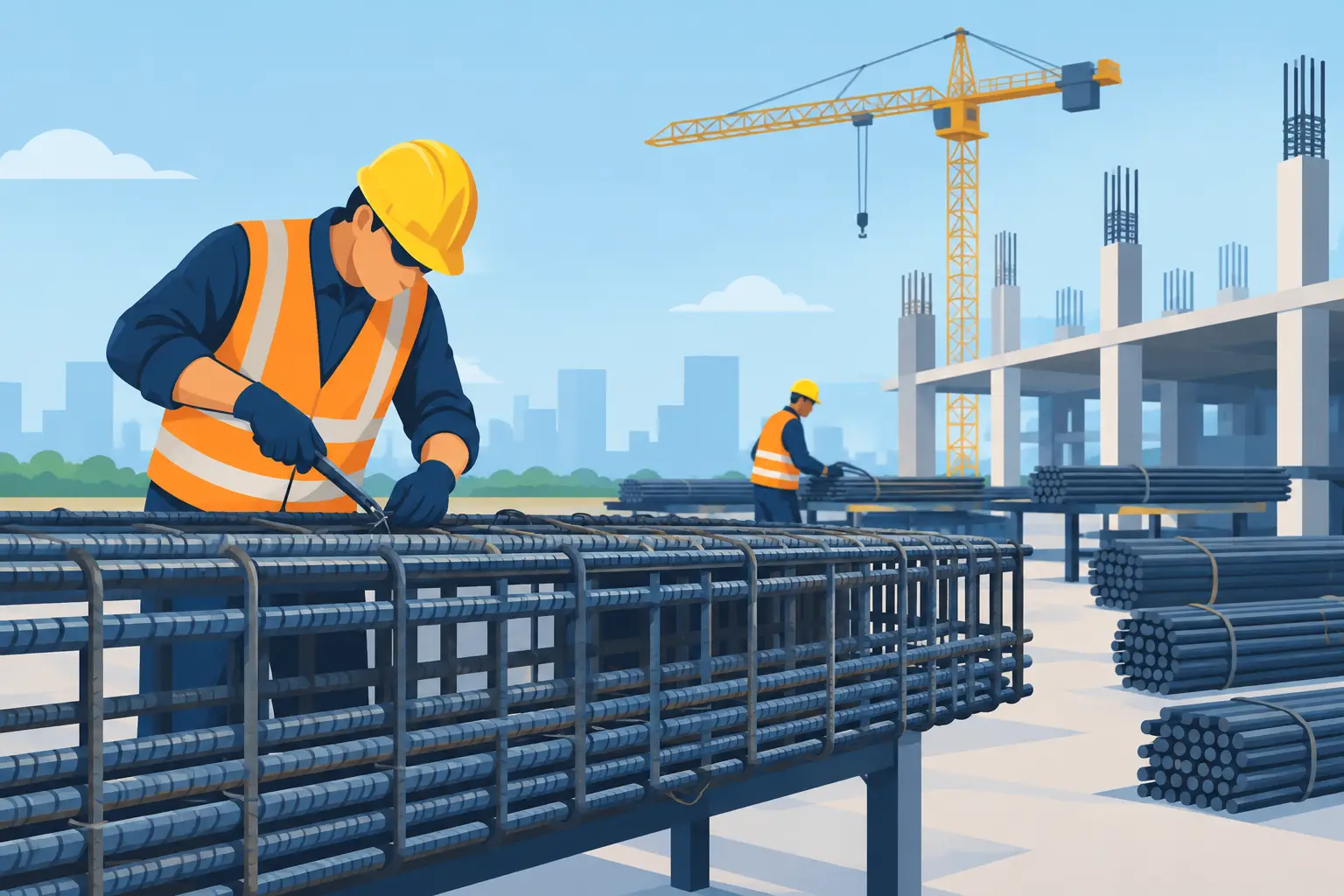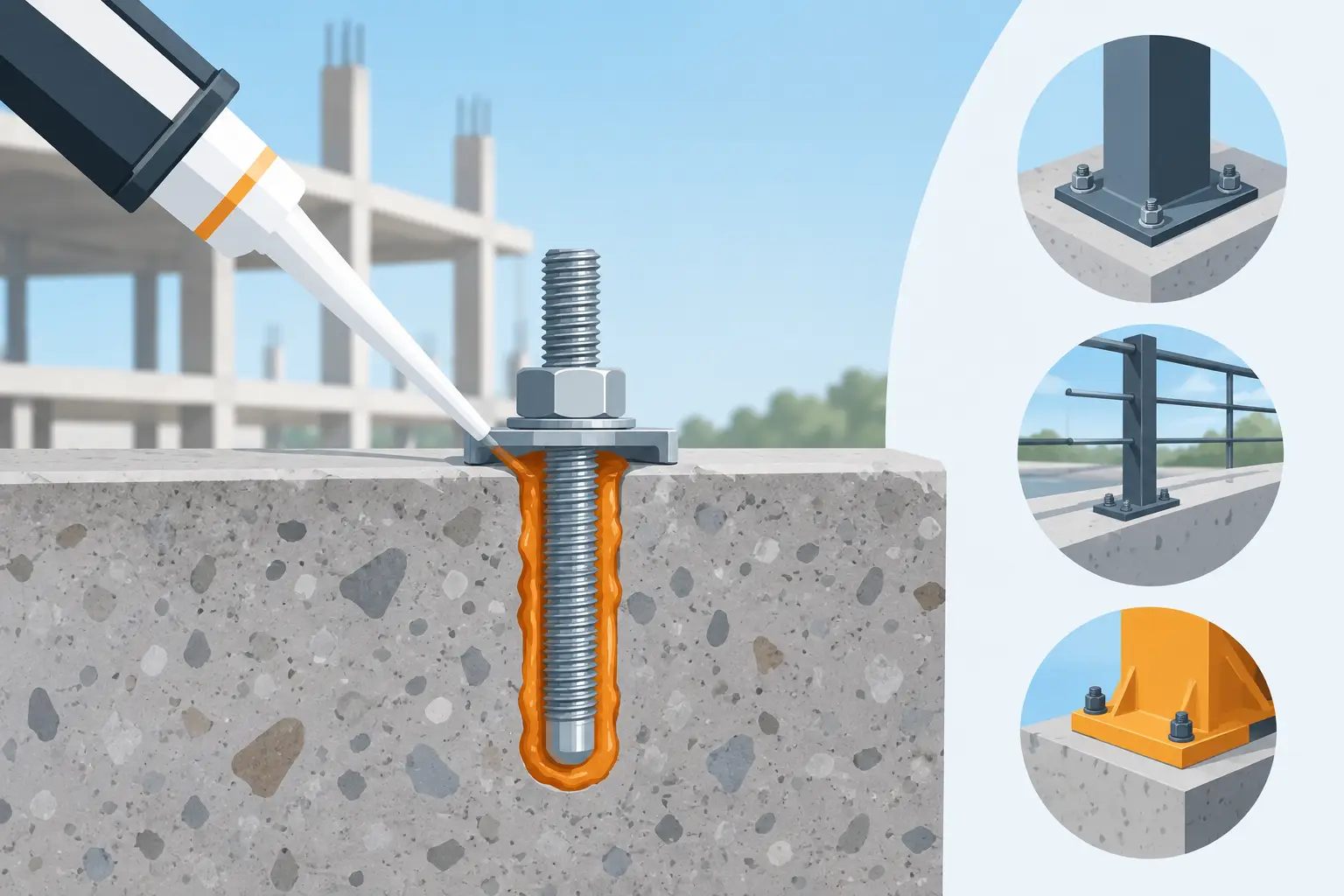
Rebar fabrication services reduce field cutting, support accurate placement, and help concrete crews keep schedules, inspections, and deliveries on track.
Plastic Bar Chairs Versus Steel: What Holds Up?
A bar chair is a small item with a large job: it keeps reinforcing steel at the specified height while concrete is placed, vibrated, and finished. Get it wrong and the reinforcement can lose required cover, shift during the pour, or end up sitting on the subgrade. When weighing plastic bar chairs versus steel, the right answer comes down to the reinforcement layout, expected load during placement, exposure conditions, and the project specification – not simply which chair costs less per piece.
For most slab, footing, wall, and driveway work, both options can have a place. The practical question is whether the chair will hold position, protect the specified cover, and suit the concrete element without creating avoidable problems on site.
What Bar Chairs Need to Do
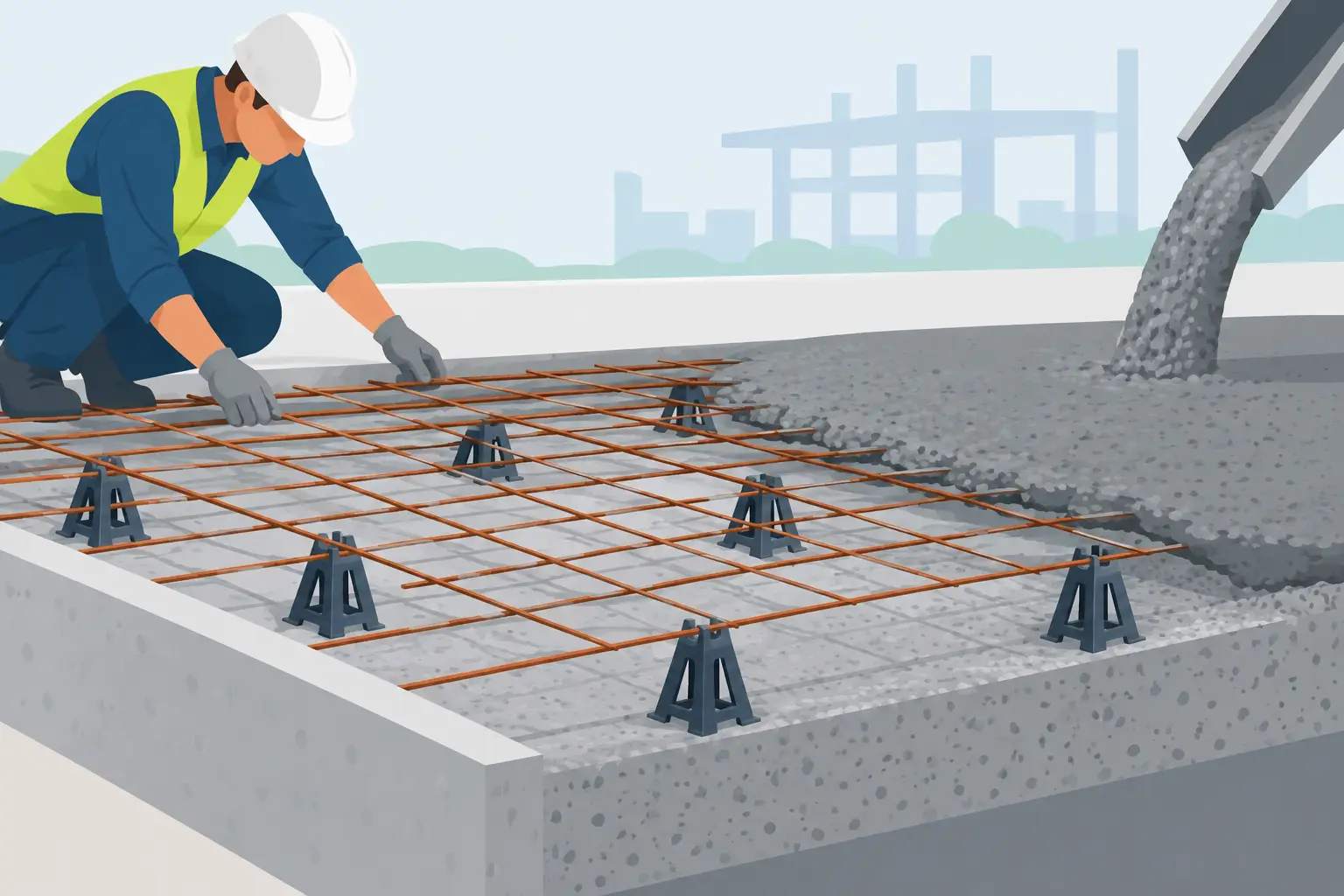
Bar chairs support reinforcing bar or mesh before and during concrete placement. Their purpose is to maintain the designed distance between the steel and the formwork, vapor barrier, or compacted base. That distance is the concrete cover, and it matters for bond, durability, fire performance, and protection against corrosion.
A chair also needs to remain stable under the reinforcement itself, foot traffic, pump hose movement, and concrete placement. A chair that tips, sinks, or breaks can leave steel at the wrong level even if the crew set it out correctly at the start.
Chair spacing matters as much as chair material. Wide spacing can allow mesh to sag between supports. Tightening the spacing is often the better fix where reinforcement is heavy, where workers need to walk the steel, or where concrete is being placed aggressively. Always follow the engineer’s details and the relevant project requirements for cover, support type, and chair spacing.
Plastic Bar Chairs Versus Steel on the Jobsite
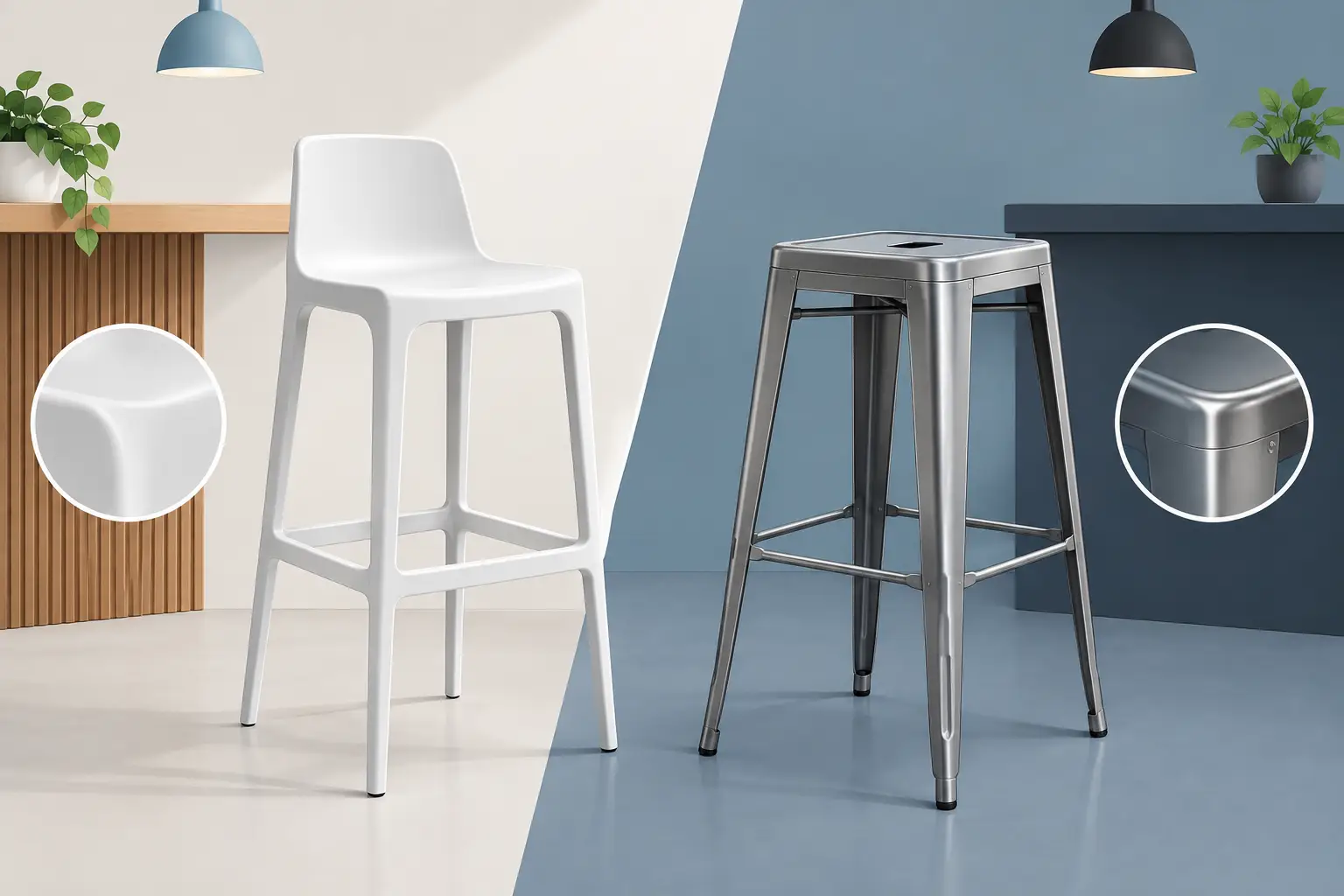
Plastic chairs are commonly used under mesh and lighter reinforcing layouts, particularly where a broad base helps prevent the support from pressing into sand, gravel, or a membrane. Steel chairs are generally selected where higher point loads, heavier bar assemblies, or more demanding placement conditions call for greater stiffness.
The material alone does not guarantee performance. Chair height, base shape, bar cradle design, gauge or wall thickness, and the condition of the supporting surface all affect the outcome. A correctly selected plastic chair can perform well under standard welded wire reinforcement. A light steel chair on uneven ground can still rock or punch through a membrane if it is not suited to the application.
Where Plastic Chairs Make Sense
Plastic bar chairs are noncorrosive and do not introduce an exposed steel support within the cover zone. That is a useful advantage in slabs and other work where moisture exposure is a concern. They are also lightweight, quick to handle, and typically have a wider footprint than wire-style steel chairs.
That wider base is valuable over vapor barriers, polystyrene systems, or prepared subbase. It can reduce the chance of a chair sinking under the mesh before concrete arrives. Many plastic designs also provide a positive cradle that helps keep mesh from rolling or sliding off the support.
For standard residential slabs, patios, walkways, and light flatwork, plastic chairs are often the straightforward choice when their load rating and height match the design. They are especially practical when the crew needs a simple, consistent support that is easy to distribute across a large area.
Plastic does have limits. It can crack under concentrated loads, especially in cold conditions or when poor-quality chairs are used. A plastic chair may also fail if workers repeatedly step directly on unsupported mesh, stack bar bundles over it, or drag heavy equipment across the reinforcement. If the steel is moving underfoot, more chairs or a stronger chair is required – not just a faster pour.
Where Steel Chairs Earn Their Place
Steel bar chairs are well suited to heavier reinforcement, elevated mats, thick sections, and congested steel cages. They provide a rigid support point and can handle more demanding loads when properly sized. For foundations with multiple bar layers, grade beams, retaining walls, and structural pours, steel chairs can make it easier to hold the reinforcement at the required elevation.
They are also useful where the bar arrangement itself needs more support. Large-diameter rebar, bundled bars, and tightly spaced grids place loads on chairs that can exceed what a standard plastic support is intended to carry. A steel chair with the correct height and wire size offers a more stable platform in these situations.
The trade-off is corrosion risk. Ordinary steel chairs should not be assumed suitable for every exposed or corrosive environment. If a steel chair is too close to the concrete surface, becomes exposed after finishing, or does not have adequate cover, it can become a pathway for staining and deterioration. Project specifications may call for plastic, coated, stainless, or other approved supports in certain conditions.
Steel chairs can also have smaller contact points. On soft subgrade or a membrane, those points may sink or puncture the surface unless they are paired with an appropriate base or used over a firm substrate. Match the chair to what it sits on, not only to what it supports.
Load and Placement Are Usually the Deciding Factors
A common mistake is selecting chairs based only on finished concrete thickness. A 4-inch slab may look like a light-duty job, but a heavy mesh sheet, close chair spacing, active foot traffic, and a pump pour can create meaningful temporary loading before the concrete sets.
Consider how the pour will actually run. If workers will walk boards over the reinforcement and avoid stepping on the steel, plastic chairs may be fully suitable. If the crew will be moving continuously across a heavy mat, placing concrete from a hose, and tying additional bars in place, a stronger support system may be needed.
For steel reinforcement that is raised well above the base, stability becomes more important. Taller chairs have more leverage and are easier to knock sideways. In that situation, use supports designed for the required elevation, position them at a spacing that controls sag, and secure reinforcing steel where the detailing requires it. Tie wire holds intersections together; it does not compensate for underspecified chairs.
Cover, Corrosion, and Compliance
Required cover is set by the design and applicable code requirements. It varies depending on whether concrete is cast against earth, exposed to weather, located indoors, or protected from moisture. The chair must deliver that cover accurately after the concrete is placed, not just before the crew starts pouring.
This is where plastic chairs can be attractive for exposed slabs and moisture-prone work. Because they do not rust, they avoid one of the concerns associated with uncoated steel supports near the finished face. Still, plastic chairs must be approved or suitable for the job. A chair that is too narrow, too brittle, or incorrectly sized does not become compliant because it is nonmetallic.
With steel chairs, verify that the support type is acceptable under the drawings and specifications. Do not substitute a general steel chair for a specified noncorrosive support, and do not allow chair legs to sit so close to the concrete face that cover is compromised. The structural engineer’s documents control where there is any conflict between site preference and design requirements.
Cost Is More Than the Per-Chair Price
Plastic chairs often look like the economical option for broad, repetitive slab work. They are quick to place and can reduce handling time. Steel chairs may cost more per unit, but they can reduce movement and rework on heavily reinforced work where a lighter chair would require much closer spacing or would not be suitable at all.
The expensive outcome is not choosing the higher-priced support. It is having to lift and reset mesh during a pour, stopping placement because steel has dropped, or discovering after the fact that cover was not maintained. Buying the correct chair type and enough of them is a small cost compared with remedial work or a delayed inspection.
When pricing a job, count the supports required from the planned spacing rather than ordering by guesswork. Include extra chairs for edges, laps, penetrations, service openings, changes in reinforcement level, and areas that will see more site traffic. These are the locations where reinforcement is most likely to lose position.
A Practical Selection Method
Start with the drawings: identify the required cover, bar or mesh type, reinforcement level, and exposure classification. Then look at the base condition and how the crew will place the concrete. A standard mesh slab over a vapor barrier often favors a plastic chair with a broad footing. A raised reinforcement mat or heavy foundation cage may call for steel chairs designed for that loading.
If the job has unusual conditions – tall supports, multiple steel layers, chemical exposure, architectural concrete, or a strict noncorrosive-support specification – confirm the chair choice before materials are delivered. It is quicker to check the detail than to change a support system after the reinforcement is already tied.
The best chair is the one that keeps the steel exactly where the design puts it through the entire pour. Choose for the load, cover, and site conditions, then order enough to keep the reinforcement from moving when the work gets busy.
Related Posts