Compare plastic bar chairs versus steel for concrete reinforcement. Learn how load, cover, exposure, cost, and compliance guide the right choice onsite.

Rebar Fabrication Services That Keep Jobs Moving
A concrete pour rarely gets held up because a crew does not know how to tie steel. It gets held up when bars arrive uncut, bends do not match the drawings, bundles are hard to sort, or a missing shape is discovered after the forms are ready. Rebar fabrication services are built to prevent those costly site problems by turning reinforcement drawings into cut, bent, tagged, and deliverable steel.
For builders, concrete contractors, and civil crews, fabrication is not an extra step added to the order. It is the difference between receiving raw material and receiving reinforcement that can be placed in sequence. The right approach saves labor in the field, reduces handling, and gives the foreman a clearer path from delivery to inspection.
What Rebar Fabrication Services Include
Rebar fabrication starts with the approved structural drawings and bar bending schedule. Each reinforcing bar is identified by size, grade, length, shape, quantity, and location. The fabricator cuts straight bar to length, bends specified shapes such as hooks, stirrups, U-bars, and closed ties, then groups the material into marked bundles for the job.
A good fabrication package is organized around placement, not just production. Tags should let the crew match a bundle to the relevant mark on the schedule. Where practical, deliveries should be arranged in the sequence the steel will be installed. That matters on tight sites, where crews do not have room to spread every bundle across the slab area and search for the next bar.
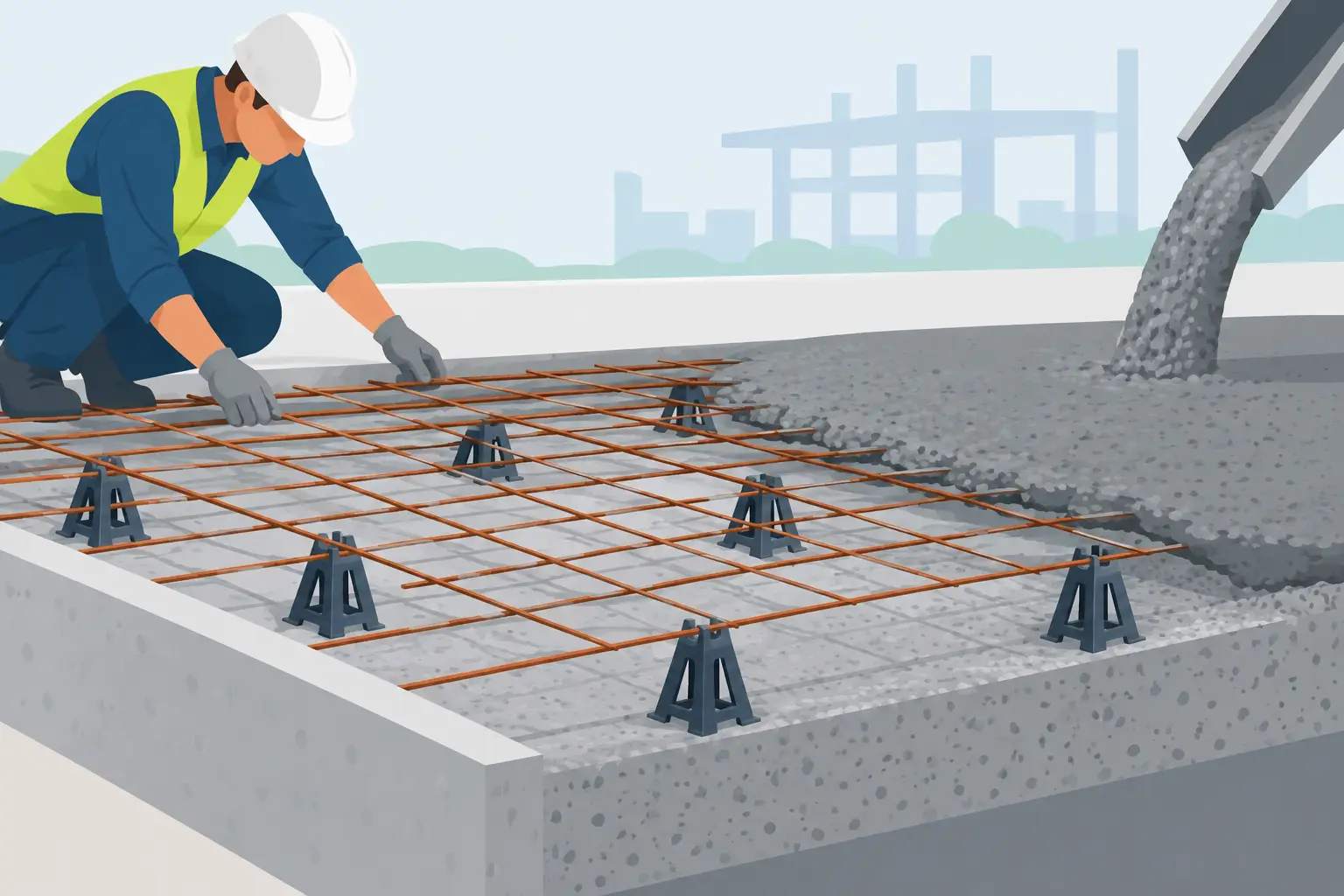
Fabrication can cover standard reinforcing bar as well as commonly used bent components. Welded wire reinforcement, bar chairs, tie wire, couplers, and concrete accessories may be supplied alongside the fabricated steel, although they are not fabricated in the same way. Ordering these items together helps avoid the common situation where the rebar is on site but the crew is short of chairs, ties, or the correct mesh.
Why Field Cutting Costs More Than It Looks
Cutting and bending steel on site can make sense for a small repair, a simple footing, or a job with genuinely uncertain dimensions. For larger slabs, retaining walls, foundations, columns, and commercial structural work, it often creates more cost than it avoids.
The immediate cost is labor. A crew member measuring, cutting, bending, and sorting bar is not placing steel, checking cover, or preparing for the pour. There is also equipment time, offcut waste, and the risk of producing a bend that does not meet the scheduled shape or required dimensions.
The larger risk is disruption. A single incorrect bar mark can force the crew to stop and rework an area. If a replacement is needed after the delivery truck has left, the job can lose hours or a full shift. When the concrete booking, pump crew, and inspection are already scheduled, a small steel issue becomes an expensive coordination problem.
Fabricated rebar does not remove the need for site checks. Dimensions still need to be verified against the latest approved drawings, and the crew still needs to maintain cover, lap lengths, spacing, and tie requirements. It does, however, remove a large amount of repetitive processing from the field.
Start With a Clear Bar Bending Schedule
The quality of fabricated reinforcement depends on the information supplied. The fabricator can cut and bend accurately, but cannot reliably guess an unclear detail, resolve conflicting revisions, or know that a foundation layout changed after the original schedule was issued.
Before placing an order, confirm the drawing revision and review the bar bending schedule for bar marks, diameters, quantities, shapes, and dimensions. Check whether dimensions are measured to the outside, inside, or centerline of bends where the drawing standard requires it. Make sure laps, hooks, development lengths, and splice locations are shown clearly rather than assumed.
For straightforward residential work, the schedule may be relatively simple. A commercial or civil package can include hundreds of bar marks across multiple pour stages. In those cases, separating orders by footing, wall, slab, beam, or pour sequence can make receiving and placement much easier.
Questions Worth Resolving Before Fabrication
Confirm whether the specified material grade and bar sizes are available, whether the design calls for standard bends or special shapes, and whether bars need to be delivered loose or bundled by mark. Also confirm the site access conditions. A full-length delivery may not suit a constrained urban site, and bundles that are convenient for transport are not always convenient for manual handling.
If a drawing leaves room for interpretation, stop before fabrication begins. A short clarification at the ordering stage is far cheaper than remaking steel after it reaches the site.
Getting Delivery Right Matters as Much as the Bends
Rebar is heavy, awkward, and often needed at a specific point in the construction sequence. Delivery planning should cover the practical realities: truck access, unloading equipment, safe set-down areas, ground conditions, and the order in which bundles will be needed.
For a slab, mesh and perimeter bars may be required first, followed by trench reinforcement, dowels, and local strengthening bars. For a multi-stage foundation, the first delivery may only need the steel for the next pour. Sending every fabricated item at once can create congestion, increase handling, and raise the chance that bundles are moved or mixed up.
Urgent deliveries are valuable when a site is genuinely short of a critical item. They are not a substitute for checking quantities and timing early. The best result is a supplier that can support a fast turnaround when needed, while also giving crews clear pricing, direct contact, and dependable delivery windows for planned work.
Compliance Is a Site Responsibility, Not Just a Supplier Claim
Reinforcing steel must match the project specification and applicable building requirements. Fabrication should follow the approved schedule, but installation must still be checked before concrete is placed. Inspectors and site supervisors are looking at more than whether there is steel in the formwork.
They may check bar size and grade, spacing, cover, laps, anchorage, bend orientation, chairs, cleanliness, and the position of dowels or starter bars. Fabricated material makes those checks easier when bars are correctly tagged and grouped, but it does not replace competent supervision.
Avoid making substitutions in the field without approval. Replacing one bar size with another, changing a bend, shortening a lap, or relocating steel to make installation easier can affect structural performance. If material needs to change, get direction from the project designer or the responsible professional before proceeding.
Choosing a Fabrication Supplier
Price matters, but a low line-item price is not always the lowest installed cost. A supplier should be able to provide compliant reinforcing steel, fabricate to the schedule, communicate clearly about lead times, and deliver material in a condition the crew can work with.
Look for practical signs of control: clear bar identification, accurate quantities, straightforward order confirmation, and a direct contact person who can deal with changes quickly. For repeat contractors, consistency is especially valuable. When the same ordering process works across foundations, retaining walls, slabs, and structural additions, estimating and site coordination become less complicated.
It also helps to buy the related reinforcement essentials from one source when the order suits it. Matching rebar with mesh, chairs, tie wire, and stirrups reduces the number of purchase orders and makes it less likely that a small missing item delays placement.
A Better Way to Order Fabricated Rebar
Send the current approved drawings and bar bending schedule early enough to allow for review, fabrication, and delivery. State the project name, contact details, delivery address, required date, unloading restrictions, and whether the order is tied to a particular pour stage. If a delivery must arrive before a concrete booking or inspection, say so clearly.
When the material arrives, check the delivery against the packing information before the truck leaves where possible. Identify the bundles, keep tags attached until installation, and store steel off mud and standing water when site conditions allow. A quick receiving check is far easier than locating a missing bar mark once the crew has started tying.
The best fabrication service is the one that makes reinforcement feel predictable. When the schedule is clear, the steel is correctly prepared, and delivery fits the site plan, the crew can focus on placement and inspection instead of cutting bar under pressure. That is how a well-run rebar order helps keep the next pour where it belongs: on schedule.
Related Posts