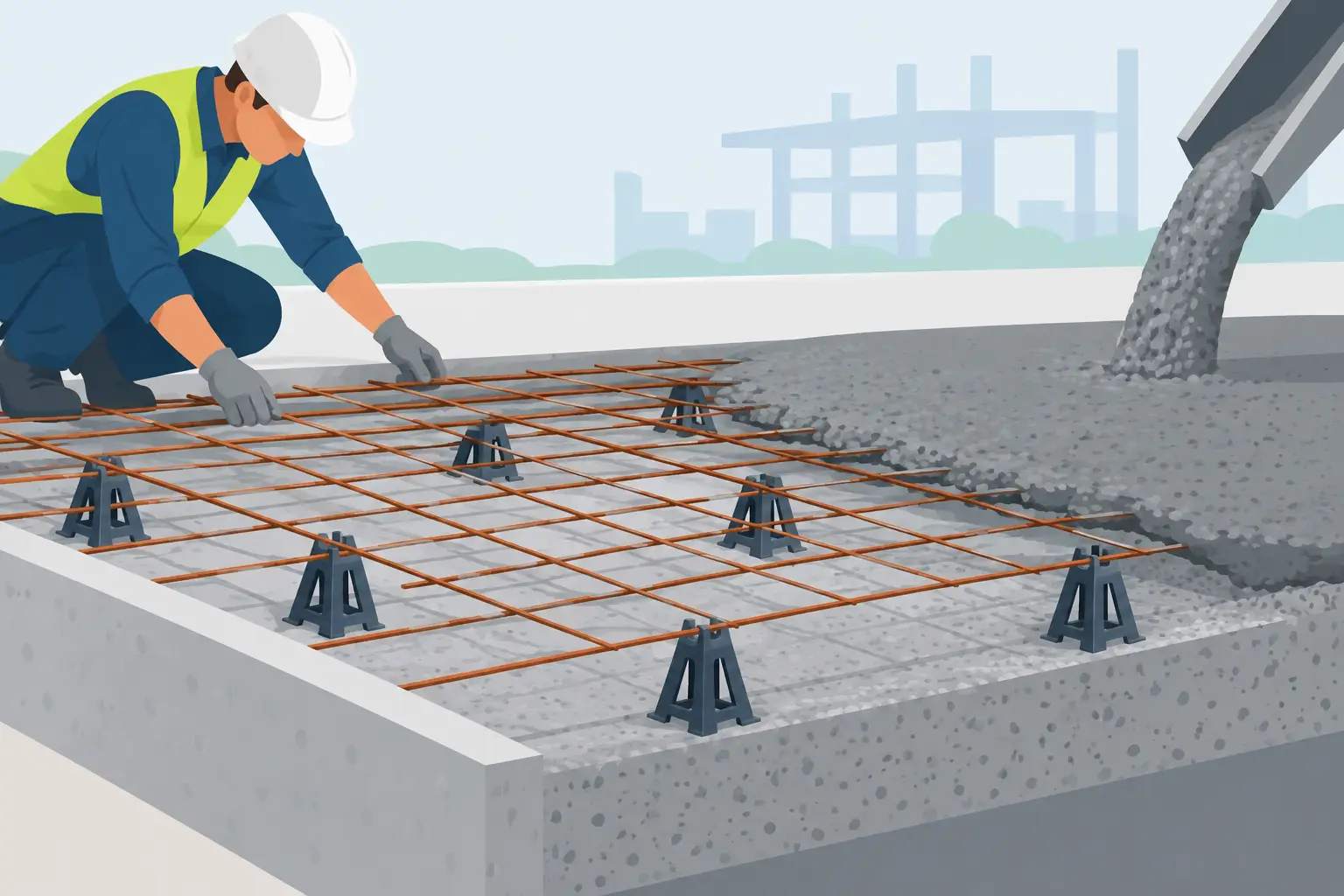
Rebar fabrication services reduce field cutting, support accurate placement, and help concrete crews keep schedules, inspections, and deliveries on track.
When to Use Chemical Anchors in Concrete
A mechanical anchor is quick, familiar, and often the right call. But when to use chemical anchors comes down to more than holding power. The base material, edge distance, load direction, embedment depth, and installation conditions all matter. On a structural job, choosing the wrong fixing can mean cracked concrete, failed inspections, rework, and a crew standing by while the problem gets sorted.
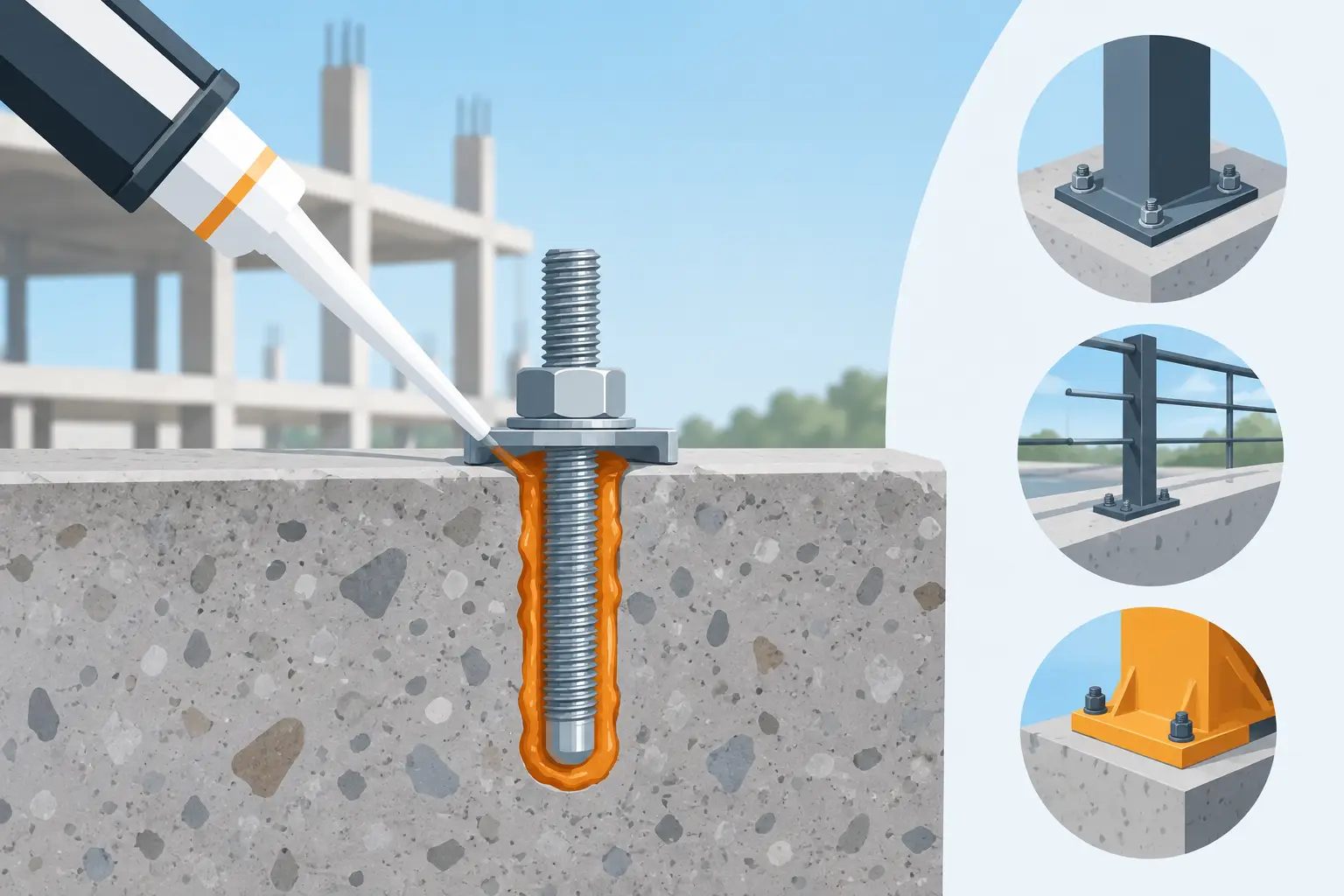
Chemical anchors, also called adhesive anchors or injection anchors, use a resin cartridge and a threaded rod or reinforcing bar to create a bond inside a drilled hole. They are not a universal replacement for expansion anchors. They are the better option where the concrete condition, geometry, or design load makes a mechanical fixing unsuitable.
When to use chemical anchors on a concrete job
Use a chemical anchor when the fixing needs high capacity without placing large expansion forces into the concrete. This is particularly useful in cracked concrete, near slab edges, close to corners, or where several anchors need to sit close together.
Expansion anchors develop load by bearing against the drilled hole as they expand. That can work well in sound, thick concrete with adequate edge distance. In contrast, an adhesive anchor transfers load along the embedded length of the rod or bar. Because it does not need to wedge the concrete apart, it can be specified in locations where expansion anchors may create a breakout risk.
Chemical anchors are commonly selected for structural steel base plates, handrails, safety barriers, equipment supports, overhead services, façade brackets, and post-installed reinforcing bar. They are also practical for retrofit work, where the structure is already in place and the available fixing location is not ideal.
The key word is specified. A chemical anchor should be selected from an approved system with published design data for the substrate and loading condition. Resin, rod grade, hole diameter, embedment, spacing, edge distance, and curing time are all part of the system.
Situations where adhesive anchors earn their place
Close to an edge or corner
A slab edge, narrow wall, curb, or small concrete pedestal gives you limited room for a conventional expansion anchor. If the anchor expands too close to an edge, the concrete can split or break out under load.
An adhesive anchor can reduce that expansion pressure, but it does not remove the need for engineering checks. Edge distance still affects concrete breakout strength. The correct solution may be a deeper embedment, a smaller rod, a different anchor layout, added reinforcement, or a redesigned connection.
Cracked concrete
Concrete cracks. Shrinkage, temperature movement, loading, and normal building movement can all create cracking over the life of a structure. If the anchor will be used in a tension zone or a location where cracking is expected, use an adhesive system rated for cracked concrete.
Do not assume every cartridge is suitable. General-purpose polyester products may be acceptable for light-duty nonstructural work, but they are not automatically appropriate for structural anchors in cracked concrete. Check the product approval and the engineer’s detail before drilling.
Heavy loads and high tension loads
For a heavy bracket, steel column base, machinery restraint, or load-bearing connection, chemical anchors can provide strong performance when the design calls for sufficient embedment. They are especially useful where tension loads are significant and a longer embedment can be achieved.
More embedment is not automatically better. Deep holes take longer to drill and clean, require more resin, and may intersect existing reinforcement or services. The load path must also be considered. An anchor can have adequate pullout capacity while the concrete member itself lacks the strength to resist breakout or splitting.
Post-installed rebar and concrete extensions
Chemical anchoring is regularly used to connect new concrete work to existing concrete. Examples include slab extensions, wall additions, stair landings, footings, curbs, and repair pours. Reinforcing bar is drilled and bonded into the existing member so the new work can transfer forces as designed.
This is not simply a matter of drilling a hole and filling it with resin. Post-installed rebar needs the correct bar size, hole diameter, embedment length, adhesive type, and development detail. The engineer may require specific cleaning procedures, minimum cover, bar spacing, and inspection records. If the existing concrete is weak, deteriorated, or heavily cracked, the detail may need to change.
Wet holes, water exposure, or difficult site conditions
Some adhesive systems are approved for damp or water-filled holes, while others are not. The same applies to installation temperatures, overhead applications, sustained loads, and seismic loading. Conditions on site can quickly rule out the cartridge in the truck.
Read the manufacturer’s data before installation. If the hole is wet, the substrate is saturated, or the work is being done in cold conditions, use a system specifically rated for those conditions. Trying to make a standard resin work outside its limits is not a shortcut. It is a failed anchor waiting to happen.
When a mechanical anchor may be the better choice
Chemical anchors take more preparation than mechanical anchors. The hole must be drilled to the correct diameter and depth, cleaned properly, filled with the right amount of resin, and left undisturbed until curing is complete. On a fast-moving site, that time matters.
For light-to-medium-duty fixtures in sound concrete, a mechanical anchor is often more economical and faster to install. It can be loaded immediately or soon after installation, depending on the anchor type. This suits items such as light brackets, temporary supports, and nonstructural fixings where the approved capacity and edge distances are available.
Avoid chemical anchors when the base material is unsuitable, the hole cannot be cleaned, the required cure time will delay critical work, or the connection has not been designed for adhesive anchoring. Hollow masonry, weak block, and deteriorated concrete may need specialist sleeves, alternative fixings, or a different support detail.
Installation quality decides the result
A quality resin does not compensate for poor installation. Adhesive anchor failures are often caused by dust left in the hole, incorrect mixing, short embedment, wrong hole diameter, or loading before the resin has cured.
The basic process is simple, but each step needs to be done correctly: drill to the specified diameter and depth, clean the hole using the stated blow-brush-blow method or approved vacuum procedure, dispense resin until the color is consistent, fill the hole from the back, then insert the rod or bar with a twisting motion. Set the projection and leave it alone for the full cure period.
Overhead and horizontal installations need extra care because resin can sag or run if the product is not approved for that orientation. Threaded rod should be clean and free from oil. Rebar should also be clean, with loose rust, dust, and contaminants removed before bonding.
On critical structural work, record the product batch, installation date, hole depth, bar or rod size, installer, and cure conditions. A simple installation record gives the project team something solid to check if questions arise later.
Check the design data before ordering
Before buying anchors and resin, confirm the substrate strength, concrete thickness, cracked or uncracked condition, load type, edge distance, spacing, rod grade, and required embedment. For structural applications in the United States, anchor design commonly needs to align with the project specifications, approved product evaluation data, and applicable requirements such as ACI 318 anchoring provisions.
Do not substitute a resin or rod simply because the diameter looks the same. Different systems have different approved capacities, installation temperatures, and cure times. If a detail calls for an adhesive anchor system, supply the complete approved system rather than mixing products from different manufacturers.
For any anchor carrying structural, safety, overhead, or life-safety loads, get the engineer’s detail and follow it exactly. That is faster than drilling twice, and far cheaper than repairing a failed connection.
Chemical anchors are a practical answer when conventional expansion fixings put too much stress on the concrete or cannot meet the required load and layout. Get the design checked, use approved materials, and give the installation the same attention you give the concrete work around it.
Related Posts