Rebar fabrication services reduce field cutting, support accurate placement, and help concrete crews keep schedules, inspections, and deliveries on track.
How to Store Rebar Onsite Without Costly Damage
A rebar delivery can be on site for weeks before the concrete crew is ready. If it is dropped straight onto mud, mixed with offcuts, or left where equipment can run over it, that material can quickly become a placement problem. Knowing how to store rebar onsite protects the reinforcing steel, keeps the schedule moving, and helps the crew install the right bar in the right location.
Rebar is tough material, but it is not maintenance-free. Poor storage creates avoidable issues: bent bars, lost identification, concrete contamination, trip hazards, and unnecessary reordering. A few practical controls from the first delivery make a major difference.
How to Store Rebar Onsite Before the First Delivery
Start by choosing the laydown area before the truck arrives. It should be firm, reasonably level, accessible to the unloading equipment, and clear of excavation edges, traffic routes, and standing water. The best location is close enough to the work face to avoid repeated handling, but not so close that bars interfere with formwork, pours, or site access.
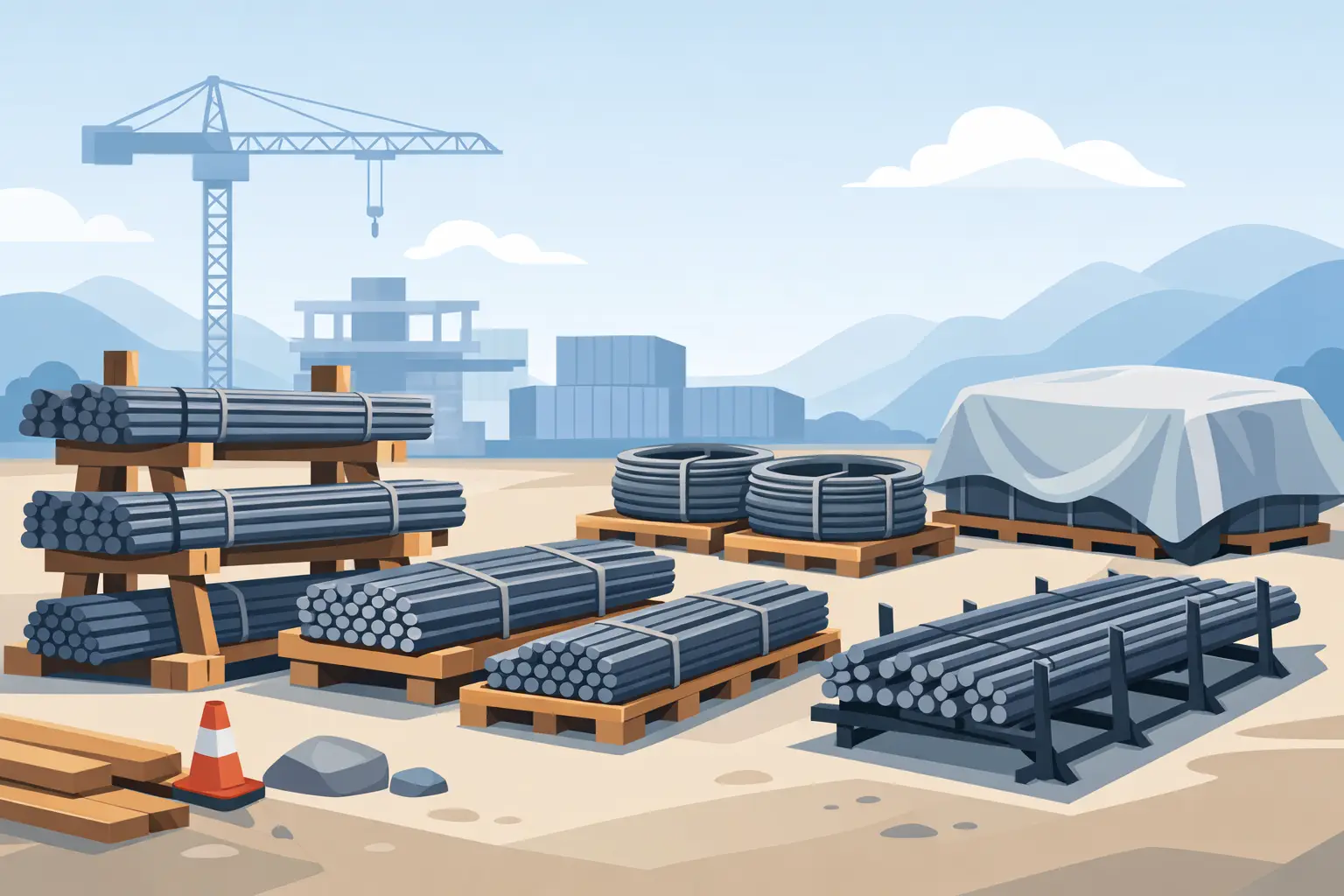
Keep rebar off the ground. Use timber dunnage, steel racks, concrete blocks designed for the load, or another stable support system that raises bundles clear of soil and puddles. Place supports at enough points to prevent sagging, especially with long lengths. A bundle that is unsupported through the middle can take a set, and bent stock is not something a crew should casually straighten and install.
Allow room between stacks for forklift tines, slings, and safe manual access. Do not build one large mixed pile simply because there is open space. Separating material by bar size, grade, shape, and pour area reduces picking errors when the job gets busy.
The ground condition matters as much as the cover. A low area that turns into a pond after rain will keep the lower bars wet and dirty, even if the top of the bundle is protected. If the only available space is exposed, create drainage around the storage zone and use a raised rack arrangement rather than placing dunnage directly in soft ground.
Keep Rebar Clean, Identified, and Fit for Placement
Reinforcing steel needs to be free of materials that can affect its bond with concrete. Keep it away from wet soil, clay, oil, grease, curing compounds, paint, salt, fuel, and waste from other trades. Avoid storing it beside cutting, grinding, or coating work where overspray and debris can land on the bar.
Not all surface rust means rebar has failed. Light, even surface oxidation can occur during normal storage and may be acceptable, depending on the project specification and engineer’s requirements. Heavy flaking scale, deep pitting, or corrosion that reduces the bar section is different. Inspect suspect material before it goes into the cage or slab, rather than asking the concrete crew to make the call during a pour.
Protect bar tags and bundle identification from the start. Delivery paperwork, bundle labels, heat numbers where required, bar grades, and size markings should stay matched to the material. This is particularly important on commercial and structural work where traceability is part of the quality process. If a label is likely to be damaged by weather, record the details in the site materials register and mark the storage location clearly.
For cut-and-bent bars, store each shape separately and retain the bar mark information. A pile of similar-looking stirrups, U-bars, starter bars, and hooks can create expensive confusion. The time saved by labeling one bay for each bar mark is far greater than the time lost sorting steel at the edge of a pour.
Cover Rebar Without Trapping Moisture
Covering rebar is useful when storage will be extended or the site is exposed to persistent rain, coastal air, or contamination from surrounding work. However, wrapping bundles tightly in plastic and leaving them on wet ground can trap moisture. That creates a damp environment rather than protecting the steel.
Use a cover that sheds water while allowing air movement. Set it above the bundles where possible, with an open side or gap for ventilation. A simple temporary roof, tarp on a frame, or covered rack generally works better than a tarp wrapped directly around every bundle. Check after heavy rain that water has not pooled on the cover or collected beneath the steel.
Exposure conditions should guide the level of protection. A short-term residential slab job on a dry, well-drained site may only need raised dunnage and basic organization. Rebar held for several months, stored near saltwater, or assigned to a specification with stricter corrosion requirements deserves more controlled storage and more frequent inspections.
Do not use site covers as an excuse to forget the material. Covers can hide damage, standing water, and mixed stock. Lift the edges during routine site checks and look at the lowest bars, where problems usually start.
Stack Bundles for Safety and Easy Access
Rebar bundles are heavy, awkward, and capable of rolling if they are not restrained. Stack them only as high as the supports, ground condition, and handling method can safely manage. Keep round bar from rolling by using chocks, cradles, or racks designed to restrain the bundle. Never rely on loose timber kicked against the side of a stack.
Place the heavier bundles at the bottom and avoid stacking different lengths in a way that leaves short bundles unsupported or hidden. Keep fabricated shapes, mesh sheets, and straight bar in defined areas because each needs different handling. Reinforcing mesh should sit flat on adequate supports so sheets do not twist, settle into mud, or create sharp edges in walkways.
A clear storage plan also reduces manual handling. Store the first material needed where it can be picked first. Put long bars where they can be lifted in a straight path without swinging over workers, vehicles, or finished work. Where a forklift or crane is used, confirm the load capacity, lifting gear, exclusion zone, and travel path before moving bundles.
Do not drag bars across the ground or use a machine bucket to shove bundles into position. Those shortcuts damage the steel, disturb the dunnage, and make it harder to maintain separation between sizes and grades.
Organize Stock Around the Pour Sequence
The most efficient rebar yard is arranged for installation, not just storage. Separate stock by scheduled pour, footing line, wall, slab zone, or structural level. Place associated items nearby: tie wire, bar chairs, stirrups, couplers, and approved fixings. This gives the steel crew a workable pick area and prevents small essential items from disappearing into general site storage.
Use durable signs or marked bays for common sizes and products. For example, keep straight bar, starter bars, mesh, stirrups, and offcuts apart. Offcuts are useful for approved applications, but they should never be mixed into full-length stock where they can be selected by mistake.
Inventory control is just as practical on a small site as a large one. Count received bundles against the delivery docket, note where each bundle is stored, and flag any visible transport damage immediately. As material is issued to a pour, update the remaining quantity. This reduces last-minute shortages and gives the project team time to order replacement reinforcement before installation stops.
Inspect Stored Rebar Before Installation
A brief check before each major placement is better than discovering a problem after the crew has tied half a cage. Confirm the bar size, grade, length or shape, and quantity against the approved drawings and bar schedule. Then inspect the material condition and storage area.
Look for mud, oil, heavy corrosion, crushed bundle tags, bent bars, weld spatter, and damage from vehicle contact. Check whether rain has shifted dunnage or caused the stack to settle. If any bar has been modified, cut, heated, or field-bent beyond the approved details, stop and confirm the required corrective action with the responsible engineer or project supervisor.
Keep the inspection practical. The objective is not to create paperwork for its own sake. It is to ensure the reinforcement delivered to the work area is identifiable, clean, correctly specified, and safe to handle.
Avoid the Storage Mistakes That Cause Delays
The most common failures are simple: storing steel directly on dirt, leaving bundles in drainage paths, mixing sizes and grades, losing labels, and allowing plant to use the rebar area as a turning or parking zone. Each one can lead to wasted labor or a delay at the point when concrete is booked and there is no time to recover.
Treat the rebar laydown area as part of the reinforcement operation, not a spare corner of the site. Raised, organized, protected stock is easier to count, easier to inspect, and faster to install. When the pour date moves forward or a crew needs extra steel urgently, that discipline is what keeps a material issue from becoming a schedule issue.
Related Posts