Rebar fabrication services reduce field cutting, support accurate placement, and help concrete crews keep schedules, inspections, and deliveries on track.
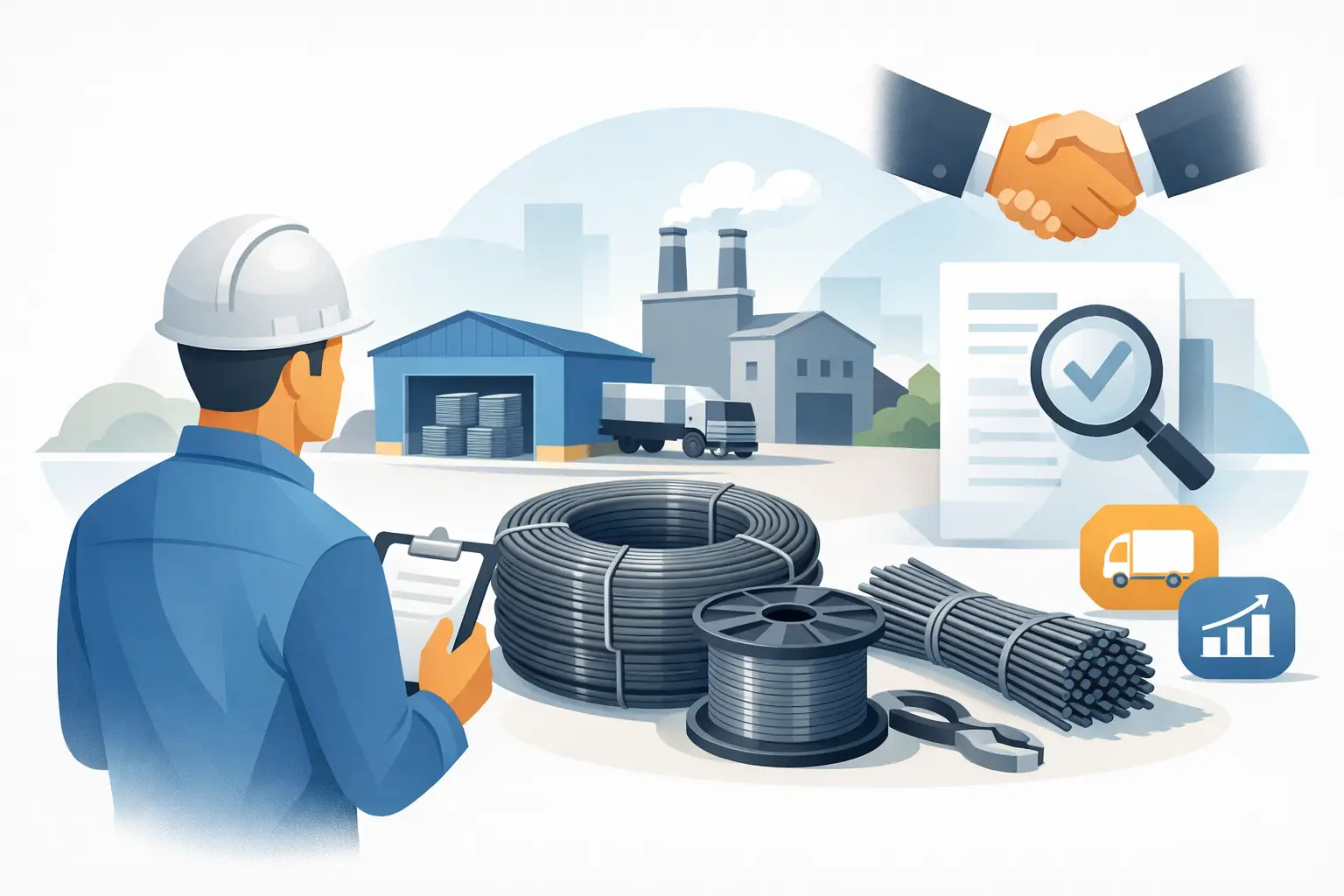
How to Choose a Tie Wire Supplier for Your Job
A tie wire supplier can look like a minor purchasing decision until the reinforcement crew is waiting on site with mesh, rebar, and chairs ready to go. The wrong wire gauge, a shortage of rolls, or an unreliable delivery can slow a concrete pour just as quickly as a missing load of steel. For builders, concrete contractors, and civil crews, tie wire needs to be available, workable, and suited to the reinforcement task at hand.
Tie wire is a small component in the reinforcing package, but it performs a practical job. It holds reinforcing bar, mesh, stirrups, and accessories in position while the cage is assembled and concrete is placed. Selecting it properly helps crews maintain spacing, cover, and layout without wasting time fighting stiff wire or running back to the supplier for more stock.
What a Tie Wire Supplier Should Get Right
The first requirement is product suitability. Tie wire is not a decorative fastening product or general fencing wire. Reinforcement work calls for wire that can be twisted efficiently around steel intersections and remains secure during handling, foot traffic, pumping, and placement.
For most site work, annealed tie wire is the practical choice because it is softer and easier to bend than harder wire. Crews can tie it by hand with nippers or use a tying tool where the volume justifies it. A wire that is too hard may hold its shape, but it costs time at every intersection and can be harder on workers’ hands and tools.
Stock consistency matters as much as the wire itself. When ordering multiple rolls for a slab, retaining wall, footing, or larger reinforcement package, the wire should be consistent in diameter, finish, and handling characteristics. Changing wire halfway through a job may not stop the work, but it creates unnecessary friction for the crew.
A capable supplier should also make the ordering process clear. Trade buyers need to know what they are purchasing, how it is packed, what it costs per item, and whether it can be delivered with the rest of the reinforcing order. Clear product information avoids the common problem of ordering a general-purpose wire product when reinforcement tie wire was needed.
Choose the Wire for the Type of Reinforcing Work
Tie wire selection depends on the steel arrangement, the size of the job, and how the crew works. There is no benefit in specifying more wire than the work requires, but undersized or unsuitable wire can make a simple tying task slow and unreliable.
Rebar cages, footings, and columns
Bar cages for footings, beams, columns, and retaining walls often involve repeated ties around intersecting bars and stirrups. The wire needs enough strength to hold the cage together through lifting and placement, while remaining pliable enough for quick twisting. For detailed cages, accessibility matters too. A wire that handles easily gives workers more control in tight corners and around closely spaced steel.
The tying pattern also affects wire use. Not every intersection needs the same tie. A cage that will be lifted or moved may require more secure ties at critical points, while steel laid in place for a slab may need ties mainly to prevent movement and maintain the designed spacing. The reinforcing design and site method should lead the decision, not a one-size-fits-all wire choice.
Reinforcing mesh for slabs and driveways
Mesh work is usually straightforward, but the quantity of ties adds up fast. On residential slabs, driveways, paths, and commercial floor areas, crews need a wire that can quickly secure mesh laps and keep sheets located on bar chairs before concrete placement.
The key is to order enough rolls for the area and the overlap detail. A small slab might only need a limited quantity, while a large floor pour with substantial laps, penetrations, and edge reinforcement can consume wire quickly. Ordering wire with mesh, chairs, and perimeter bars prevents small omissions from becoming a last-minute site problem.
Precast, landscaping, and smaller concrete work
Smaller jobs still benefit from correct material selection. Garden retaining walls, pads, fence footings, steps, and repair work may only need modest quantities of reinforcement and tie wire, but the product must still be easy to use and readily available. For owner-builders, clear pack sizes and direct advice are often more useful than buying a large quantity that will sit unused after the pour.
Look Beyond the Per-Roll Price
Price matters, especially across a larger reinforcement package. But comparing tie wire only by the price on one roll can give a misleading result. The real cost is the combination of product price, availability, delivery, labor time, and whether the material turns up when the crew needs it.
A cheaper wire is not a saving if it is difficult to twist, breaks too easily, or arrives separately from the bars and mesh. Similarly, buying from multiple suppliers can create extra receiving, handling, and delivery coordination. Where possible, source reinforcing essentials together so the site receives a complete package.
For regular trade buyers, transparent item pricing is useful because it allows quick estimating and purchase approval. For larger jobs, the supplier should also be able to discuss volume requirements directly. A large structural package may need staged deliveries, coordinated unloading, or replacement stock held close to the delivery date. That level of service is often more valuable than a marginal price difference on a consumable item.
Check Availability Before the Reinforcing Crew Is Booked
Construction schedules rarely leave much room for a missed delivery. Concrete bookings, pump availability, inspections, and labor all depend on the reinforcement being ready. Tie wire should be treated as part of the reinforcement package from the first takeoff, not as an afterthought on pour day.
When speaking with a supplier, confirm the product is available in the quantity needed and ask how quickly it can be dispatched. If the project is staged, clarify whether stock will be available for later pours as well. This is particularly relevant for subdivisions, commercial slabs, walls, and civil work where repeat orders may be required over several weeks.
Delivery coverage is another operational detail. A supplier with reliable local delivery can remove a major burden from site teams, particularly when the crew does not have time to collect materials. Quality Steel Supplies supports Auckland-wide delivery and urgent orders, helping contractors keep reinforcement materials moving when project timing is tight.
That said, delivery only helps if the order is accurate. Check that the wire quantity, rebar sizes, mesh grade, stirrups, chairs, and fixings all match the drawings or takeoff before dispatch. A quick confirmation before the truck leaves is easier than fixing a shortfall once the crew is set up.
Questions to Ask a Tie Wire Supplier Before Ordering
A good supplier should be able to answer practical questions without sending you through a complicated procurement process. For a standard order, start by confirming the wire type and pack size. Then ask whether the product is suitable for hand tying or the tools your crew uses.
For a larger order, it is worth confirming four points:
- Is the required quantity in stock now, and can repeat quantities be supplied for later stages?
- Can tie wire be delivered with reinforcing bar, mesh, chairs, and other concrete accessories?
- What is the delivery lead time for the site location and required unloading arrangements?
- Is pricing clear per roll or pack, with direct support available for larger-volume requirements?
These questions are simple, but they reveal whether the supplier understands site operations. A supplier focused only on a catalog transaction may be fine for a small collection order. For active projects, you need someone who recognizes that reinforcement materials arrive as a working system, not as unrelated items.
Avoid Common Ordering Mistakes
The most common error is underestimating the quantity. Tie wire is inexpensive compared with steel and concrete, so there is little value in risking a delay to save a small amount on the initial order. Allow for laps, cages, extra intersections, site changes, and a reasonable contingency where the job is complex.
Another mistake is treating all wire as interchangeable. Wire intended for a different use may not have the softness, gauge, or handling characteristics needed for reinforcing work. Specify reinforcement tie wire and verify the product details rather than ordering by a vague description.
Finally, do not separate the wire order from the reinforcing takeoff unless there is a clear reason to do so. Adding it to the main order improves visibility and gives the supplier a better chance to flag missing accessories before delivery. A complete reinforcement package keeps the crew focused on placing steel correctly, not searching for materials.
Buy for the Pour, Not Just the Product
The right tie wire supplier provides more than rolls of wire. They help make sure a small but necessary material arrives with the structural steel, at a clear price, and in time for the crew to use it. That is the standard worth applying to every reinforcement order: get the right material on site early enough that the pour can proceed without a preventable hold-up.
Related Posts