What causes asphalt cracks? Learn how water, traffic, heat, poor drainage, and weak base preparation damage pavement - and how to plan lasting repairs.
Rebar Delivery That Keeps Concrete Work Moving
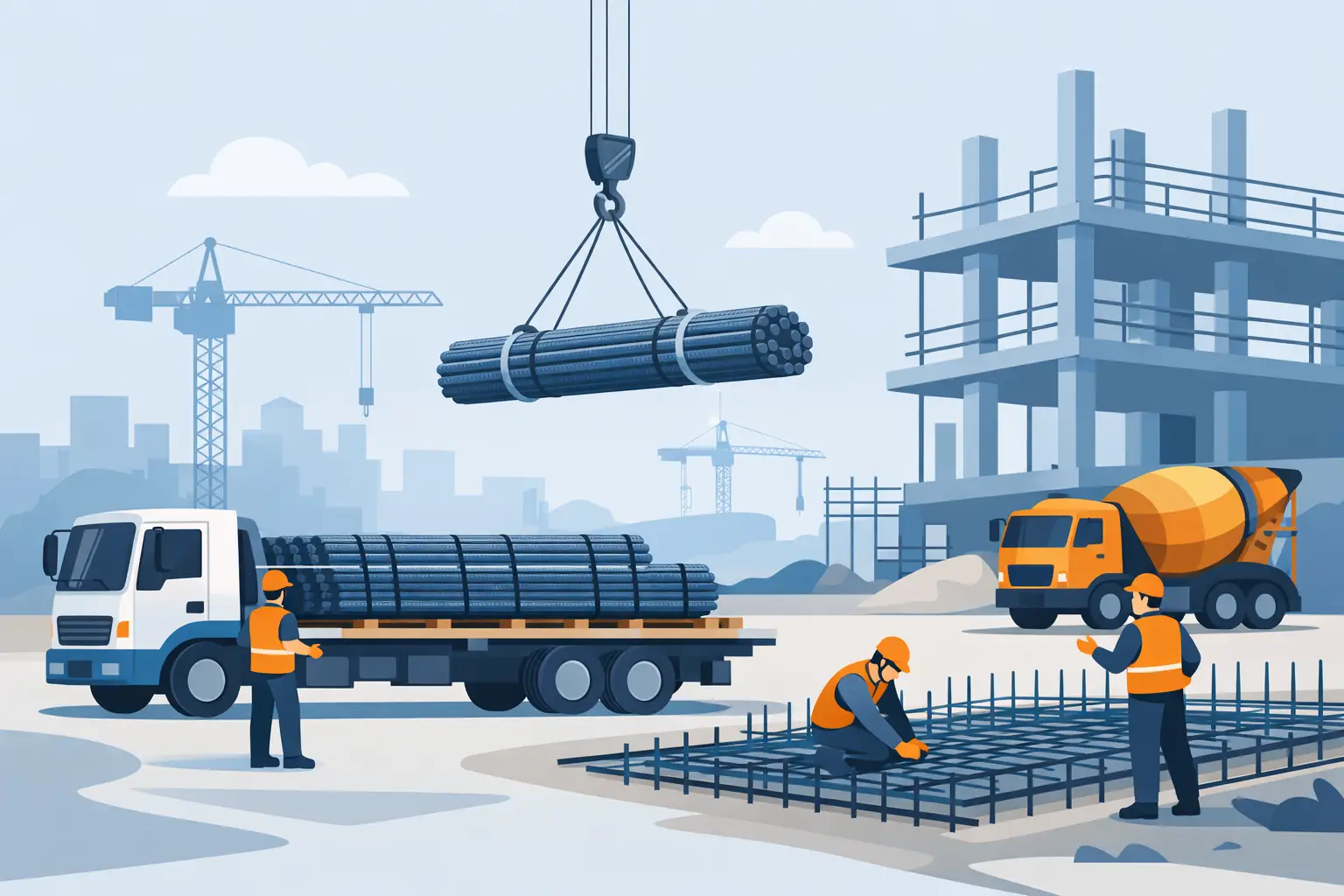
A concrete pour can be booked, the formwork can be ready, and the crew can be on site – but none of that helps if the reinforcing steel has not arrived, arrived incomplete, or cannot be unloaded safely. Good rebar delivery is not just transport. It is part of the construction sequence, and getting it right protects labor time, pour dates, and structural compliance.
For footings, slabs, retaining walls, columns, and commercial structural work, reinforcing steel needs to arrive in the correct grade, diameter, length, and quantity. It also needs to arrive when the site can receive it. That sounds basic, but delivery issues often begin much earlier, with unclear takeoffs, late changes, inaccessible sites, or orders placed after the steel is needed.
Start Rebar Delivery With a Clear Order
The fastest delivery is still the wrong delivery if the order details are not right. Before placing an order, check the drawings, bar schedule, and engineer’s reinforcement notes against the materials you are requesting. Confirm the bar diameters, bar lengths, mesh type, laps, stirrups, tie wire, bar chairs, and any starter bars or specialty bends required for the work.
For standard residential concrete work, this may mean confirming the footing bars and slab mesh before excavation is complete. For larger commercial and civil jobs, use the current bar bending schedule and issue revision. Do not rely on an old PDF, a verbal change, or a prior-stage order when the structural details have been updated.
Ordering by total weight alone can create problems. A job may have enough tons of steel overall but still be short on a particular bar size, mesh sheet, or set of stirrups. Site crews need usable reinforcement, not just a correct invoice total.
When ordering cut-and-bent steel, provide dimensions and shape details clearly. A small error in leg length, hook direction, or bar mark can hold up installation. Standard stock lengths can suit some jobs and may offer better availability, but they also create more cutting, handling, and waste on site. The right choice depends on the complexity of the work, available labor, and how tight the construction program is.
Match Delivery Timing to the Work Sequence
Rebar should be on site before the crew needs it, but not so early that it blocks access, gets buried under other materials, or creates an unnecessary theft risk. The right delivery window depends on site space and the next concrete activity.
For a slab, steel commonly needs to arrive after the base is prepared but early enough for cutting, tying, chair placement, inspections, and corrections before the pour. For footings and retaining walls, delivery should allow the crew to place reinforcement after excavation and formwork are ready, without leaving steel exposed in an unsafe or muddy area for days.
Large orders often work best when split by pour or construction stage. Delivering all reinforcement at once may look efficient on paper, but it can make a restricted site harder to manage. Separate loads for foundations, ground slabs, walls, and upper-level work can keep the work area clearer and reduce the chance that material is moved several times before use.
There is a trade-off. Multiple deliveries can improve site organization, while a single larger delivery can reduce transport activity and simplify purchasing. On sites with good laydown space and a stable schedule, one delivery may be practical. On tight urban projects, staged delivery is usually the safer call.
Allow Time for Inspections and Changes
Reinforcement is often inspected before concrete is placed. Build that inspection time into the delivery plan. If an inspector or engineer identifies a missing chair, incorrect lap, or changed detail, the project needs time to correct it without losing the pour.
Urgent delivery support is valuable when a site has a genuine shortfall, but it should not be the main supply plan for every pour. Last-minute orders can be affected by stock levels, traffic, loading schedules, and site access. Order core materials early, then use urgent service for legitimate changes or overlooked items.
Prepare the Site Before the Truck Arrives
A delivery can only be fast when the driver can enter, unload, and leave without delay. Before booking rebar delivery, check the route from the road to the unloading point. Consider overhead power lines, parked vehicles, narrow driveways, soft ground, turning space, gate widths, and whether another trade will block access.
Tell the supplier about restrictions at the time of ordering. A truck suitable for a clear commercial site may not suit a steep residential driveway or a congested street. If a crane, forklift, telehandler, or site crew is needed for unloading, have it ready at the agreed time.
The unloading area should be firm, clear, and close to where the steel will be installed. Rebar bundles are heavy and awkward to shift manually. Mesh sheets need enough room to be safely unloaded and stacked flat. Putting steel near the work zone reduces double handling, but it must not obstruct formwork, excavations, accessways, or emergency routes.
Keep reinforcement off wet ground where possible. Timber dunnage or suitable supports help keep bars and mesh separated from mud and standing water. Surface rust can occur on reinforcing steel exposed to weather, but heavy contamination, oil, paint, or caked mud should be addressed before installation. Steel must be fit for its specified structural use, not simply available on site.
Check the Load Before Signing Off
A quick receiving check avoids a bigger problem later in the day. Compare the delivery docket with the order and confirm the bar sizes, quantities, lengths, mesh grades, and accessories. Check labels on bundles and identify bar marks for cut-and-bent orders before the driver leaves where practical.
Pay close attention to similar-looking products. Different bar diameters can be difficult to distinguish at a glance, and mesh grades or sheet sizes may be confused when materials are stacked together. Separate and label materials by pour stage or work area as soon as they are unloaded. This makes the steel crew faster and helps prevent the wrong bars being installed.
If there is a shortage, damage, or mismatch, report it immediately with the delivery details and photos where useful. Waiting until the crew is tying steel can turn a straightforward correction into a missed inspection or delayed concrete truck.
Order the Supporting Products at the Same Time
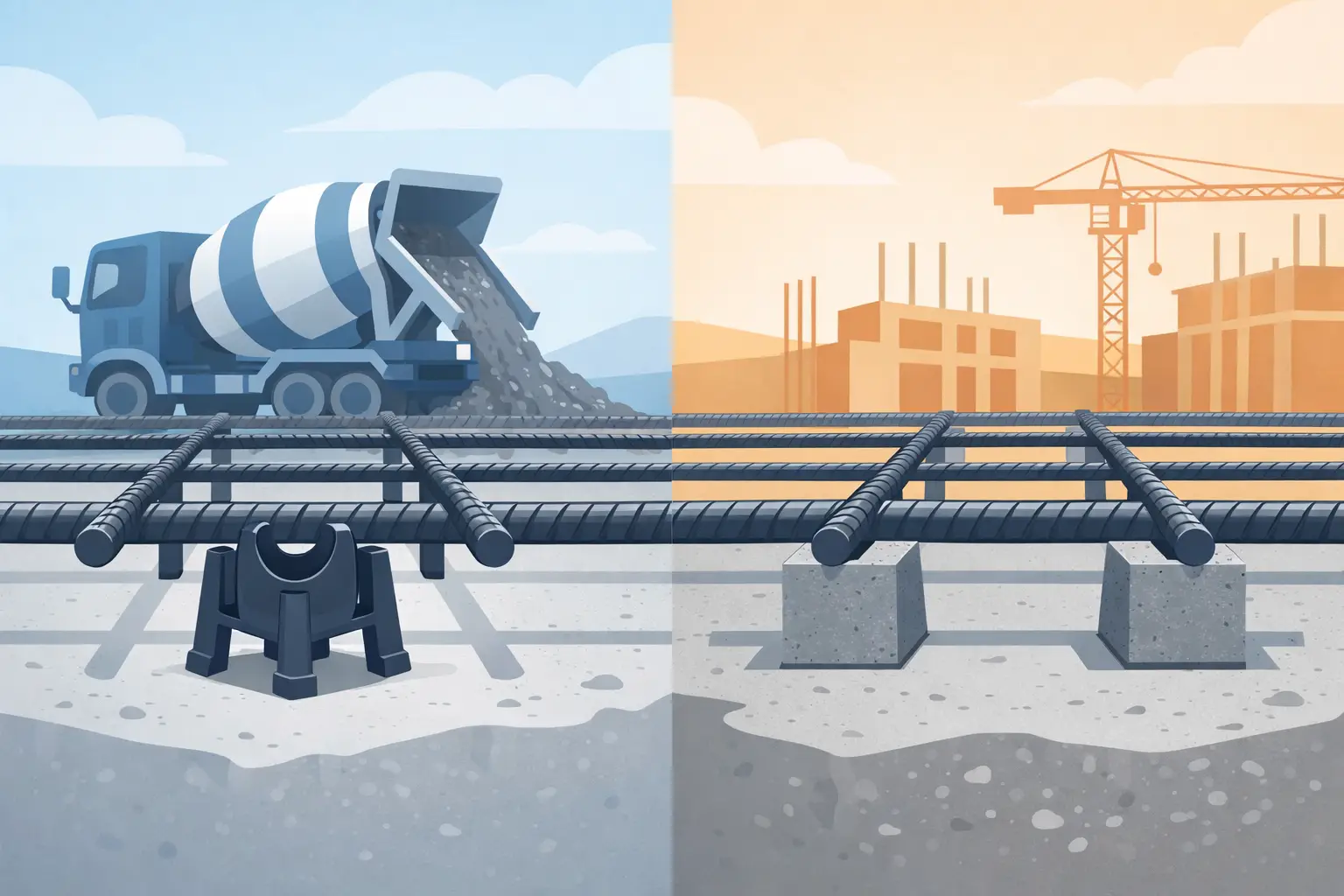
Rebar is only one part of a compliant reinforcement installation. A delivery that includes the required support products keeps crews from stopping for small but essential items. Bar chairs maintain concrete cover. Tie wire secures intersections. Stirrups, ligatures, spacers, and concrete fixings may be required depending on the design and formwork arrangement.
Mesh orders may also need chairs, laps, tie wire, and cutting tools planned around them. For pod slabs, make sure reinforcing mesh and bars are coordinated with the polystyrene pod layout, edge beams, service penetrations, and thickened areas. These are common points where a standard order can fall short if the site team focuses only on the main mesh quantity.
A supplier with clear per-item pricing makes it easier to include these supporting products in the first order instead of treating them as an afterthought. That helps control cost and reduces avoidable trips during setup.
Choose a Supplier That Understands Jobsite Pressure
Price matters, especially across repeat pours and large-volume work. But delivery reliability, compliant product supply, order accuracy, and direct communication matter just as much when labor and concrete are booked. The cheapest material can become expensive quickly if it causes downtime or forces a pour to move.
For Auckland projects, Quality Steel Supplies supports builders, contractors, and project buyers with reinforcing steel and related site products backed by practical delivery planning. Whether the requirement is standard bar and mesh or a larger staged order, provide the details early and confirm the site conditions before dispatch.
The useful goal is simple: have the right reinforcement on site, in the right place, before the crew needs it. When rebar delivery is planned as part of the build rather than a last-minute purchase, the steel goes down cleaner, inspections run smoother, and the concrete work has a better chance of staying on program.
Related Posts