Learn how dowel bars transfer loads across concrete joints, reduce faulting, and support durable slabs with correct sizing, alignment, and installation.
How to Install Bar Caps on Exposed Rebar Safely
Exposed reinforcing bar can turn a routine pour, footing, or retaining-wall job into a serious site hazard. Knowing how to install bar caps correctly is not just about pushing plastic onto a bar. The cap must suit the rebar size, stay in place through active work, and provide the level of protection required by the job’s safety plan.
Bar caps are quick to fit, inexpensive, and easy to overlook until crews are moving around a dense reinforcement cage. Installing them before the work area becomes busy keeps access safer and avoids last-minute hold-ups before an inspection or concrete placement.
Choose the Right Bar Cap Before Installation
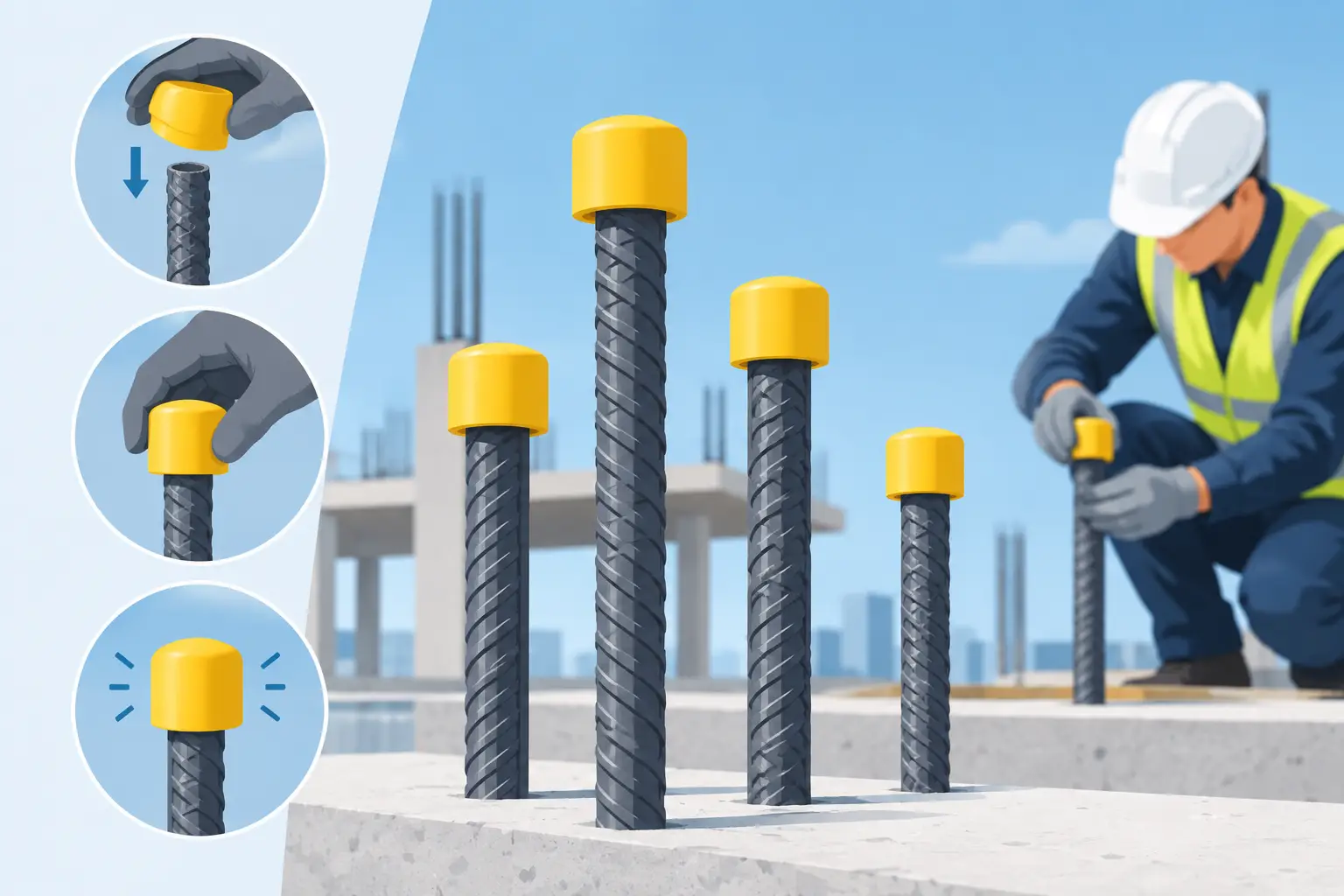
Start by identifying what the cap is expected to do. Standard rebar end caps, often called mushroom caps, provide high visibility and cover sharp bar ends. They are useful where workers need a clear visual warning around exposed reinforcement. However, a basic plastic cap should not automatically be treated as impalement protection.
Where there is a risk that a worker could fall onto vertical rebar, use purpose-made impalement protection caps or a protective system specified for that risk. These products typically have a reinforced insert or steel plate designed to spread impact across a wider area. Check the manufacturer’s marking, intended bar-size range, and site safety requirements before ordering or installing them.
Fit matters. A cap that is too loose can fall off when steel is bumped, vibrated, or handled. A cap that is too small may split, sit crooked, or fail to cover the bar end fully. Measure the nominal bar diameter if there is any doubt, especially when a job includes several bar sizes in the same cage.
Also consider the working environment. Bright safety colors are easier to see around footings, slab edges, starter bars, and excavation work. For exposed steel left in place through several stages, select durable caps that can handle sun, rain, handling, and contact with formwork without becoming brittle.
Tools and Site Preparation
Bar cap installation normally requires very little equipment, but the work should still be organized. Crews should wear the required personal protective equipment for the area, including gloves and eye protection when cutting, tying, or moving reinforcing steel. Do not install caps while workers are actively lifting or swinging long bars through the same zone.
Before fitting caps, walk the work area and identify every exposed bar end. This includes vertical starters, dowels, wall steel, pile caps, footing cages, temporary supports, and bars projecting from recently placed concrete. Bars at a low height can be just as hazardous as tall vertical starters, particularly in congested work areas.
Remove loose tie wire, concrete buildup, tape, and other debris from the top of the bar. A clean bar end gives the cap a better grip and lets it seat properly. If a bar end is badly burred, bent, or cut at an angle, address that condition before forcing a cap into place.
How to Install Bar Caps Correctly
Hold the cap directly over the end of the rebar and align its opening with the bar. Push it straight down until it seats firmly. The cap should cover the end completely and sit square to the bar rather than leaning to one side.
Avoid striking a cap aggressively with a hammer. Excess force can crack plastic caps, deform internal components, or drive a cap onto a bent bar without achieving a secure fit. If a cap will not seat by hand pressure, stop and check the bar diameter, cap size, and condition of the bar end.
For impalement-rated caps, follow the product instructions exactly. Some systems are designed for a specific range of bar diameters and may need a particular seating depth to perform as intended. Do not assume a cap is suitable simply because it fits over the bar.
Once installed, pull lightly upward and side to side to confirm the cap is retained. It should not lift off easily or spin freely. On busy sites, caps can be dislodged by formwork, hoses, machinery, and workers carrying materials. A quick retention check during installation is faster than replacing missing caps after a safety walk.
Work systematically through the area. Start at one end of a footing, wall line, or slab zone and move in a consistent direction so no exposed bars are missed. On larger jobs, separate completed sections from areas still awaiting caps, then assign a competent person to check the full installation before the area is released for normal access.
Cover More Than the Obvious Vertical Bars
The most visible hazard is usually a group of vertical starter bars, but that is not the only place bar caps are needed. Reinforcing steel projecting from a wall, grade beam, pile, or slab edge may sit at chest, knee, or ankle height. In a tight work zone, those bars can catch clothing or injure a worker passing materials through the area.
Pay particular attention to bars at changes in elevation, beside access routes, near ladders, and around formwork entrances. If the layout makes individual caps impractical or if the risk cannot be adequately controlled with caps, use another suitable protective measure. That might involve restricting access, changing the sequence of work, covering the area with a designed barrier, or bending and tying steel where the approved reinforcement detail allows it.
Never bend, cut, or relocate reinforcing bar solely to make a hazard disappear without approval. Rebar placement, cover, development length, and lap requirements are structural details. Any change must be reviewed by the appropriate project authority.
Inspect Caps Through the Job, Not Just at Setup
Installing caps once is not enough. Reinforcement zones change quickly as forms go up, concrete is placed, and follow-on trades enter the site. Make bar-cap checks part of daily site housekeeping and repeat them after major activity around exposed steel.
Look for caps that have been knocked loose, cracked, buried in concrete splatter, or moved onto a different bar size. Replace damaged caps rather than taping or patching them. A cap that has split or lost its internal reinforcement should not remain in service.
A practical inspection should confirm that:
- every accessible exposed bar end in the work zone is protected;
- each cap is seated fully and retained on the bar;
- the cap type matches the hazard and required protection level;
- access routes remain clear and visible around reinforcing steel; and
- missing or damaged caps are replaced before crews resume work.
Keep spare caps near the reinforcement work, not locked away in a distant container. When replacements are close at hand, crews are more likely to fix an issue immediately rather than leave a bar exposed until later.
Common Installation Mistakes to Avoid
The most common mistake is treating any colored plastic cap as impalement protection. Visibility caps have a place on site, but they do not necessarily provide the same protection as a rated impalement cap. Match the product to the fall risk and the project requirement.
Another problem is using one cap size across every bar on the job. Reinforcing schedules can include multiple diameters, and a cap that works on one starter bar may not hold on another. Order the correct sizes and keep them separated or clearly labeled on site.
Do not rely on caps that are already weathered, cracked, or contaminated with hardened concrete. Reusable products still need inspection. Replacing a questionable cap costs far less than dealing with a preventable injury or a failed safety inspection.
Plan Cap Quantities With Your Steel Order
The easiest time to plan bar caps is when ordering reinforcing steel. Review the bar schedule and identify all locations where bars will remain exposed between installation and the next construction stage. Include extra caps for replacements, unexpected cut bars, and areas that may stay open longer than planned.
For contractors working to tight pour dates, having reinforcement, tie wire, bar chairs, and safety accessories available together reduces site downtime. Quality Steel Supplies can help trade buyers source reinforcing essentials for scheduled and urgent work, but the final cap selection should always match the project’s safety requirements and the manufacturer’s stated use.
Treat bar caps as part of the reinforcement installation, not an afterthought once the steel crew has left. Fit the right cap, inspect it often, and replace it when conditions change. That small amount of planning keeps exposed rebar visible, controlled, and less likely to stop the job for the wrong reason.
Related Posts