Rebar fabrication services reduce field cutting, support accurate placement, and help concrete crews keep schedules, inspections, and deliveries on track.

What Are Concrete Fixings? A Contractor’s Guide
A handrail post, sill plate, equipment base, formwork bracket, or racking frame is only as secure as the connection holding it to the slab or wall. That is where concrete fixings come in. What are concrete fixings? They are anchors, screws, bolts, and related fasteners designed to create a reliable connection in concrete, masonry, or solid block.
For trade crews, the right fixing is not simply the one that fits the hole. It must suit the base material, load direction, edge distance, corrosion exposure, installation method, and any engineer or project specification. Choosing on price alone can create rework, failed inspections, damaged concrete, or a safety issue later.
What Are Concrete Fixings Used For?
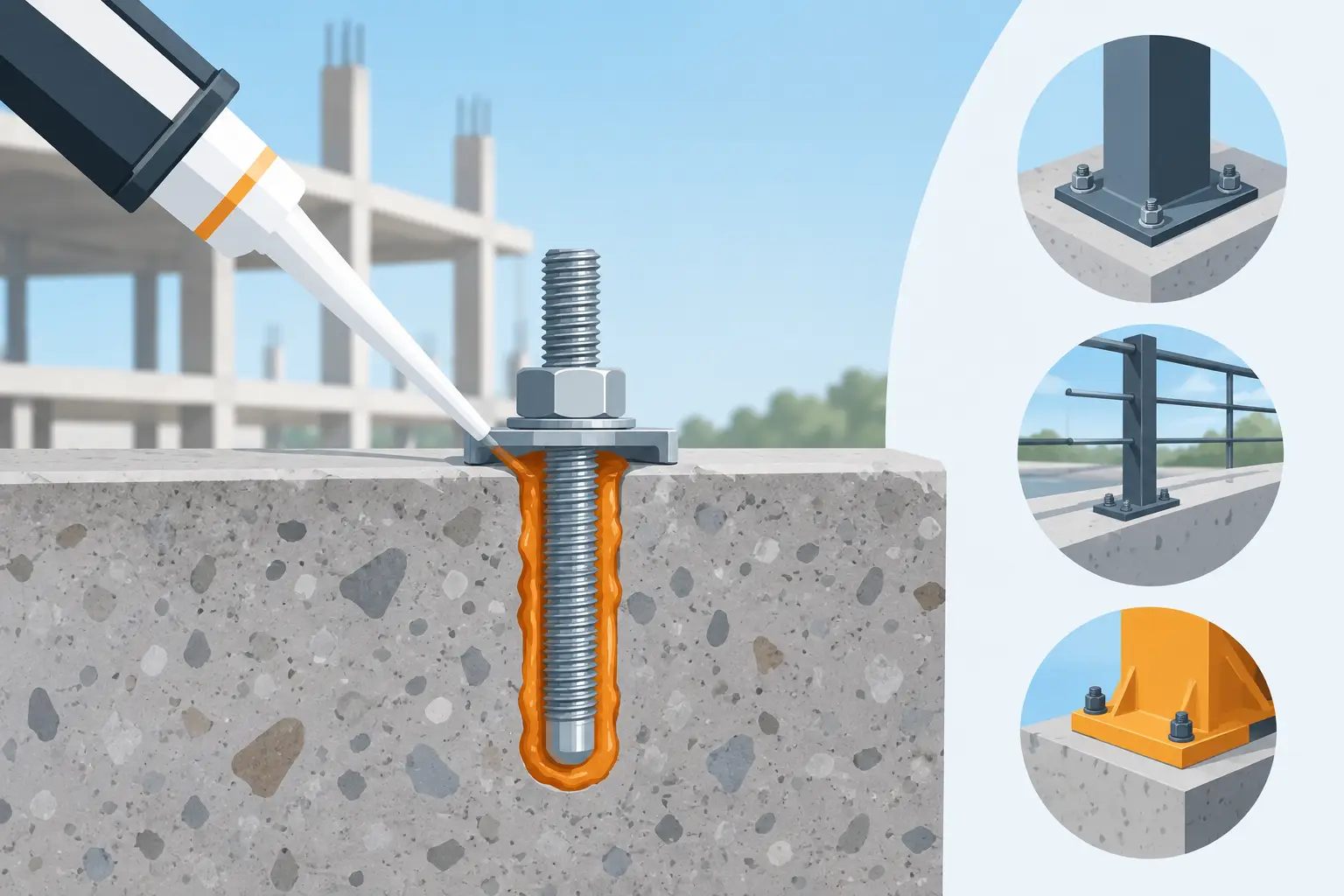
Concrete fixings secure items to hardened concrete after the pour, or are installed before the concrete is placed. On a typical job, they may be used to fix bottom plates, steel columns, barriers, handrails, gates, pipe supports, cable trays, machinery, shelving, temporary bracing, and concrete formwork accessories.
Their job is to transfer load from the attached item into the concrete. Depending on the application, the fixing may resist pull-out tension, sideways shear load, vibration, impact, or a combination of these forces. A warehouse rack, for example, places different demands on an anchor than a lightweight sign bracket. A fixing that is acceptable for one may be unsuitable for the other.
Concrete itself is strong in compression but can crack or break out around an overloaded or poorly located anchor. This is why anchor selection and installation details matter as much as the fastener itself.
The Main Types of Concrete Fixings
Concrete fixings generally fall into two groups: cast-in fixings installed before a pour and post-installed fixings fitted into cured concrete.
Cast-in anchors
Cast-in anchors are set in position before concrete is poured. Common examples include anchor bolts, threaded rods with anchor plates, cast-in channels, and embedded plates. They are often used for structural steel, hold-down connections, precast work, and equipment bases where the location is known before placement.
The advantage is strength and a direct connection to the concrete mass. The trade-off is planning. If bolt positions are wrong, correcting them after the pour can be expensive. Accurate templates, level checks, and protection of exposed threads are essential before concrete placement.
Mechanical anchors
Mechanical anchors develop holding power by expanding or bearing against the sides or underside of a drilled hole. Sleeve anchors, wedge anchors, drop-in anchors, and concrete screws are common examples.
Wedge anchors are widely used for solid concrete where a permanent, high-strength fastening is needed. Tightening the nut pulls a clip into expansion against the hole wall. Sleeve anchors work across a broader range of solid materials and are often useful for moderate-duty applications. Drop-in anchors sit flush or below the surface and accept a threaded bolt after installation, making them practical where a removable connection is required.
Concrete screws cut threads into a correctly sized drilled hole. They are quick to install and can be removed when needed, but their performance depends heavily on accurate hole diameter, embedment depth, and sound base material.
Chemical anchors
Chemical anchors, also called adhesive anchors, use a resin to bond threaded rod or rebar into a drilled hole. They are commonly specified for high loads, close-to-edge applications, retrofit connections, and installations where expansion force could damage the concrete.
A chemical anchor can be a strong option, but it is less forgiving of poor installation than many crews assume. The hole must be drilled to the specified size and depth, cleaned properly, filled with the correct amount of resin, and allowed to cure for the required time. Wet conditions, low temperatures, incorrect resin selection, or loading the anchor too early can reduce performance significantly.
For structural or safety-critical work, use the exact approved system and follow the manufacturer data and engineer’s details. Do not substitute a different resin or threaded rod because it happens to be available on site.
How to Choose the Right Concrete Fixing
Start with the item being fixed and the forces acting on it. Ask whether the fixing is carrying tension, shear, vibration, overhead load, or repeated impact. Then confirm whether the concrete is sound, cracked, lightweight, aged, or potentially weak around edges and corners.
Fixing diameter and embedment depth directly affect capacity, but bigger is not always better. A larger anchor needs more edge distance and spacing. Installing it too near a slab edge can cause the concrete to split or break out under load. Deep embedment may also be impractical where slab thickness is limited or reinforcement is dense.
The following factors should be checked before ordering or drilling:
- Required load, including any safety, seismic, wind, or dynamic loading requirements
- Concrete thickness, strength, condition, and whether it is cracked or uncracked
- Minimum edge distance and spacing between anchors
- Fastener material and corrosion resistance for indoor, outdoor, coastal, or chemically exposed locations
- Whether the connection needs to be permanent, adjustable, or removable
- Installation access, drilling depth, curing time, and inspection requirements
For a light-duty indoor fixing, a concrete screw or sleeve anchor may be sufficient. For a steel post, balustrade, overhead service support, or structural connection, confirm the design with the project engineer and use a rated anchor system suited to the application.
Installation Is Part of the Fixing System
An approved anchor installed badly is not an approved connection. Most failures come back to basic site issues: the wrong drill bit, incorrect hole depth, poor cleaning, insufficient embedment, overtightening, or fixing into damaged concrete.
Use the specified drill diameter and drill to the required depth. Mark the bit with tape or use a depth stop rather than estimating. For mechanical anchors, remove drilling dust so the anchor can seat correctly. For chemical anchors, hole cleaning is critical. The usual process involves brushing and blowing out the hole repeatedly with the correct tools, not a quick blast of air and a hope for the best.
Do not install anchors in fresh concrete unless the system is specifically approved for it. Concrete needs adequate strength before it can safely take anchor load. Also check for embedded services and reinforcing steel before drilling. Hitting rebar can damage the reinforcement, weaken the intended connection location, and hold up the job while a revised fixing detail is arranged.
If drilling encounters reinforcement, do not simply cut through it to keep moving. Review the location against the drawings and speak with the site supervisor, engineer, or relevant trade. Reinforcing bar is part of the concrete element’s structural design.
Common Mistakes That Cause Anchor Failures
The most common mistake is treating all concrete as the same. A solid, well-cured slab performs differently from a thin driveway edge, an old wall with unknown strength, or hollow masonry block. The fixing must be suitable for the actual substrate, not just the item being mounted.
Another issue is mixing components from different systems. A chemical anchor system may require a particular rod grade, hole size, resin, and installation sequence to achieve its published capacity. Combining products may remove that assurance.
Corrosion is also regularly overlooked. Zinc-plated anchors can be appropriate in dry internal environments, but exposed exterior, marine, or chemical environments may need hot-dip galvanized or stainless steel components. The best choice depends on the exposure level, compatible materials, and project specification.
Finally, avoid making field changes without checking the consequences. Moving an anchor closer to an edge, reducing embedment because the drill hit steel, or adding a new fixing beside an existing one can change how loads are transferred through the concrete.
Order Fixings Around the Job Requirement
A reliable concrete fixing package begins with clear information: what is being fixed, the substrate, load requirement, anchor size, finish, quantity, and delivery timing. For larger jobs, ordering the correct fasteners with reinforcement and other concrete site materials helps avoid a last-minute search when the crew is ready to install.
Quality Steel Supplies focuses on practical, jobsite-ready concrete and reinforcement products for crews that need clear pricing and dependable supply. Where a fixing is part of a structural or engineered connection, have the specification ready before placing the order so the supplied product matches the approved detail.
The right concrete fixing should disappear into the work once installed – not become the reason a handover, inspection, or pour sequence gets delayed.
Related Posts