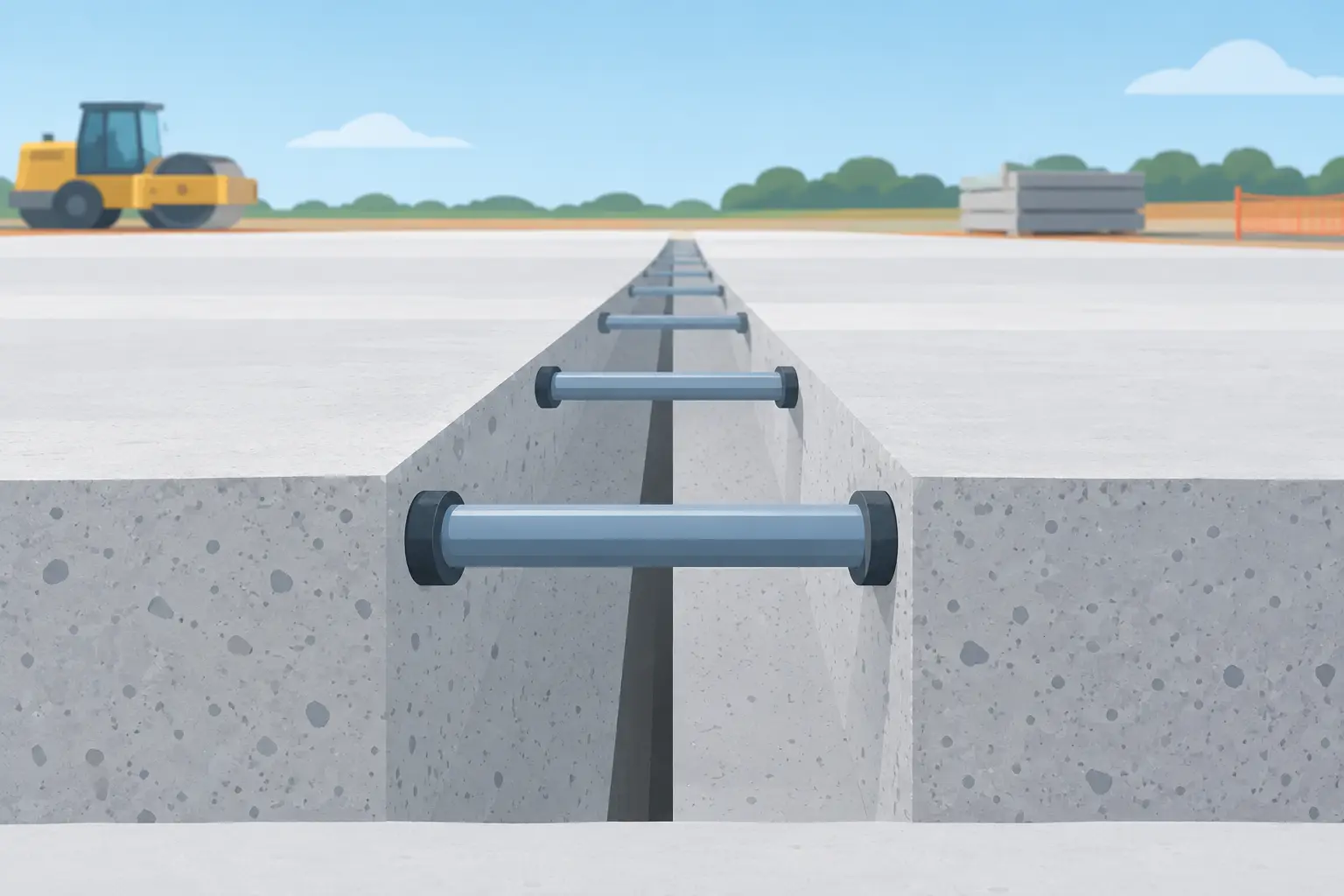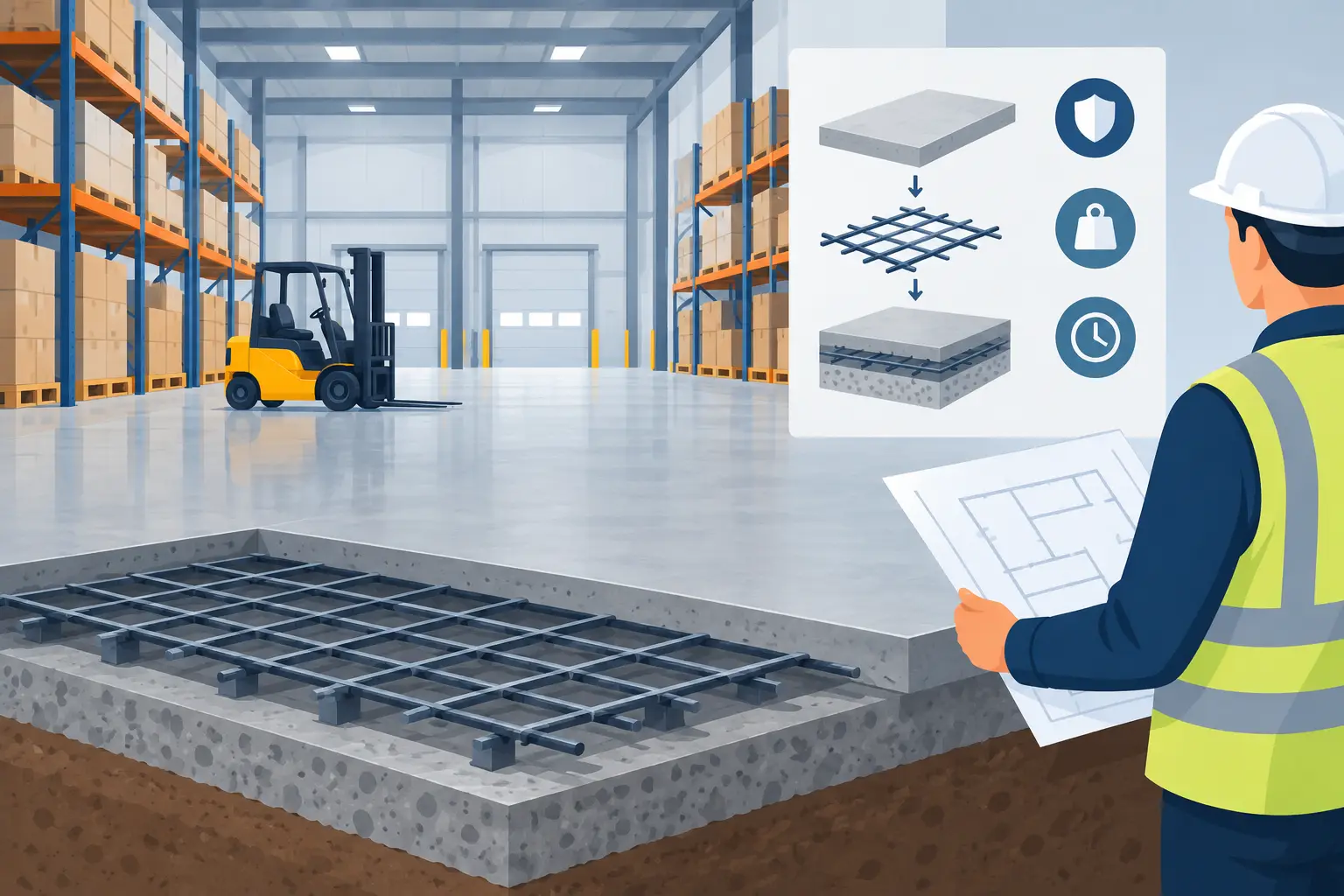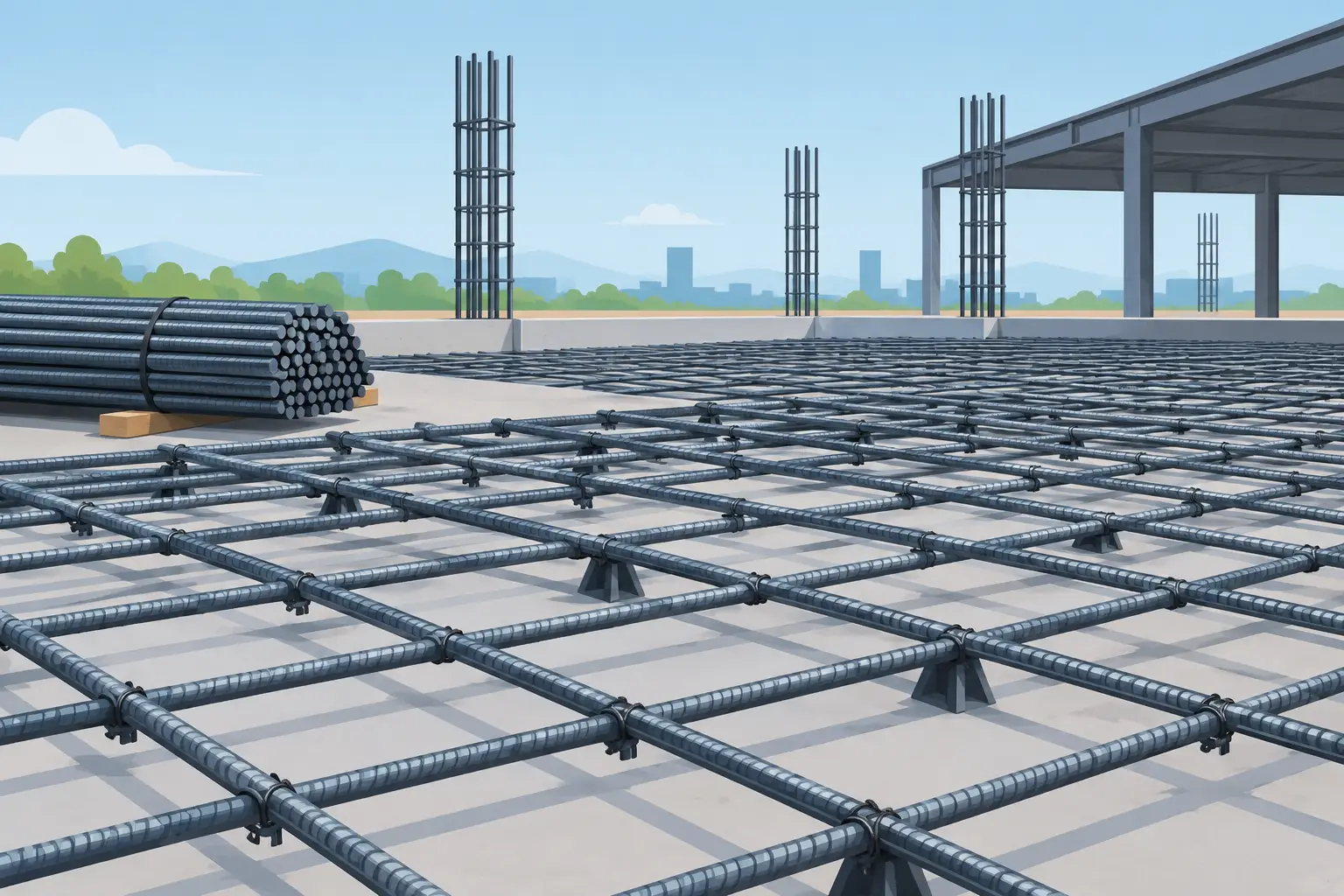
Learn how dowel bars transfer loads across concrete joints, reduce faulting, and support durable slabs with correct sizing, alignment, and installation.
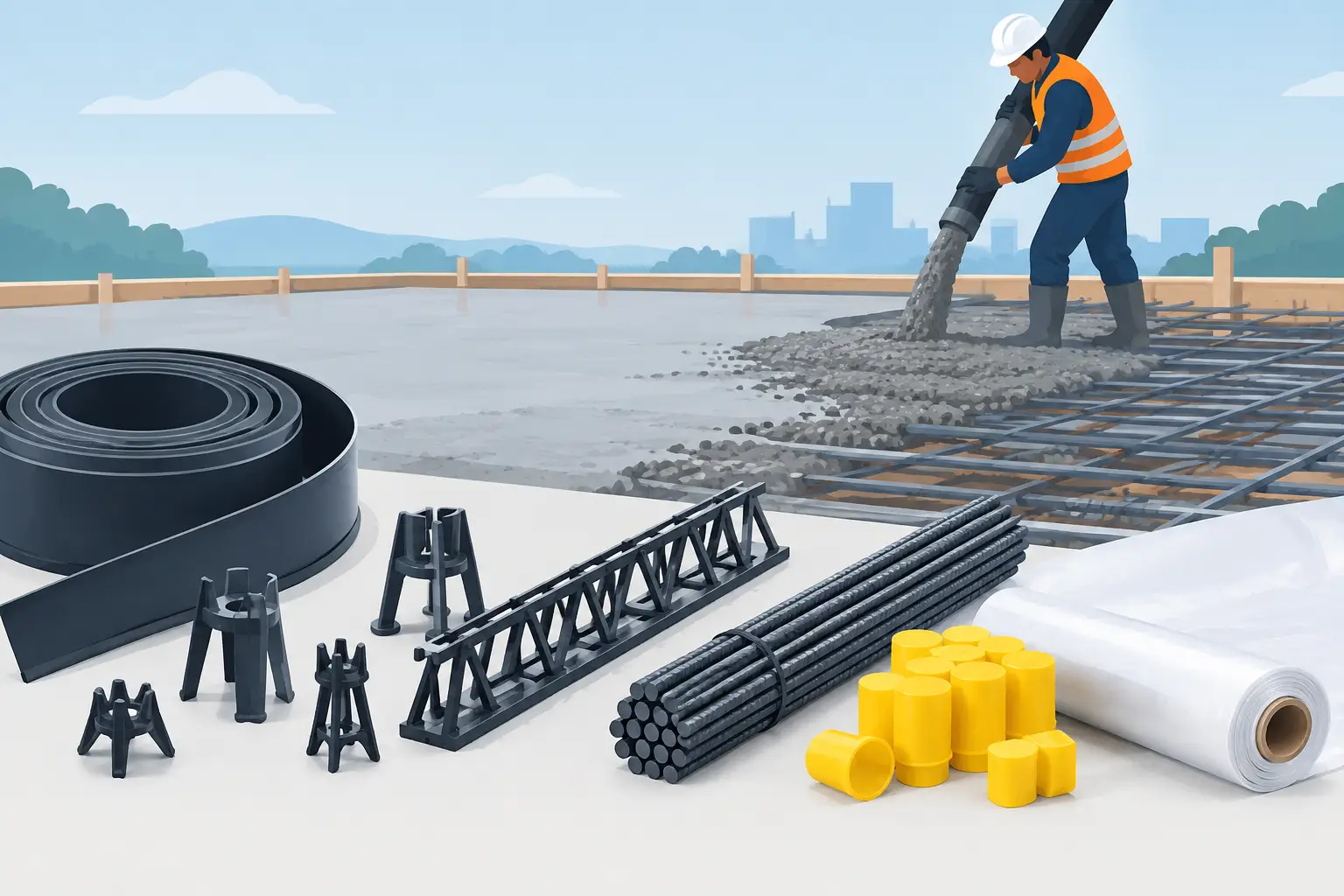
Best Slab Accessories for Concreters on Every Pour
A slab can look straightforward on the drawings, then become a costly problem once steel drops onto the ground, mesh overlaps are loose, or the pour crew is waiting on one missing item. The best slab accessories for concreters are the small, site-ready products that keep reinforcement at the specified height, hold the cage together, control cracking, and let the crew place concrete without rework.
For a residential driveway, garage floor, warehouse slab, or commercial foundation, accessories should be selected around the slab detail, ground conditions, reinforcement schedule, and pour method. Buying the cheapest pack on the shelf is rarely the win if it crushes under traffic, does not suit the cover requirement, or leaves the crew improvising on pour day.
Start with the reinforcement detail
Accessories are not separate from the reinforcement system. Their job is to make sure reinforcing bar and mesh perform as designed once concrete is placed and finished. Before ordering, confirm the slab thickness, specified concrete cover, mesh or bar size, lap lengths, joint layout, and whether there are thickened edges, beams, pods, steps, or penetrations.
That information determines chair height, chair spacing, tie-wire quantities, and whether standard supports are suitable at all. A light residential mesh panel on a firm prepared base needs a different support arrangement than heavy top steel over a beam, or multiple layers of reinforcement in a suspended slab.
Good ordering also accounts for handling. If mesh sheets are dragged across a base, walked on heavily, or supporting bar is used as a pathway for pump-hose work, the support system needs enough capacity and density to keep steel in position. Set out a realistic quantity rather than treating chairs as an afterthought.
Bar chairs: the first accessory to get right
Bar chairs are usually the most important slab accessory because correct cover is not negotiable. They lift reinforcing mesh or bar clear of the base so concrete can fully surround the steel. Without consistent support, mesh can end up at the bottom of the slab, reducing crack control where it is needed and risking noncompliant cover.
Match chair height to the specified cover
Choose chair height from the engineering detail, not from what happens to be left in the truck. The required position of the reinforcement is affected by slab thickness, exposure conditions, and whether the steel is a single central layer, bottom reinforcement, or top reinforcement over beams and openings.
For slabs cast on grade, plastic bar chairs are a common practical option. They are quick to place, stable on a prepared base, and avoid the uncontrolled variation that comes from using broken blocks, stones, offcuts, or bent rebar as spacers. For heavier reinforcement or more demanding conditions, higher-capacity support options may be necessary.
Use enough chairs to prevent sagging
Chair spacing depends on mesh weight, bar size, sheet stiffness, foot traffic, and the way concrete will be placed. A chair can be the correct height and still fail the job if supports are spaced so far apart that the mesh sags between them.
Pay particular attention at sheet laps, around penetrations, at slab edges, and in areas where workers will be moving repeatedly. These are the places where reinforcement is most likely to shift. A simple site check before the pour is worthwhile: walk the steel, look for low spots, and correct any movement before the truck arrives.
Tie wire and tying tools keep steel where it belongs
Tie wire is inexpensive, but it does a critical job. It secures mesh laps, intersects reinforcing bar, holds stirrups in place, and stops the reinforcement cage moving while concrete is placed. Annealed tie wire is widely used because it is easy to twist, grips well, and can be worked efficiently with tying pliers or a tying tool.
Do not assume every intersection needs the same tie pattern. The required tying depends on the reinforcement arrangement and how stable the assembly is. But loose laps and untied perimeter bars are a false economy. When a pump hose catches an unsecured sheet or a vibrator shifts a bar, fixing the issue during a live pour is slow, frustrating, and avoidable.
Order enough wire for the job and keep it accessible to the steel crew. For larger slab packages, it also makes sense to have spare wire on site for last-minute bars around service penetrations, formed edges, and inspection changes.
Spacers, dowels, and joint accessories protect the slab design
Not every slab needs the same joint system, but every concrete contractor needs to think about movement and crack control before placement. Concrete shrinks as it cures. Joints do not prevent all cracking, but they provide a planned location for movement and help produce a cleaner, more serviceable finished surface.
For formed joints and slab connections, dowels can transfer load while allowing controlled movement when installed correctly. Dowel placement, alignment, debonding, and joint layout should follow the engineering and project requirements. Crooked or poorly supported dowels can restrict movement and create problems that only show up after the slab is in service.
Isolation materials are useful where a slab meets columns, walls, drains, existing structures, or other elements that should not be locked into the slab. The exact product and detail matter. This is not an area for guesswork, especially on commercial work or slabs with heavy traffic loading.
The best slab accessories for concreters also include site protection
The best slab accessories for concreters are not limited to reinforcement supports. A reliable pour also depends on products that protect the prepared work and help the concrete cure as intended.
A vapor barrier or moisture-control layer may be required beneath a ground slab, depending on the specification and site conditions. It needs to be installed without unnecessary punctures, with laps and penetrations treated as required. Chairs and bar placement should be chosen so the membrane is not damaged during steel installation.
Curing supplies also deserve a place in the pour plan. Early moisture loss can affect surface quality and long-term performance, particularly in hot, dry, or windy conditions. Whether the project calls for curing compound, wet curing, covers, or another method, have the material and labor ready before finishing starts. Curing is not a task to organize after the last pass of the trowel.
Pods and edge details need a coordinated package
For pod slabs, standard slab accessories still matter, but the sequence and support arrangement need closer attention. Polystyrene pods, spacers, reinforcing bar, mesh, and edge reinforcement must work together to maintain the engineered slab profile. Incorrect chair selection can leave mesh too low over pods or make the reinforcement unstable during placement.
Check that chairs are compatible with the pod system and that the crew understands where support spacing needs to tighten. Reinforcement around ribs, thickened beams, corners, and service penetrations often needs additional tying and support. Those details take little time to plan and a lot of time to repair once concrete is down.
Buy for the pour, not just the takeoff
A clean takeoff is the starting point, but it does not always reflect site reality. Add reasonable allowance for offcuts, damaged chairs, extra ties, changed penetrations, and reinforcement adjustments approved during the build. The aim is not to overstock every job. It is to avoid stopping a crew, concrete truck, or pump because a low-cost consumable was underestimated.
When ordering slab materials, group the essentials together: reinforcing mesh and bar, bar chairs, tie wire, stirrups where required, fixings, pods, and any joint or curing materials specified for the work. This reduces split deliveries and gives the crew a better chance of finding every component when installation begins.
Quality Steel Supplies supports this practical approach with reinforcement essentials, clear per-item pricing, and fast delivery for jobs that cannot afford procurement delays. For larger or urgent orders, confirm quantities against the latest drawings and discuss delivery timing before the steel crew is due on site.
The right accessories will not replace good set-out, proper compaction, or experienced finishing. They do make it far easier to hold reinforcement in the correct position, complete the pre-pour check with confidence, and keep the slab crew focused on placing concrete properly rather than fixing preventable issues.
Related Posts