Rebar fabrication services reduce field cutting, support accurate placement, and help concrete crews keep schedules, inspections, and deliveries on track.
Why Rebar Cover Blocks Matter in Concrete Work
A reinforcement cage can be tied neatly, set to the right spacing, and still fail the pour if it drops onto the ground or formwork. That is where rebar cover blocks earn their place. These small site products hold reinforcing steel at the required distance from the concrete surface, helping protect the steel and maintain the structural intent shown on the drawings.
For builders, concrete crews, and civil contractors, cover blocks are not an afterthought to throw in at the end. They are part of getting the reinforcement setup ready before concrete trucks arrive. The right type, size, quantity, and placement can prevent avoidable rework, rejected inspections, exposed steel, and delays at pour time.
What Rebar Cover Blocks Actually Do
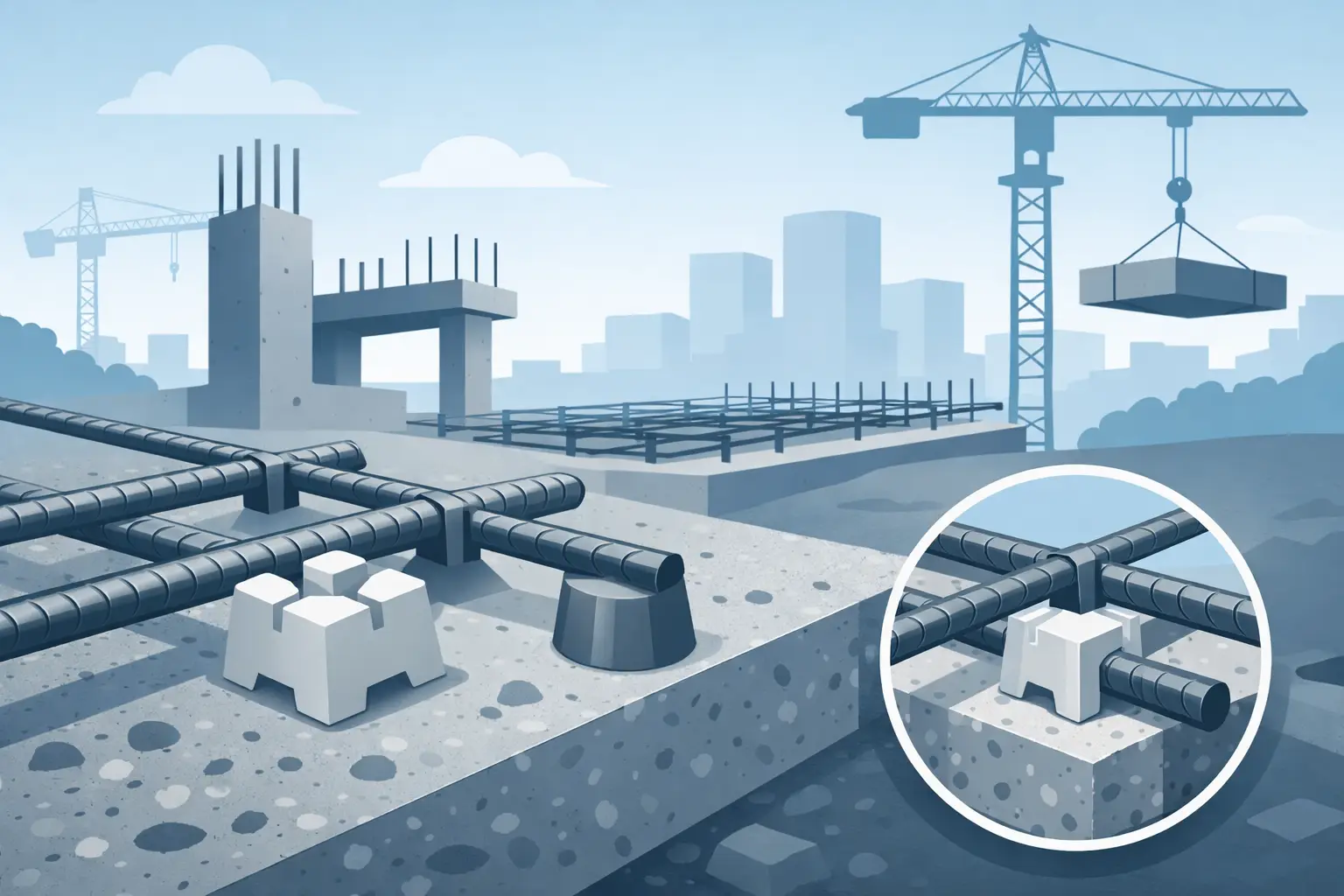
Rebar cover blocks are spacers placed between reinforcement and the formwork, ground, or other surface that will receive concrete. Their job is to create and maintain concrete cover – the thickness of concrete between the outer face of the rebar and the finished concrete surface.
That cover serves several purposes. It gives steel a protective concrete layer against moisture and corrosion, provides the intended bond between steel and concrete, and helps the finished member perform as designed. The required cover is not universal. It depends on the structural drawings, the element being poured, exposure conditions, concrete placement method, and the applicable project requirements.
A slab cast over a vapor barrier, a footing poured against soil, a precast panel, and a suspended beam do not necessarily use the same cover arrangement. Do not select block thickness by habit or what happens to be left in the truck. Check the drawings and confirm the required cover before setting steel.
Cover Blocks vs. Bar Chairs
Cover blocks and bar chairs are often used on the same job, but they solve different placement problems.
A cover block generally supports reinforcement from below or holds it away from a vertical form face. It is commonly used where the steel needs a fixed offset from ground, formwork, or a side shutter. Bar chairs are usually used to support upper reinforcement in slabs, keeping top steel at its specified level above the lower mat.
On a reinforced slab, cover blocks may support the bottom mesh or rebar above the base, while chairs maintain the top layer at the correct height. On a wall or column, side cover blocks can keep vertical bars from sitting against the form. The reinforcement detail determines where each product belongs.
Using chairs where a low-profile cover block is needed can create instability or interfere with the required level. Using only bottom cover blocks where top reinforcement needs support can leave the top mat too low after foot traffic and concrete placement. Treat each spacer as part of the reinforcement system, not as a substitute for every other support.
Selecting the Right Cover Block
Start with the cover dimension on the plans. The nominal thickness of the block must match the required clear distance between the reinforcing steel and the concrete face. If the detail calls for a particular cover, use a spacer designed to produce that cover with the specified bar or mesh arrangement.
Material selection matters too. Concrete cover blocks are often preferred where a compatible concrete spacer is required or where high load capacity is needed. Plastic spacers can be practical for many reinforcement applications because they are lightweight, consistent in size, and quick to install. The right choice depends on the project specification, the load imposed by the reinforcement, and whether the block will be used horizontally, vertically, or against formwork.
When choosing rebar cover blocks, check these four jobsite factors:
- Required cover dimension from the structural drawings.
- Rebar diameter, mesh type, and the shape of the reinforcement cage.
- Surface condition, including compacted base, vapor barrier, timber formwork, or vertical shutters.
- Expected site traffic and the weight the supports must carry before and during the pour.
A small spacer that works beneath light mesh may not be suitable beneath a heavy bar grid, a beam cage, or reinforcement that workers will step over during placement. If the steel settles under load, the cover is lost even though the original setup looked correct.
Placement Is Where Most Problems Start
Correct spacer size is only half the job. Rebar cover blocks must be placed at enough locations to support the reinforcement continuously and resist movement during the pour.
Set them on a stable, clean surface. Remove loose debris, sharp stone, and mud that can make a block tilt or sink. If reinforcement is installed over a vapor barrier, avoid dragging chairs, blocks, or steel across it and causing tears. Once the lower steel is in place, walk the grid and look for low spots, rocking sections, or bars resting directly on the base.
Spacing between blocks depends on the weight and stiffness of the steel, the size of the pour area, and the placement sequence. There is no single spacing pattern that suits every slab, footing, wall, or beam. Heavier reinforcement and busier work areas generally need more support points. Follow the engineer’s details and site procedures where they specify support spacing.
For vertical work, tie side spacers securely enough that they stay in position while forms are closed and concrete is placed. A loose spacer can rotate, fall away, or allow the cage to drift to one side. Check clearances before the final form closure, not after the first load of concrete is in the wall.
Keep Spacers Clear of Congested Steel
Tight beam intersections, lap zones, starter bars, and penetrations can make spacer placement difficult. That does not justify packing blocks randomly into the cage. A block that forces a bar out of position or prevents concrete from flowing through congested steel creates a different problem.
Where the detail is crowded, plan the support arrangement early. Use an appropriate spacer shape, reposition support points where permitted, and raise questions with the project supervisor or engineer before the pour. Small corrections are simple while the forms are open. They are expensive after concrete has set.
Common Mistakes That Cost Time
The most common error is allowing reinforcement to sit directly on the ground, formwork, or vapor barrier. It may happen when blocks are omitted, placed too far apart, or knocked over during steel fixing. Another frequent issue is mixing block sizes on the same element without a clear reason. That can produce inconsistent cover across a slab or footing.
Crews also run into trouble when they install spacers before the steel layout is finalized, then move bars around without resetting the supports. Every adjustment to the reinforcement can change where the load sits. A quick final check before concrete arrives is far cheaper than stopping a pump crew to repair sagging steel.
Do not rely on concrete placement to lift reinforcement into the right position. Wet concrete can push steel, but it does not place it accurately or consistently. Vibration can also shift unsecured cages and dislodge poorly positioned blocks. Reinforcement should already be tied, supported, and checked before the pour begins.
Ordering Cover Blocks for a Pour
Order enough cover blocks to support the full reinforcement layout, plus a sensible allowance for cuts, changes, breakage, and areas that need additional support. Running short near the end of a steel fix often leads to improvised spacers, uneven support, or a delayed pour.
Give your supplier the block thickness required, the type of reinforcement being supported, the planned application, and the quantity or pour area. If the job involves heavy mats, vertical walls, footings, or unusually congested reinforcement, say so. Clear information makes it easier to supply a product suited to the work rather than a generic spacer that may not hold up on site.
For urgent jobs, confirm availability and delivery timing before the steel crew reaches the placement stage. Cover blocks are low-cost items, but missing them can hold up far more expensive labor, formwork, concrete, and pumping resources.
A Better Pre-Pour Check
Before approving reinforcement for concrete, inspect the support system as carefully as the bar size and tie pattern. Confirm that steel is clear of the base and forms, cover blocks match the drawing requirement, supports are stable under normal site movement, and vertical spacers are secured where needed.
Then check it again after the crew has completed any last-minute changes. Rebar cover blocks do their best work quietly, but only when they are selected and placed with the same care as the steel they support. Get that detail right before the truck arrives, and the pour has one less reason to go off schedule.
Related Posts