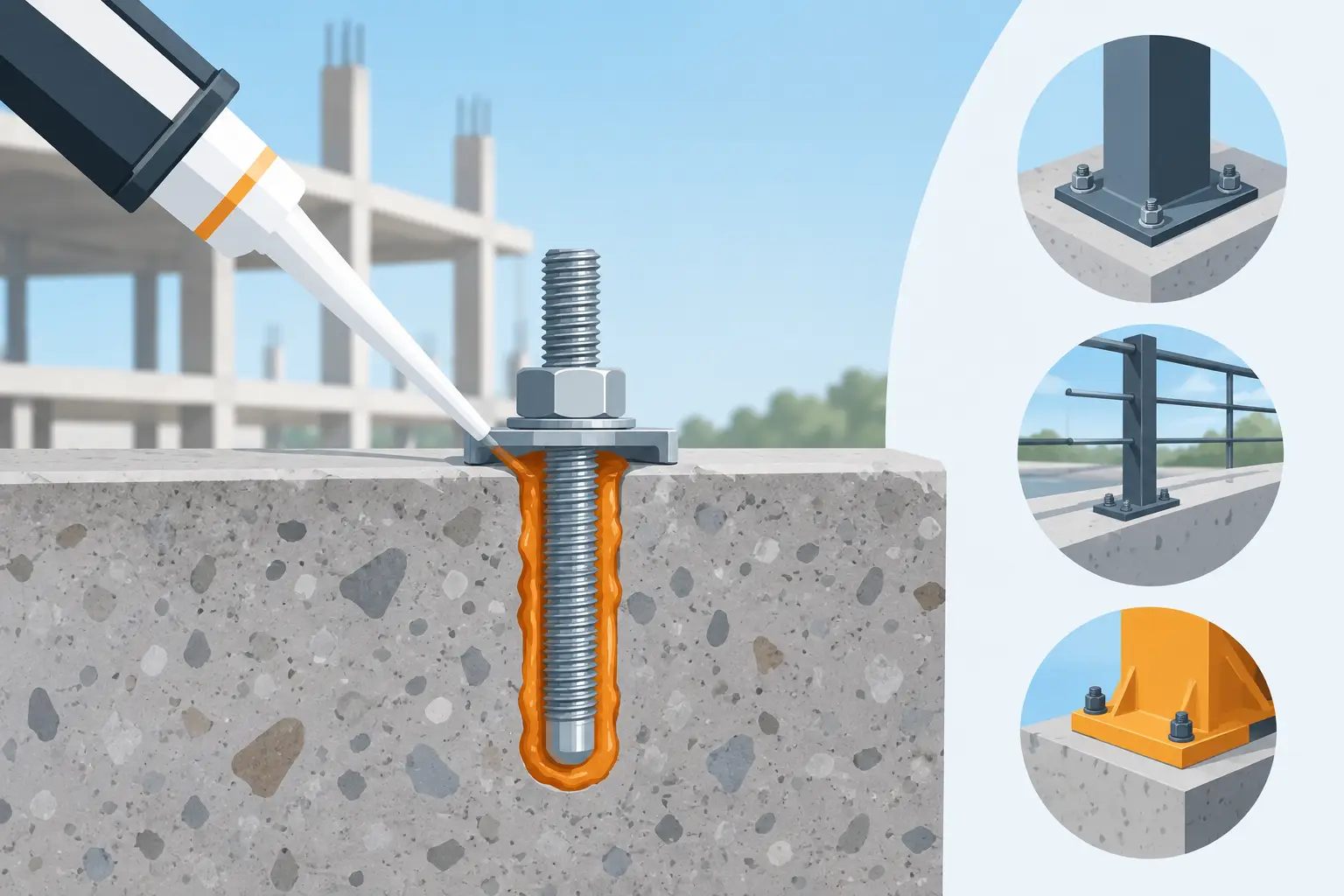
Rebar fabrication services reduce field cutting, support accurate placement, and help concrete crews keep schedules, inspections, and deliveries on track.
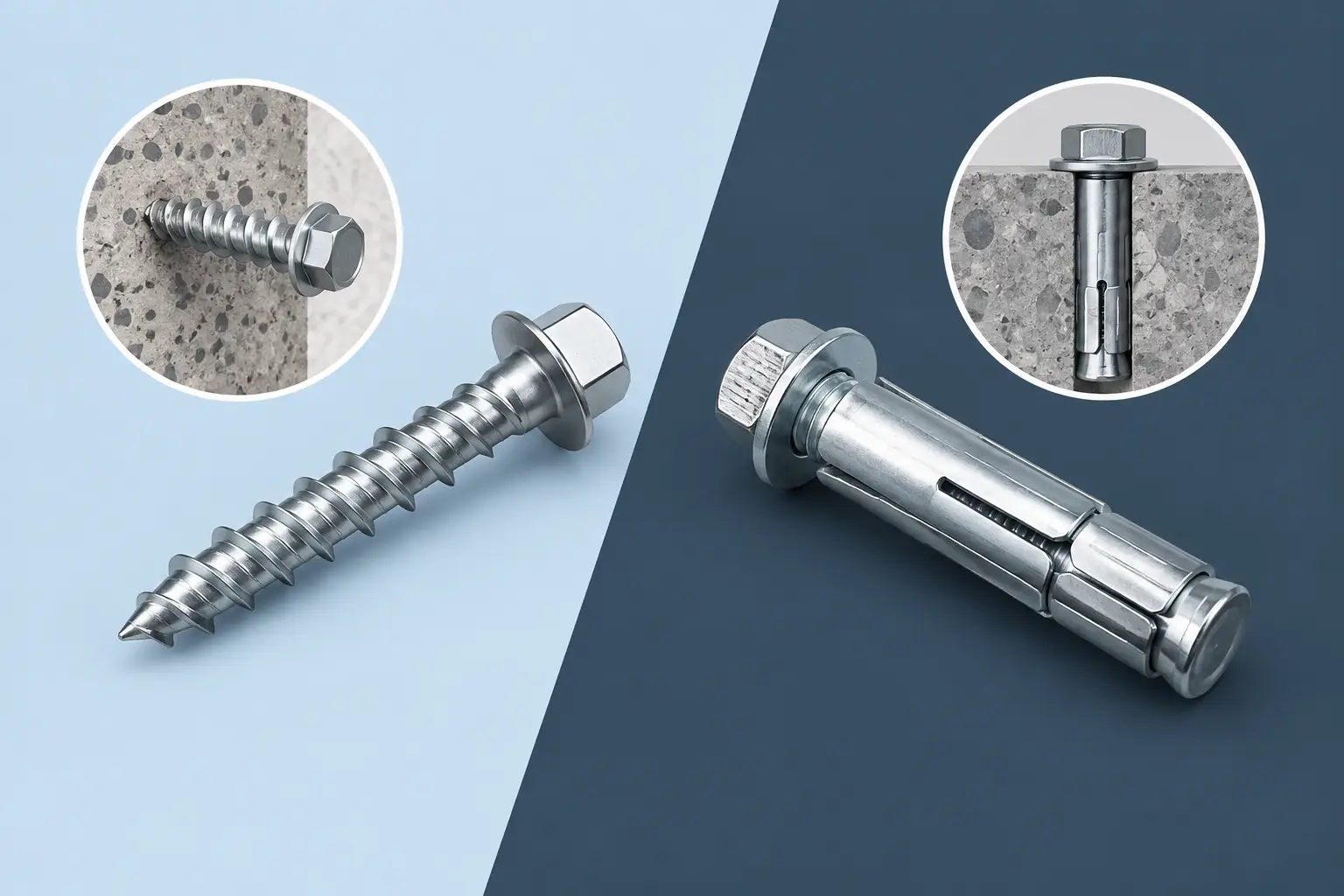
Concrete Screws Versus Sleeve Anchors Compared
A handrail bracket that pulls loose, a temporary form support that shifts, or plant fixed into poor concrete can stop a job quickly. The choice between concrete screws versus sleeve anchors comes down to more than which box is on the shelf. Base material, load direction, edge distance, corrosion exposure, and whether the fixing needs to come out later all affect the right call.
Both are established mechanical fixings for concrete work. Neither is automatically stronger or better. The practical question is which anchor suits the substrate and duty of the connection you are installing.
How Concrete Screws Work
Concrete screws, often called screw anchors, are hardened fasteners with threads designed to cut into a predrilled hole in concrete, solid brick, or some masonry units. Once driven to the specified embedment, the threads engage the sides of the hole and hold the fixture in place.
Their main advantage is speed and serviceability. Drill the correct diameter hole, clean it as required by the anchor instructions, position the fixture, and drive the screw with the correct socket or driver. There is no nut to tighten and no sleeve to expand. For repetitive light-to-medium-duty fixings, that can save real time across a site.
They are also useful where access is limited to the face of the fixture. A screw anchor with a hex-washer head can clamp down brackets, timber plates, conduit saddles, and light steelwork directly. Countersunk versions suit applications where the head must finish flush.
Removal is another clear advantage. A concrete screw can usually be backed out when temporary work, formwork accessories, or removable equipment is involved. That does not mean the same hole should automatically be reused. Thread engagement reduces after removal, and a damaged or oversized hole may not meet the required capacity. Use a new fixing location unless the manufacturer specifically permits reuse.
How Sleeve Anchors Work
A sleeve anchor is an expansion anchor. It has a threaded stud or bolt, an expansion sleeve, a nut, and a washer. As the nut is tightened, the cone at the lower end is drawn into the sleeve. The sleeve expands against the drilled hole and creates the holding force.
This design makes sleeve anchors a dependable option for through-fixtures such as steel base plates, brackets, angle supports, and equipment feet. The anchor is installed through the fixture, then tightened to the specified torque. Once set, it provides a permanent mechanical connection that is familiar to most trade crews.
Sleeve anchors generally suit solid concrete particularly well. They can also be used in solid masonry where the product approval allows it, but performance varies significantly with brick strength, mortar condition, and voids. Do not assume a published concrete load applies to every block or masonry wall.
The trade-off is that sleeve anchors are not intended for convenient removal. Removing the nut may release the fixture, but the expanded sleeve remains in the hole. In many cases the anchor has to be cut off flush or left below the finished surface. That is acceptable for permanent work, but less useful when a support may need to be relocated later.
Concrete Screws Versus Sleeve Anchors: Key Differences
The fastest way to separate these fixing types is to look at what creates the holding power. Concrete screws rely on thread engagement. Sleeve anchors rely on expansion pressure against the wall of the drilled hole. That difference affects installation, load behavior, and where each product makes sense.
Concrete screws are normally quicker to install and easier to remove. They can be a strong choice for brackets, services, temporary works, and fixtures where a clean change-out is likely. They also avoid the expansion force created by a sleeve anchor, which can be useful when working closer to an edge, provided the specified edge distance and load data are met.
Sleeve anchors are often selected for permanent through-bolted connections in sound concrete. Their expansion mechanism provides a straightforward, secure installation for many general construction applications. But expansion anchors place radial force into the concrete, so edge distance and anchor spacing matter. Setting one too close to an unsupported slab edge can crack or break out the concrete before the anchor reaches its expected capacity.
Neither anchor should be selected by diameter alone. A larger fastener is not automatically the better option if the slab is thin, the concrete is weak, or the required edge distance is unavailable. The actual approved load depends on anchor diameter, embedment depth, concrete strength, cracked or uncracked condition, spacing, edge distance, and whether the load is tension, shear, or a combination of both.
Start With the Concrete, Not the Fixture
Before ordering anchors, inspect the material you are fixing into. Sound, normal-weight concrete gives the most predictable results. Old slabs, green concrete, lightweight concrete, hollow block, crumbling masonry, and precast panels all need more care.
For a slab or footing, confirm its thickness before choosing embedment. An anchor drilled too deep can blow out the underside of a thin slab or interfere with reinforcement, services, or post-tensioning. Avoid drilling through reinforcing bar where possible. If you encounter steel, do not simply force the drill through it. Check the fixing layout and get direction from the project engineer or supervisor where structural reinforcement may be affected.
Cracks also change the equation. A fixing near a control joint, visible crack, or slab edge may have lower capacity than the same anchor in the center of intact concrete. For structural, safety-critical, overhead, or seismic applications, use a fastening system with the correct code evaluation and design the connection to the manufacturer data and project requirements.
Installation Is Where Capacity Is Won or Lost
Most anchor failures on site trace back to installation errors, not the anchor itself. Hole diameter matters. A hole that is too large reduces screw thread engagement and can prevent a sleeve anchor from expanding correctly. A hole that is too shallow can stop the anchor before the required embedment is reached.
Use a rotary hammer and bit size specified for the anchor. Drill perpendicular to the surface unless the design allows otherwise, and drill to the required depth. Remove drilling dust with a blow-out pump, vacuum, or brush where the anchor instructions call for it. Dust left in the hole can reduce engagement, interfere with expansion, and make torque readings misleading.
For sleeve anchors, install the anchor through the fixture, tap it to the required depth, and tighten the nut to the stated torque. Over-tightening is not extra security. It can damage threads, over-expand the sleeve, or crack weaker concrete.
For concrete screws, use the specified driver and install to the required depth without stripping the head or overdriving the screw. If the screw spins without tightening, do not rely on it. Remove it, assess the hole, and use an approved alternative at a new location or a larger anchor only where design and manufacturer data permit.
Choosing for Common Site Work
For temporary bracing, removable timber forms, service clips, and brackets that may need adjustment, concrete screws are usually the practical option. They are quick to install, quick to remove, and available in head styles that suit a range of fixtures.
For permanent steel brackets, base plates, racking, guardrail components, and general through-fixture connections into sound concrete, sleeve anchors are often a sensible choice. They provide a familiar expansion fixing and work well when the connection is not expected to be dismantled.
Exterior work needs another check. Standard zinc-plated anchors may not suit exposed wet areas, coastal locations, treated timber, or chemically aggressive environments. Match the coating or stainless steel grade to the exposure conditions and the project specification. The wrong corrosion rating can turn a sound installation into a maintenance issue long before the concrete reaches the end of its service life.
Do Not Treat Published Loads as a Site Guarantee
Catalog load figures are useful for comparing products, but they are not permission to install an anchor in any concrete at that load. Published values may be based on a specific concrete strength, embedment, spacing, edge distance, and test condition. Reduce capacity when those conditions are not available, and account for the actual load direction.
A wall-mounted item creates a different demand than a base plate loaded straight down. Tension pulls an anchor outward. Shear pushes it sideways. Eccentric loads can apply both at once. If the fixing supports people, heavy equipment, structural steel, suspended services, or critical safety barriers, have the anchor layout checked by a qualified designer.
The right anchor is the one that matches the concrete, fixture, exposure, and approved load requirement – then gets installed exactly as specified. Confirm those details before the material arrives on site, and your crew can fix once, torque correctly, and keep the job moving.
Related Posts