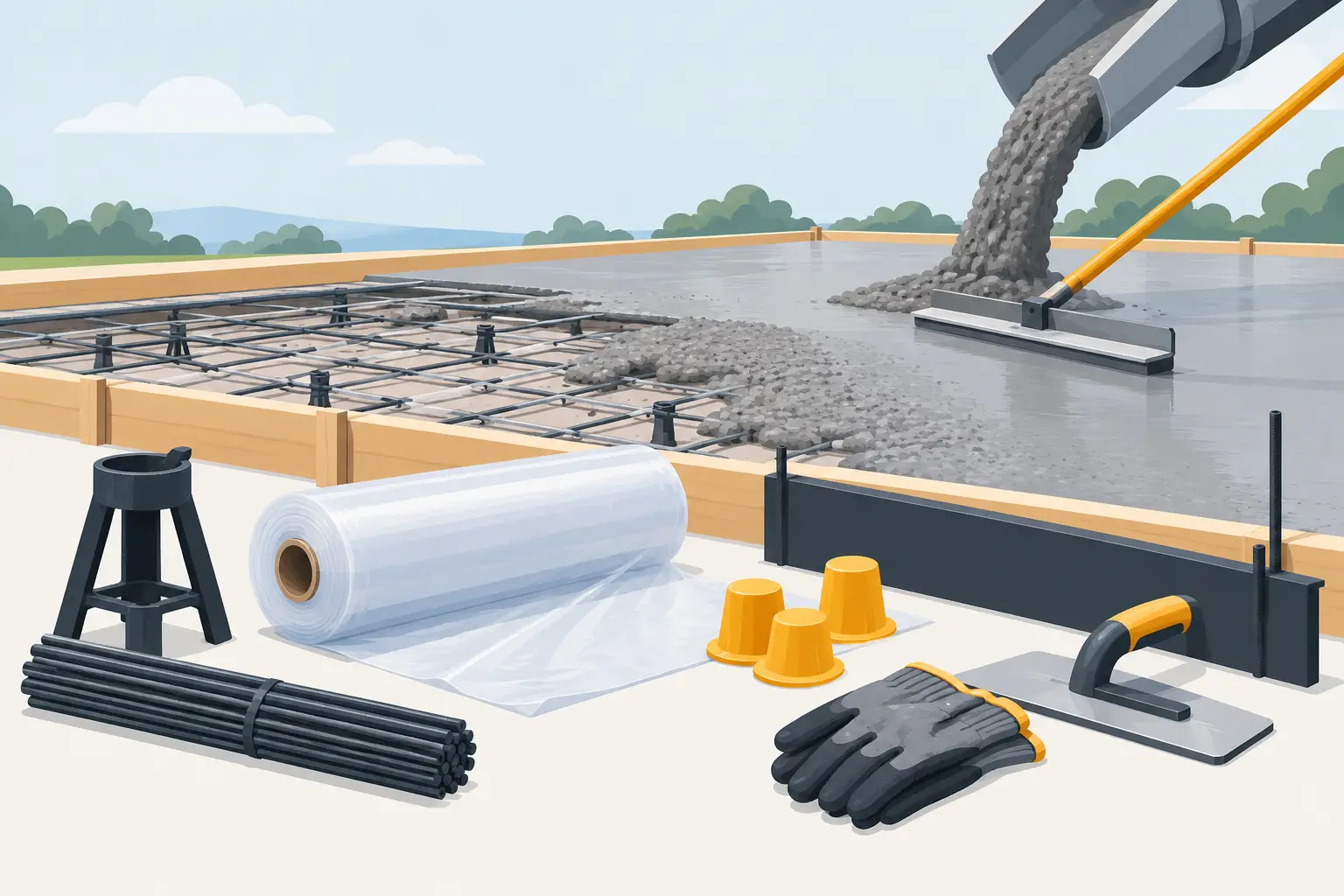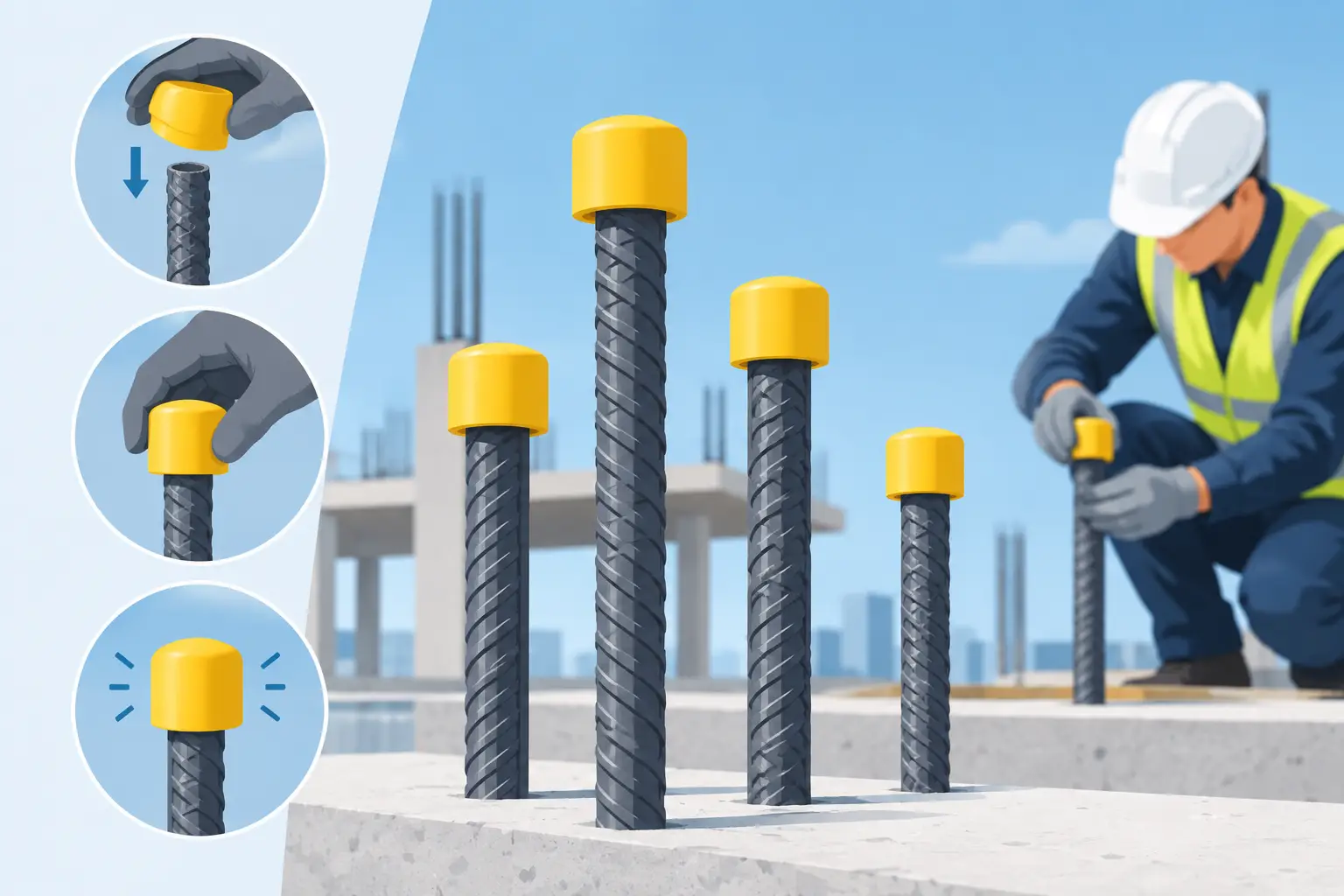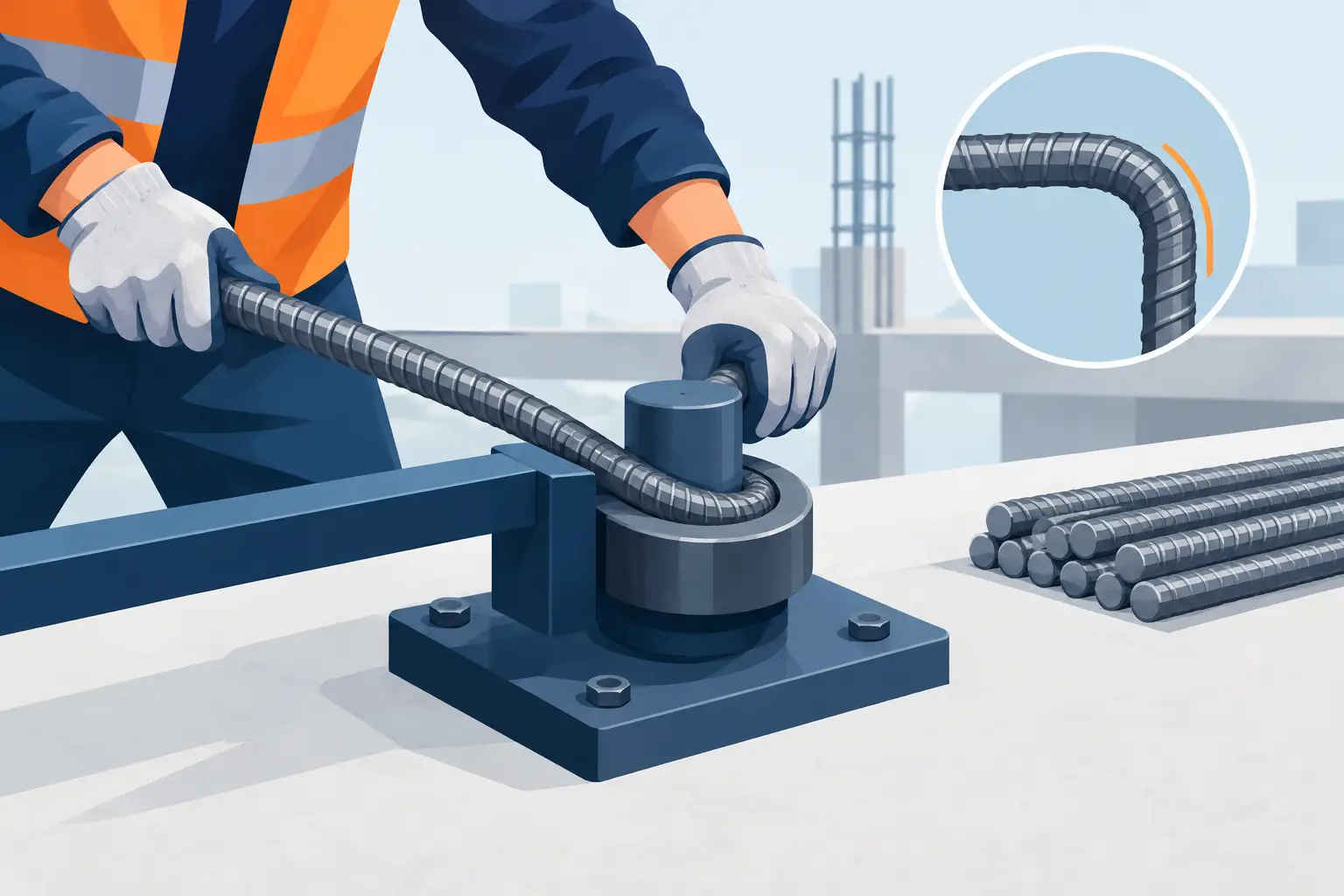
Essential concrete pour accessories keep reinforcement positioned, forms stable, and fresh slabs easier to place, finish, and protect from defects on site.
Reinforcing Steel for Concrete Jobs That Last
A concrete pour can look ready from the forms and still fail inspection or create expensive remedial work because the reinforcing steel is wrong, poorly supported, or not placed as detailed. Rebar and mesh are not add-ons once the concrete truck arrives. They are part of the structural system, and getting them right before the pour protects the program, the budget, and the finished work.
For builders, concrete crews, and project buyers, the practical challenge is usually not understanding that steel is required. It is ordering the correct material, in the correct quantities, with the chairs, tie wire, and fixing items needed to keep it in position when the concrete goes down.
What Reinforcing Steel Does in Concrete
Concrete handles compression well. It does not handle tension, bending, or localized cracking nearly as well. Reinforcing steel adds the tensile strength that concrete needs in slabs, footings, retaining walls, beams, columns, driveways, and other structural elements.
When a loaded slab bends, one face is placed in compression and the other is placed in tension. The reinforcement is positioned where the engineer expects those tensile forces to occur. In a typical ground slab, mesh is commonly placed in the upper portion of the slab to help control cracking and support the design intent. In footings, beams, and walls, reinforcing bars are arranged according to the structural details because the load paths are more specific.
Steel also helps manage cracking as concrete shrinks and responds to temperature changes. That does not mean reinforcement makes concrete crack-free. Concrete will still crack. The objective is to control the crack width and location while maintaining the element’s required capacity.
Start With the Drawings, Not the Last Job
The fastest way to create a site problem is to order reinforcement based on what was used on a previous project. A residential driveway, warehouse slab, retaining wall, and suspended deck may all involve concrete, but their reinforcement requirements can be very different.
Review the structural drawings and schedules before placing an order. Confirm the bar diameter, grade, spacing, lap lengths, mesh designation, bends, stirrups, cover requirements, and any notes for construction joints or penetrations. If a detail calls for a particular bar type or mesh grade, do not substitute based on availability without approval from the engineer or designer.
This matters most when the job has multiple pour stages. Ordering all steel as one broad quantity can leave crews sorting through material on site or discovering that critical bent bars and accessories are missing when a section is ready. Breaking the order into footing, wall, slab, and beam requirements makes delivery and installation easier to control.
Rebar Sizes and Grades
Rebar is specified by diameter, grade, shape, and placement. In U.S. notation, common sizes include #3, #4, #5, and larger bars for heavier structural work. The number relates to nominal bar diameter in eighths of an inch. A #4 bar, for example, has a nominal diameter of 1/2 inch.
The grade identifies the steel’s yield strength. Grade 60 rebar is common in many applications, while other grades or weldable steel may be specified for particular structural details. The key point is simple: the bar size and grade work together. Installing a smaller bar at tighter spacing, or a different grade at the same spacing, is not automatically an equivalent solution.
For straight runs, standard-length reinforcing bar may be the most efficient option. For footings, beams, corners, and tied columns, cut-and-bend bar or prefabricated stirrups can reduce site cutting, improve consistency, and keep the crew moving. The best choice depends on the drawings, the labor available, and the amount of repetition in the work.
Reinforcing Mesh for Slabs and Flatwork
Welded wire reinforcement, often called reinforcing mesh, is commonly used in slabs, sidewalks, driveways, patios, and other flatwork. It provides distributed reinforcement across the slab area and can be quicker to install than individual bars where the design allows it.
Mesh needs proper laps, tying, and support. Rolling it out on the subbase and expecting it to be lifted during the pour is unreliable. Once workers, pump lines, and wet concrete start moving across the area, unsupported mesh can end up near the bottom of the slab where it provides far less value for crack control.
Use chairs or other approved supports at suitable spacing so the mesh stays at the required elevation. At laps, follow the project details and ensure sheets are tied securely enough to prevent separation during the pour. Openings around pipes, pits, and penetrations often need additional trim bars or local reinforcement, so check those details before the crew starts placing mesh.
Cover, Chairs, and Tie Wire Are Structural Items
Reinforcement needs concrete cover – the distance between the outside of the steel and the finished concrete surface. Cover helps protect steel from corrosion, fire exposure where applicable, and loss of bond. Required cover varies based on whether the concrete is cast against earth, exposed to weather, or protected within an interior element.
Bar chairs are what keep reinforcement at the required height. Their role is straightforward, but the wrong chair type, spacing, or load capacity can allow steel to sag under foot traffic and concrete placement. For mesh in slabs, use enough supports to maintain level placement rather than relying on a few chairs around the perimeter.
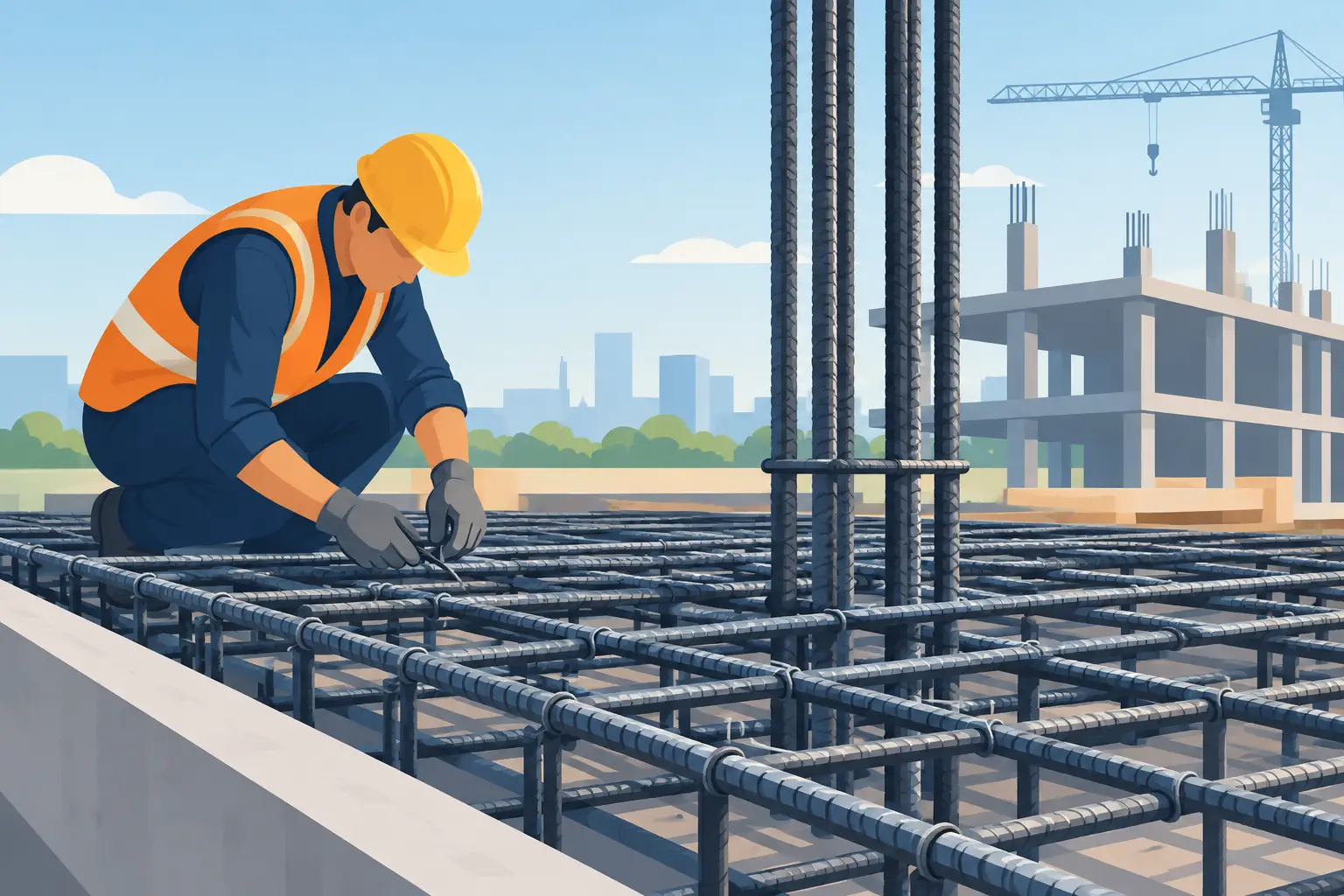
Tie wire keeps bars and mesh aligned while the crew works. It does not need to turn every intersection into a rigid cage, but it must hold the assembly together through placement. Pre-tied stirrups, ties, and bar intersections should be checked before the pour, especially where the steel will be difficult to access after forms are closed.
Do not treat chairs, tie wire, and concrete fixings as minor extras left for a last-minute store run. Ordering them with the reinforcement saves time and reduces the chance of a crew standing by with forms complete but no way to correctly support the steel.
Avoid These Common Reinforcement Problems
Most reinforcement issues are preventable with a short pre-pour check. The crew should confirm bar size and spacing against the drawings, check that laps are the specified length, and make sure starter bars, dowels, and stirrups are in the right locations.
Watch for reinforcement resting on the ground or vapor barrier, particularly in slabs. Check cover at slab edges, footing sides, and form faces. Make sure bars have not been pushed aside by plumbing, sleeves, hold-downs, or embedded items. Where multiple trades work in the same area, a final check after services are installed is often more useful than the check completed the day before.
Rust is another area where context matters. Light surface rust is not necessarily a reason to reject rebar, but heavy scale, contamination, oil, mud, or damage that affects the bar’s bond or dimensions is a concern. Keep steel stored off the ground where practical, organized by size, and protected from site contamination.
Order for the Pour Sequence
Reinforcement supply is most effective when it matches how the job will be built. For a small slab, that may mean mesh, perimeter bar, chairs, tie wire, and fixing items delivered together. For a larger commercial or civil project, it may mean staged deliveries that align with excavation, footing, wall, and slab operations.
Start with a bar schedule or takeoff that separates straight bar, bent bar, mesh, stirrups, chairs, and consumables. Allow for laps, cuts, bends, and reasonable site waste, but avoid over-ordering material that will sit exposed or become mixed with offcuts. If the project has a tight pour date, confirm delivery timing early and leave room for a final top-up order after the steel is placed and checked.
Quality Steel Supplies supports trade buyers with reinforcing bar, reinforcing mesh, bar chairs, tie wire, stirrups, concrete fixings, and related site materials, with clear product pricing and direct support for urgent or volume orders. That makes it easier to source the full reinforcement package rather than chasing basic items from separate suppliers.
A good reinforcement order is not just a list of bars and sheets. It is a planned set of materials that lets the crew place steel accurately, pass inspection, and pour without delays. Get the drawings, cover, support, and delivery sequence sorted before the forms are full of workers, and the concrete work has a far better start.
Related Posts